
Bulk Medjoul Dates: Sizes, Origins, Season
Bulk Medjoul dates: jumbo and large sizes, origins Israel, Jordan and South Africa. Seasonality, storage and professional formats.
The Medjoul date holds a special place in the world of dried and dehydrated fruits sold in bulk. Thick flesh, high natural sugar content, generous size: this premium variety stands out as a key product for gourmet grocery stores, foodservice establishments, and caterers looking for a high-perceived-value product. At Palimex, a food wholesaler specializing since 1984, the Medjoul is one of the most sought-after references in our Dried Fruits > Dates catalog. This article delves specifically into this variety—sizes, origins, harvest windows, storage, and professional uses—in addition to our general overview Date wholesaler: overview of varieties and formats.
The Medjoul, a premium date: what justifies its high-end positioning
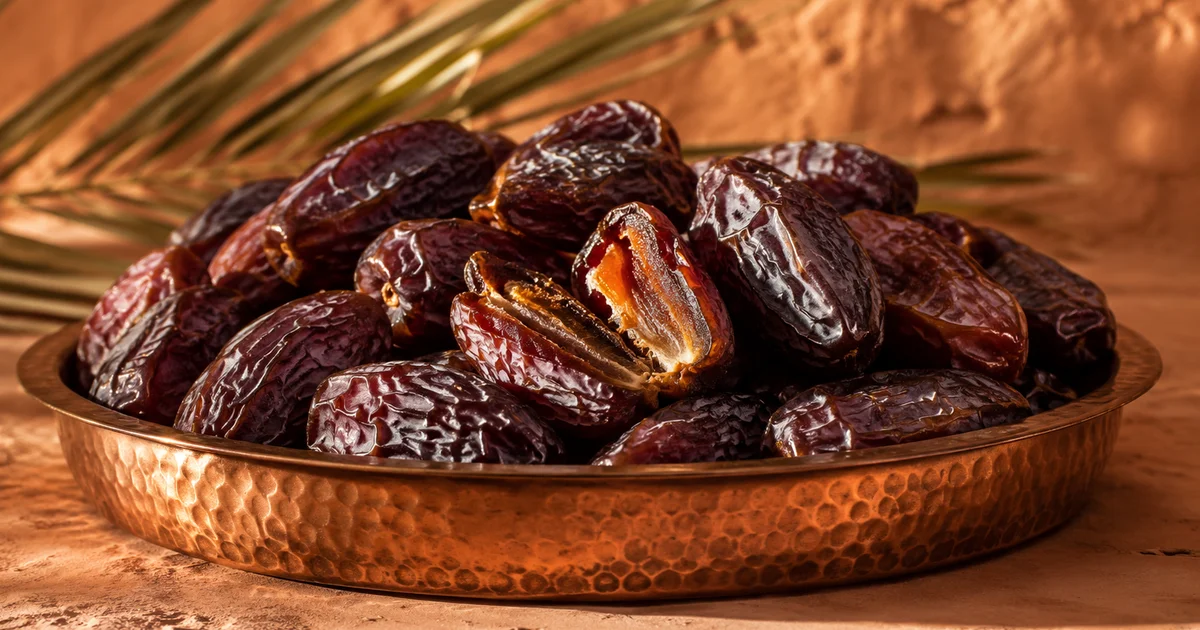
The Medjoul sets itself apart from other date varieties with its soft, moist flesh, high natural sugar content, and a size significantly larger than that of a classic Deglet Nour. Its reputation as the "queen of dates" is not just empty marketing: it is based on concrete agronomic characteristics that directly influence its use in professional kitchens and its bulk purchase price.
For a professional buyer—gourmet grocery store, restaurant, pastry shop, or caterer—several criteria determine the quality of a batch of Medjoul:
- Texture: a premium-quality Medjoul must remain soft and fleshy, without excessive dryness or residual moisture.
- Color: amber brown to dark brown depending on the maturity stage at harvest, with no whitish areas that would indicate the onset of sugar crystallization.
- Size: a central element of commercial positioning, it determines both the price and the recommended use (details below).
- Batch traceability: origin, harvest date, batch number, and best-before date must be indicated on the delivered boxes, a prerequisite for integration into a HACCP plan in foodservice.
This traceability requirement is all the more important since the Medjoul, unlike more standardized dried fruits, exhibits significant quality variations depending on the origin, orchard, and harvest season.
Jumbo, large, medium sizes: what impact on bulk pricing?
Size is the primary commercial segmentation criterion for the Medjoul. It directly affects the price per kilogram, the number of pieces per box, and the recommended professional use. A buyer ordering for counter snacking does not have the same needs as a pastry shop that stuffs dates in bulk.
| Size | Average weight per piece | Approximate number of pieces / kg | Recommended professional use |
|---|---|---|---|
| Jumbo | 25 to 30 g | 33 to 40 | Gift boxes, individual sales, high-end presentation |
| Large | 20 to 24 g | 42 to 50 | Foodservice, buffets, gourmet grocery corners |
| Medium | 15 to 19 g | 53 to 65 | Pastry, processing, bulk stuffing |
As an indication, the price difference between a medium size and a jumbo size can represent several tens of percent on the price per kilogram. For a bulk order, it is therefore essential to match the size to the final use: a jumbo size for a pastry shop that will cut the date into small pieces is an unnecessary cost, whereas a medium size for a professional gift box will detract from the presentation.
Origins and harvest windows: Israel, Jordan, South Africa
The Medjoul is now cultivated on several continents, allowing a wholesaler like Palimex to smooth out supply over a large part of the year. Each origin has a slightly different profile in terms of average size, sugar content, and especially harvest schedule.
- Israel: the historical origin of the modern Medjoul, main harvest from September to November. Sizes are generally homogeneous, often oriented toward jumbo and large.
- Jordan: harvest window close to that of Israel (September to October), with production steadily increasing in recent years.
- South Africa: southern hemisphere, thus off-season harvest, generally between March and May. This origin is strategic for a wholesaler as it allows offering a freshly harvested Medjoul during the period when stocks from the northern hemisphere begin to dwindle.
This complementarity of harvest windows is precisely what allows Palimex to maintain a smooth stock rotation and avoid shortages on such a sought-after reference as the Medjoul. For a professional buyer, knowing the origin and harvest date of a batch is a real selling point with their own customers, particularly in gourmet grocery stores where traceability is part of the product narrative.
To situate the sector as a whole, the FAO provides documentary resources on date palm cultivation worldwide, useful for understanding production dynamics by geographic basin.
Medjoul or Deglet Nour: which date to choose based on professional use
Confusion between Medjoul and Deglet Nour is common among buyers new to the date category. These two varieties, however, serve very different purposes and are not interchangeable from a commercial standpoint.
| Criterion | Medjoul | Deglet Nour |
|---|---|---|
| Texture | Soft, fleshy, very moist | Semi-dry, firm, translucent |
| Perceived sugar content | High | Moderate |
| Price positioning | Premium | Entry to mid-range |
| Main use | Table date, gift box, presentation | Cooking, pastry, baking, processing |
| Main origins | Israel, Jordan, South Africa, Morocco | Algeria, Tunisia |
In practice, a gourmet grocery store or restaurant looking to offer a product with a strong flavor identity for direct sale or presentation will prefer the Medjoul. Conversely, an industrial pastry shop or processing workshop that uses dates as a recipe ingredient (spreads, bars, baking) will find better economic value in the Deglet Nour. The complete overview of varieties available in bulk is detailed in our article Date wholesaler.
Bulk storage: cold chain and sugar crystallization
The Medjoul, due to its higher moisture and sugar content than the average date, requires special attention in terms of storage and stock rotation. Poor storage quickly leads to two phenomena: hardening of the flesh or, conversely, sugar crystallization on the surface, which alters the commercial appearance of the fruit without making it unfit for consumption.
At Palimex, we regularly receive feedback from customers concerned about seeing small white crystals appear on their Medjoul after several weeks of storage. This natural sugar crystallization phenomenon is common with jumbo sizes, which are particularly rich in natural sugars. Our field recommendation: store boxes between 2 and 6°C in a ventilated and dry space, avoid repeated thermal shocks when opening cold rooms, and prioritize rapid stock rotation rather than prolonged storage, even in cold conditions. A Medjoul stored correctly but for too long will lose its softness before even reaching its best-before date.
Here are some practical principles for managing a professional stock of Medjoul:
- Store unopened boxes in positive cold storage upon receipt, following the first-in, first-out (FIFO) principle between different batches.
- Do not break the cold chain between storage and display or foodservice presentation.
- Visually check the appearance of the dates each time a box is reopened, without waiting until the best-before date approaches.
- Avoid storing near strongly scented products: the soft flesh of the Medjoul easily absorbs surrounding odors.
- Anticipate orders based on seasonality to limit long storage periods, especially between two harvest windows.
For professionals managing several families of dried and dehydrated fruits, these rotation and cold management principles align with the best practices discussed in our dedicated article on the cold chain applied to dried fruits.
Foodservice, pastry, and gift boxes: enhancing the Medjoul at the point of sale
The Medjoul is a product with strong commercial potential for foodservice professionals, gourmet grocery stores, and event caterers. Its generous size and melting texture make it a self-sufficient product, unlike drier dates that often require processing.
- Premium counter snacking: presentation by the piece or in small bags, large or jumbo size to maximize visual impact.
- Stuffed date: pitted and filled with fresh cheese, mascarpone, marzipan, or nuts, a classic for foodservice platters and catering buffets.
- Presentation on cheese platters: the jumbo Medjoul adds a sweet touch that contrasts with aged cheeses.
- Petits fours and pastry finishes: medium size recommended for a better cost-to-use ratio when the date is cut or incorporated.
- Professional gift boxes: a highly sought-after format at the end of the year by gourmet grocery stores and corporate committees, where the jumbo size from Israel or South Africa serves as a premium selling point.
- Infusions and sweet-savory pairings: increasing use in gourmet restaurants, combined with spices like cinnamon or cardamom.
For buyers looking to structure a range of gift boxes or seasonal displays, it is recommended to combine several sizes and origins to offer a clear range: a jumbo size for visual entry-level, a large size for volume, and an off-season origin like South Africa to ensure supply continuity during the low season for Mediterranean basin origins.
Order formats and B2B logistics for bulk Medjoul
As with the entire Palimex catalog, the Medjoul is offered exclusively to professionals with a SIRET, with a minimum packaging of 5 kg per reference. This approach ensures a consistent quality-price ratio for professional volumes while simplifying delivery logistics.
| Format | Indicative weight | Target audience |
|---|---|---|
| Bulk box | 5 to 10 kg | Foodservice, processing, grocery restocking |
| Premium calibrated box | 5 kg (homogeneous jumbo or large size) | Gourmet grocery, individual sales |
| Full pallet | Multiples of boxes per reference | Regional wholesalers, purchasing centers, foodservice chains |
Delivery is free on board from a minimum order threshold, with batch management allowing each professional to trace the origin, harvest date, and best-before date of each received box. This documentary rigor is essential for integrating the Medjoul into a HACCP food safety plan, regardless of the type of establishment.
Summary: securing your supply of premium Medjoul
The Medjoul remains a safe bet in the date catalog for any professional looking to offer a premium product with strong customer recognition. The choice of size—jumbo, large, or medium—should be guided by the final use rather than price alone, to avoid overpaying for an unnecessarily large size or detracting from a high-end presentation. The diversity of origins, between Israel, Jordan, and South Africa, also provides a lever for supply continuity thanks to complementary harvest windows. Finally, rigorous management of the cold chain and stock rotation remains the best guarantee against sugar crystallization and loss of softness, two common pitfalls with this demanding variety. To further explore the references and formats suited to your activity, consult our Dried Fruits > Dates category as well as our overview Bulk date wholesaler.
Further reading
Frequently asked questions
Everything you need to know about this topic.
A question?
Get in touch directly.

Marketing & Communications Manager — Palimex / Meyva
As Marketing & Communications Manager at Palimex / Meyva, Aude Moyne leads the company's communications and digital marketing strategy: editorial content, email campaigns and the promotion of its product ranges. Her experience at Palimex, a specialist in dried fruit, nuts, olives and spices for professionals, has given her in-depth knowledge of the products, their origins and uses, and the expectations of food-industry professionals. The blog articles are written or supervised by her, in collaboration with Palimex's sales and product teams whenever a topic calls for specific expertise.
Our advice related to Dried-fruits
 dried-fruits
25 kg Bucket, Box, or Bag: How to Choose Based on Stock Rotation
Bucket, carton, or 25 kg bag: which packaging to choose based on your actual turnover in professional kitchens. Palimex advice for foodservice, grocers, and pastry chefs.
 dried-fruits
Dried Apricots: Sizes No. 1 to No. 4, Sulphured or Unsulphured | Palimex
How to read size grades No.1 to No.4 for dehydrated apricots, and choose between sulphured and unsulphured based on professional kitchen use. Buyer’s guide for foodservice, pastry chefs, and specialty grocery stores.
 dried-fruits
Almond, Blanched, Flaked, Powdered: Which Format to Choose?
Professional guide: uses, cooking performance, and storage of blanched almonds, flaked, slivered, and powdered. Procurement and B2B logistics tips from Palimex.