

Available products
16 references

Looking for a wholesale dried fruit supplier?
I'm Jessica, your dedicated wholesale account manager.
Direct sourcing — Rungis and Bordeaux.
- ✓Direct sourcing from producers
- ✓Quality controlled (shelf-life, calibre, origin)
- ✓Next-day delivery in Île-de-France
- ✓Bulk, custom packaging, co-packing
- ✓B2B account with pricing tiers
Shipping & pickup
Rungis pickup
Pick up your order at our Rungis market depot. By appointment Monday through Friday.
Nationwide delivery
Delivery within mainland France and major European cities. Indicative lead time 24-48h.
Careful packaging
Reinforced cardboard, anti-shock padding, traceability labels.
Frequently asked questions
About this category
Safaa: a range built on preparations, not on a single olive
A table olive is not defined by its variety alone. What sets two references apart in the kitchen is the work already done to them: cracked, pitted, slit, stuffed, sliced into rings. Each of those preparations is a task the professional will not have to repeat, and the Safaa range is built around that logic.
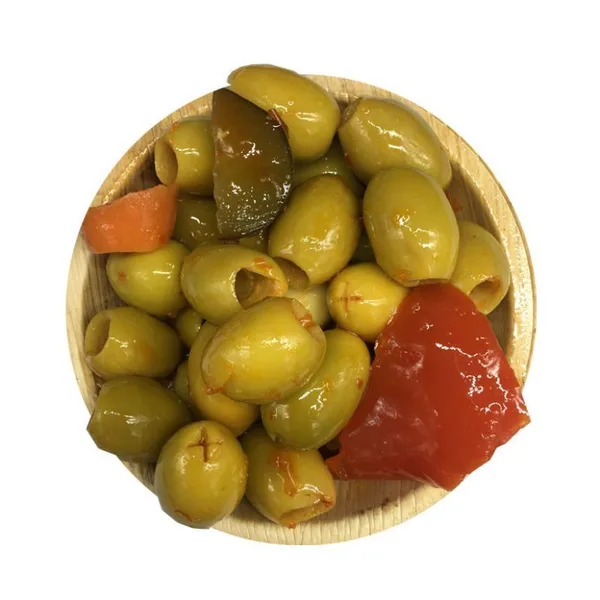
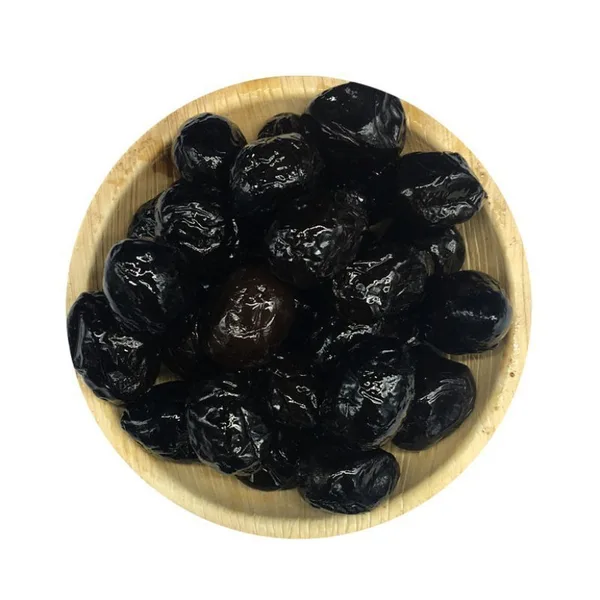
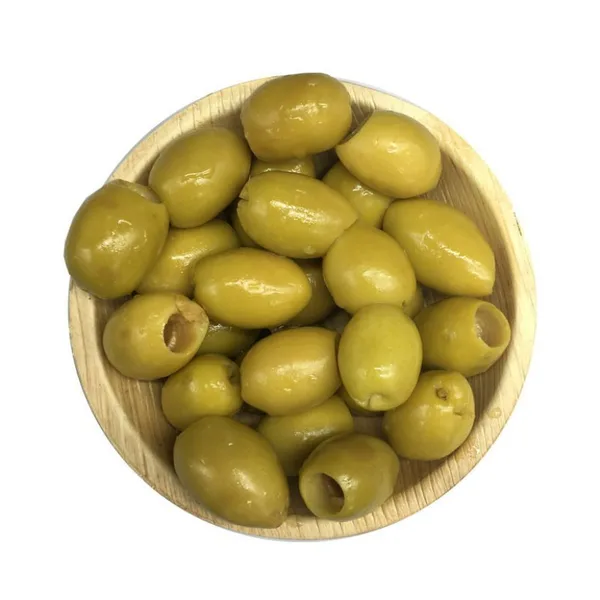
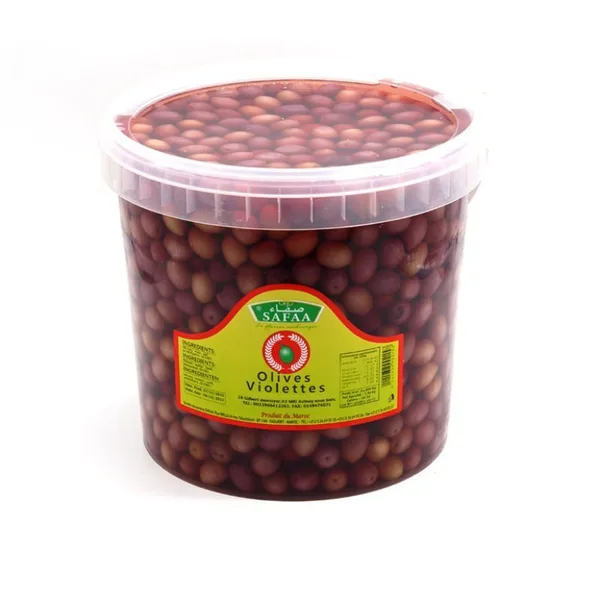
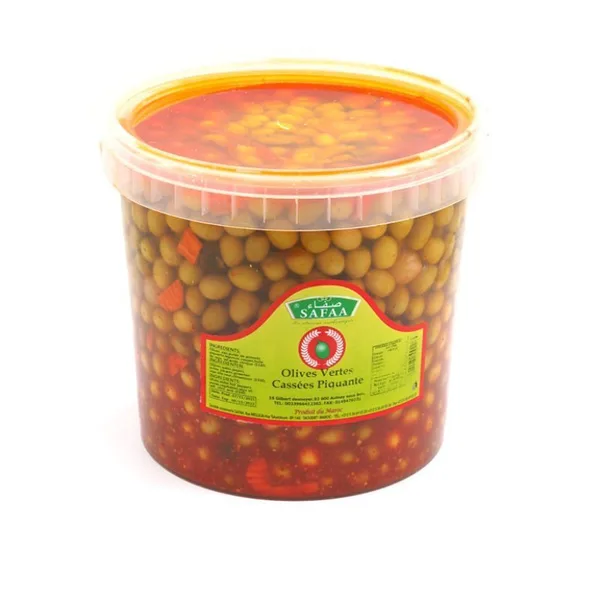
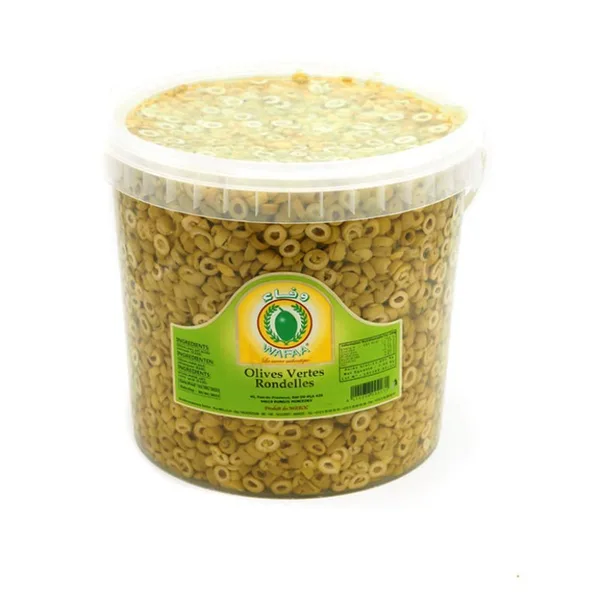
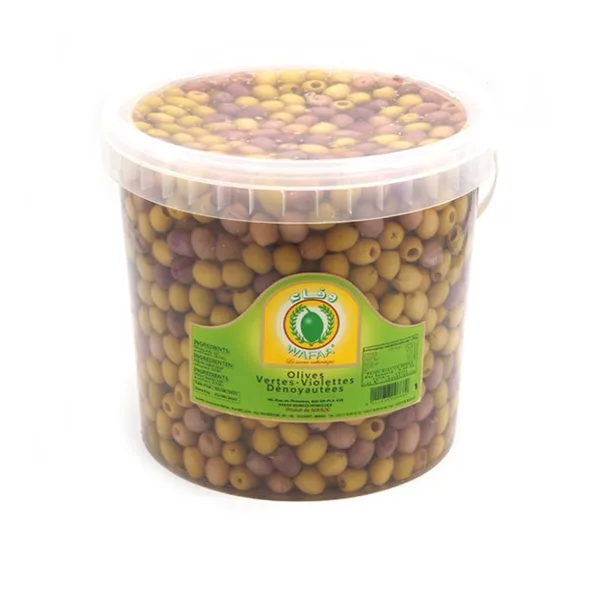
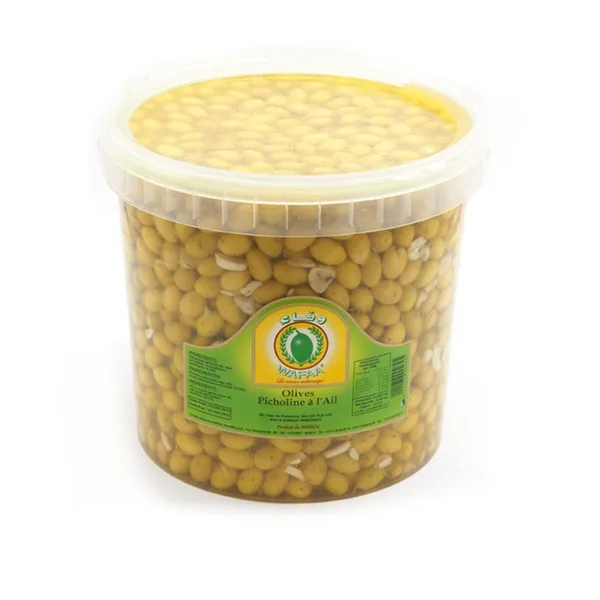
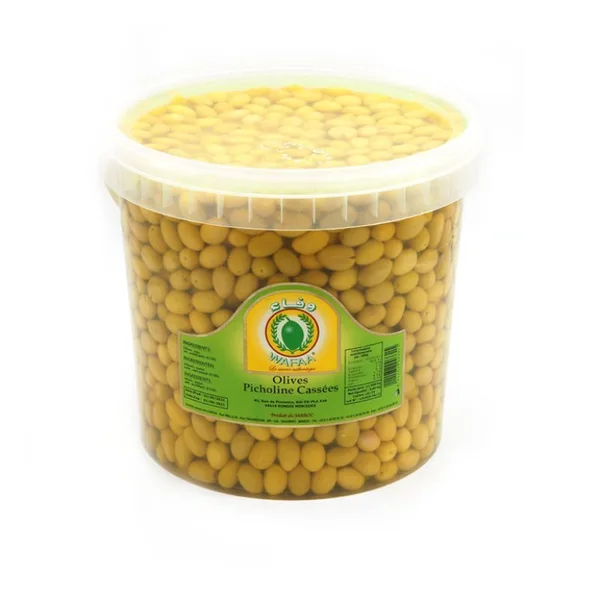
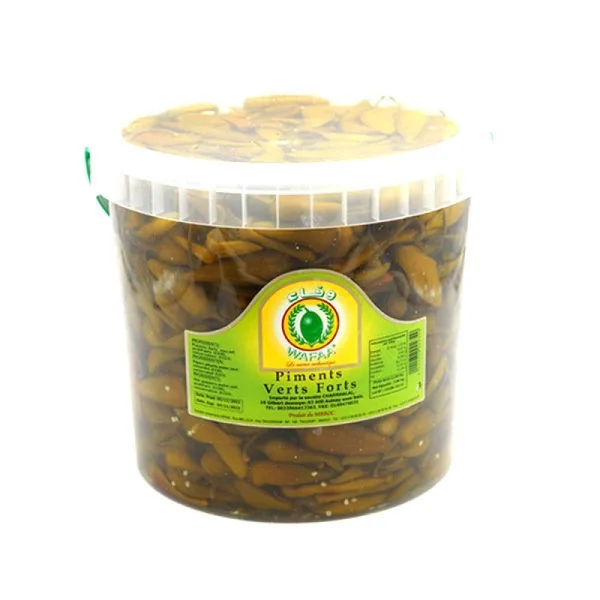
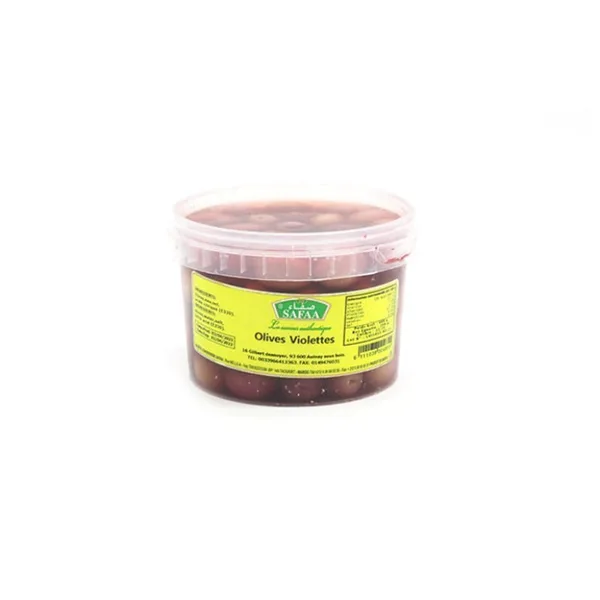
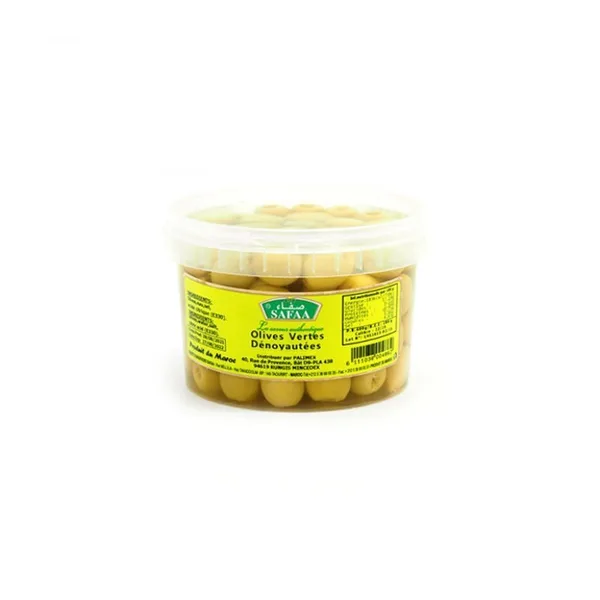
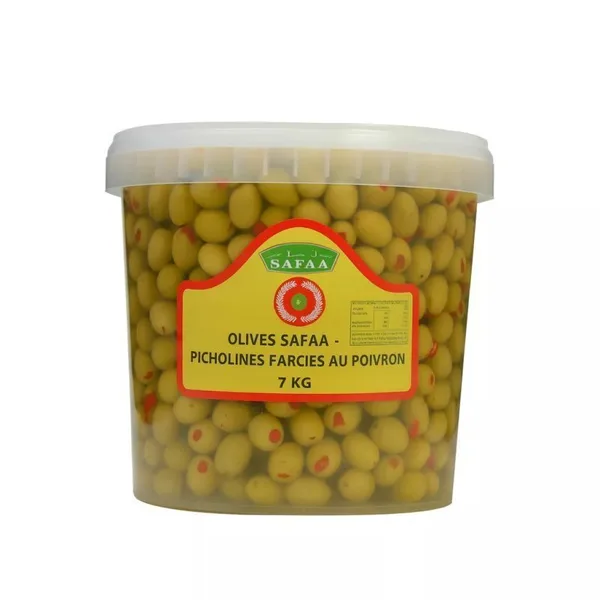
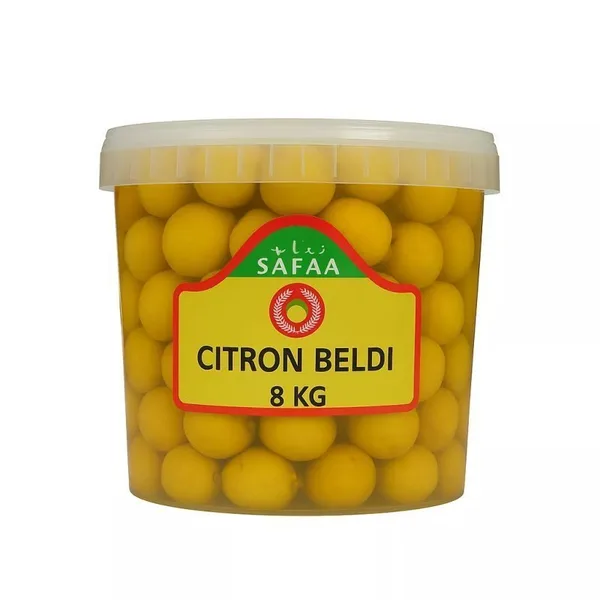
Picholine sits at the heart of the range, offered cracked plain, cracked with garlic, cracked spicy, pitted, pitted spicy and stuffed with pepper. Alongside it, the purple olive comes whole, pitted and slit, the green one in rings for pizza and salad, the black one Greek-style for slow-cooked dishes and platters. Beldi lemon and hot green peppers complete the assortment for Mediterranean and North African menus.
The standards governing international trade in table olives are published by the International Olive Council: the sector reference for the vocabulary of preparations and grades.
What each preparation changes in the kitchen
The table below gathers the main families in the Safaa range. It does not replace the product sheet, but it gives the angle that matters when composing an order: which preparation for which task.
| Preparation | What it saves in the kitchen | Main use |
|---|---|---|
| Cracked picholine (plain, garlic, spicy) | no seasoning needed, the flavour is already carried | aperitif, bar, platter |
| Pitted (green, purple, picholine) | pitting, the slowest station of all | pizza, salad, stuffing, tapenade |
| Slit purple | the incision that lets a marinade in | house marinade, platter |
| Green in rings | even knife slicing | pizza, sandwich bar, composed salad |
| Greek-style black | choosing an olive that holds up to cooking | tagine, slow-cooked dish |
| Stuffed with pepper | stuffing, impossible at volume | aperitif, skewer, buffet |
Two formats, two trades
Format is not a logistics detail: it decides who handles the olive and when. The Safaa range reads in two columns.
- The 6 to 8 kg pail: the container of the kitchen and the bar. Scoop, serve, close. It supplies the loose-goods aisle, the sandwich bar and continuous service.
- The pack of 6 units (280 to 400 g): the shelf format. The olive leaves as it is, with no repacking, in its own container and on its own rotation.
- The mix: nothing forces a choice. One establishment can work cracked picholine from the pail at the bar and display purple olives in small format on the stall.
In practice, service frequency usually settles it. An establishment serving small quantities throughout the day is better off with the pail, since each scoop only touches the container already open. One that replenishes a shelf once a week loses time repacking and is better served by the 6-unit pack.
Uses by trade
Here is how the range divides by activity, to be adjusted of course to each menu and clientele.
- Hospitality professional: cracked garlic picholine and pepper-stuffed olives for the bar aperitif, slit purple for tasting platters.
- Sandwich bar and pizzeria: green rings, ready to spread over dough or into bread, with no slicing time at the station.
- Caterer: pitted olives for tapenades, stuffings and savoury cakes, where a stone is unacceptable.
- World cuisine: Greek-style black and beldi lemon for tagines and North African menus, where the olive cooks with the dish.
- Neighbourhood grocer: the pail for the loose stall, the 6-unit packs for the self-service shelf.
Storage, covering liquid and rotation
Table olives keep in their covering liquid: it protects the fruit and maintains its texture. An opened pail must stay covered, closed again after each service and kept cool according to the instructions on the packaging. An olive left in the open loses its firmness within hours, long before any date becomes an issue.
For rotation, the rule is the same as across the rest of the grocery: first in, first out, with the opening date written on the pail. Across an assortment of six or eight preparations, that handwritten note is often the only information available at stocktaking.
We advise building the assortment around the task saved rather than the variety: a pitted olive saves an entire kitchen station, where a difference in variety will not show in a tapenade.— The Palimex team
Ordering from a B2B wholesaler
To size an order, look at the weekly consumption of each preparation rather than the total volume of olives. A menu that runs through green rings every day and stuffed olives only at weekends does not need equal quantities: it needs the right split.
An order mixes preparations and formats freely. Pails and packs travel together, by carton or pallet, and can be grouped with the other house brands on a single delivery. The site is reserved for professionals holding a company registration number.
- Meyva — dried fruit, blends and aperitif in pails and bags
- Wissal — pulses and seeds in cases
- All our brands