
Litige qualité sur un lot : de la réclamation à l'avoir
Building a valid quality claim file: batch, photos, deadlines. Fact-based B2B procedure through to credit note or replacement at Palimex.
A box of dehydrated apricots shows abnormal moisture upon receipt, a batch of dates arrives with crystallised fruits outside the specified size, a bag of cashew nuts reveals a higher-than-normal percentage of broken pieces: these situations are part of a food wholesaler’s daily operations, and Palimex handles them every day. This article details the fact-based procedure for compiling a valid quality claim file, from warehouse inspection to commercial resolution—return, credit note, or replacement.
Identifying a Quality Dispute on a Batch Before It’s Too Late
A quality dispute is characterised by a measurable discrepancy between what is stated on the purchase order or technical data sheet and what is actually delivered. This discrepancy must be identified quickly, ideally upon receipt, as the reporting deadline determines the claim’s validity.
- Size or grade discrepancy: a box labelled W320 containing a significant proportion of broken pieces or smaller sizes.
- Non-compliance in moisture or texture: softened dried fruits, early-stage mould, abnormal crystallisation on dehydrated fruits.
- Packaging defect: torn bag, crushed box, broken cold chain for sensitive products.
- Atypical odour or taste: rancidity in nuts, oxidation, presence of a foreign body.
- Best-before date discrepancy: product delivered with a best-before date too close to the receipt date to allow normal stock rotation in-store or in the kitchen.
These criteria are always assessed against the product’s technical data sheet, which specifies size, grade, and expected tolerances. For a reminder of the objective criteria to check, refer to our guide on how to read a technical data sheet before deeming a batch non-compliant.
Compiling the Claim File: Essential Documents
An incomplete file systematically delays the processing of a claim and may even jeopardise its outcome. Five elements must be gathered before any report, without exception.
- The batch number: found on the box, bag, or pallet label. Without this number, no traceability can be established on the supplier’s side.
- Dated photographs: taken on the day of receipt or inspection, showing the product, packaging, and, if possible, the batch number in the same shot.
- The affected quantity: number of boxes, kilos, or pallets impacted, distinct from the rest of the order if it included multiple SKUs.
- Retention of the disputed sample: do not discard or return the product before the file is closed. A representative sample must remain available for verification.
- Compliance with the reporting deadline: each type of non-conformity has a reasonable reporting window, shorter for defects visible upon receipt than for storage defects that appear after several weeks.
Retaining the sample requires appropriate storage conditions: a poorly stored dried fruit may develop alterations unrelated to the original dispute, complicating the analysis. Our article on storing dried fruits details the temperatures and humidity levels to maintain while awaiting file closure.
At Palimex, we find that most unresolved claims fail not because the product was not defective, but because the batch number was not recorded before the box was emptied or repackaged. Our field advice: upon receipt, before even storing the goods, systematically photograph the batch label on each pallet. This habit, which takes a few seconds, makes all the difference when a report becomes necessary.
The B2B Quality Claim Processing Workflow
Once the file is compiled, the report follows a structured workflow to objectify the dispute and reach a decision. This workflow applies regardless of the product range—dried fruits, olives, spices, or dehydrated fruits.
| Step | Expected Action | Indicative Lead Time |
|---|---|---|
| Initial Inspection | Dated photographs, isolation of the affected batch, recording of the batch number | On the day of receipt or inspection |
| Reporting | Submission of the file via email to shop.meyva@palimex.fr with attachments | As soon as possible after inspection |
| Acknowledgement of Receipt | Confirmation of file acceptance by Palimex | Varies based on processing volume |
| File Analysis | Verification of batch traceability, cross-check with retained sample | Depends on file complexity |
| Decision | Return, credit note, or replacement, notified to the professional client | Upon completion of analysis |
This table summarises the key steps, but each file is reviewed individually: the product type, order volume, and purchase frequency may influence how the file is processed.
Return, Credit Note, or Replacement: Understanding Possible Outcomes
Three outcomes are possible following the analysis of a file. None are automatic: they depend on the nature of the dispute, product availability, and the client’s logistical setup.
- Return: the non-compliant batch is collected, typically during a future delivery or via a dedicated pickup for large volumes.
- Credit Note: a commercial credit note is issued, deductible from a future order, corresponding to the quantity recognised as non-compliant.
- Replacement: the defective batch is exchanged for a compliant batch of the same SKU, subject to stock availability at the time of processing.
For clients ordering full pallets, the return or replacement logistics align with standard delivery conditions. The terms for free delivery and pallet shipping are detailed in our guide on Free Delivery and Pallet Shipping, useful for planning batch exchanges without disrupting in-store rotation.
Anticipating Quality Disputes by Product Category
Certain product ranges have specific points of vigilance due to their sensitivity to moisture, light, or storage duration. Knowing these in advance reduces the risk of disputes and simplifies file compilation if an issue arises nonetheless.
- Dried fruits and nuts: almonds and other nuts are prone to rancidity if stock rotation is too slow or storage conditions are poorly ventilated. An olfactory check upon receipt minimises unpleasant surprises.
- Dates and soft fruits: crystallisation or premature drying may indicate an original packaging defect rather than a client-side storage issue. Our guide on storing Medjool dates helps distinguish between the two.
- Olives and tapenades: the brine must remain homogeneous; abnormal cloudiness or unusual sediment justifies a dated photograph before using the product.
- Bulk spices: loss of aroma or dull colour compared to a previous batch may stem from a batch defect rather than normal ageing.
To objectify a size discrepancy, particularly for products like cashew nuts, comparing grades often verifies whether the received product truly matches the order. Our comparison of cashew nuts W320 vs W240 details the criteria for distinguishing between grades.
Best Practices to Reduce Quality Dispute Frequency
Beyond curative dispute resolution, certain internal practices limit the number of files to open and speed up their resolution when they occur nonetheless.
- Train receiving staff to systematically verify the batch number and visual condition of packaging before signing the delivery note.
- Retain a dated control sample of each received batch, stored separately, for the entire duration of the batch’s use in the kitchen or on the shelf.
- Adhere to the storage conditions specific to each product category, particularly for sugar-rich dehydrated fruits sensitive to ambient humidity.
- Document every anomaly, even minor ones, including those that do not immediately lead to a claim: this history facilitates identifying recurring issues with a given SKU.
- Verify consistency between the delivery note and the actual pallet contents before storing the goods in the warehouse.
For a concrete example of vigilance with one of the most storage-sensitive products, see our article on dehydrated apricots, whose residual moisture must be monitored upon receipt to prevent mould development in stock.
What Palimex Expects from a Valid Claim File
A well-structured file significantly accelerates dispute processing. This section summarises the minimum requirements before submission.
| Required Element | Why It’s Essential |
|---|---|
| Legible batch number | Enables traceability back to the original supplier |
| Dated photographs | Objectifies the inspection at the exact time of receipt or discovery |
| Precise affected quantity | Avoids any ambiguity regarding the claim’s scope |
| Sample retained under proper conditions | Allows physical verification if necessary |
| Reporting within a reasonable timeframe | Determines the file’s validity |
A file sent to shop.meyva@palimex.fr with these five elements is typically processed without additional back-and-forth, speeding up the final decision, whatever it may be.
Summary: From Claim to Credit Note, a Procedural Approach
A quality dispute on a batch is not resolved through a simple verbal complaint or vague email: it requires a methodical approach. Recording the batch number upon receipt, taking dated photographs, precisely quantifying the affected amount, retaining a sample under proper conditions, and prompt reporting form the essential foundation of any valid file. The subsequent processing workflow—reporting, acknowledgement of receipt, analysis, decision—leads to one of three possible outcomes: return, credit note, or replacement, depending on the product type and stock availability. Anticipating these situations by training receiving teams and systematically documenting anomalies, even minor ones, remains the best way to limit dispute frequency and expedite resolution when they occur.
Frequently asked questions
Everything you need to know about this topic.
A question?
Get in touch directly.

Marketing & Communications Manager — Palimex / Meyva
As Marketing & Communications Manager at Palimex / Meyva, Aude Moyne leads the company's communications and digital marketing strategy: editorial content, email campaigns and the promotion of its product ranges. Her experience at Palimex, a specialist in dried fruit, nuts, olives and spices for professionals, has given her in-depth knowledge of the products, their origins and uses, and the expectations of food-industry professionals. The blog articles are written or supervised by her, in collaboration with Palimex's sales and product teams whenever a topic calls for specific expertise.
Our advice related to Pro-tips
 pro-tips
Lot Inspection: How to Build a Representative Sample
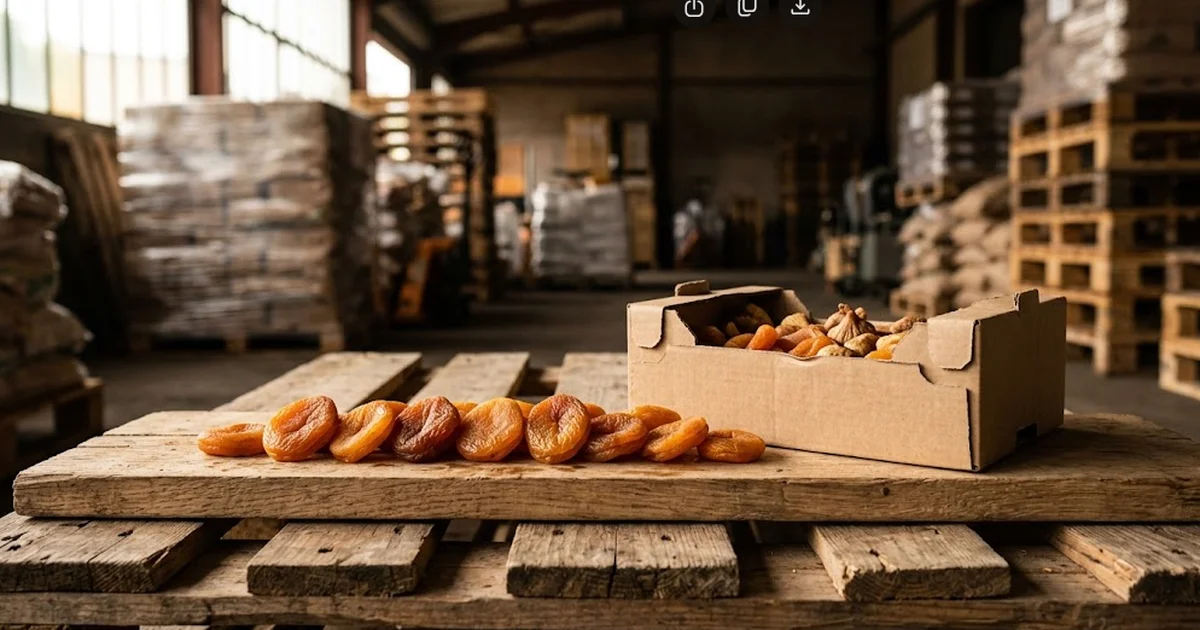
Receiving a pallet: how many samples, how to distribute them, and which checkpoints to use for inspecting a lot of nuts, spices, or olives without opening everything.
 pro-tips
Shrinkage and Breakage: Measuring Bulk Aisle Losses
Breakage, dehydration, sampling, weighing errors: the Palimex method to measure each bulk B2B loss item and adjust your pricing without guesswork.
 pro-tips
Cycle Counting: Counting Without Halting B2B Operations
Cycle counting method for grocery and foodservice: segmentation by product family, frequency based on turnover, acceptable discrepancies, and handling recurring variances.