
Available products
5 references

Looking for a wholesale dried fruit supplier?
I'm Jessica, your dedicated wholesale account manager.
Direct sourcing — Rungis and Bordeaux.
- ✓Direct sourcing from producers
- ✓Quality controlled (shelf-life, calibre, origin)
- ✓Next-day delivery in Île-de-France
- ✓Bulk, custom packaging, co-packing
- ✓B2B account with pricing tiers
Shipping & pickup
Rungis pickup
Pick up your order at our Rungis market depot. By appointment Monday through Friday.
Nationwide delivery
Delivery within mainland France and major European cities. Indicative lead time 24-48h.
Careful packaging
Reinforced cardboard, anti-shock padding, traceability labels.
Frequently asked questions
About this category
The most expensive line in the range, and the most fragile
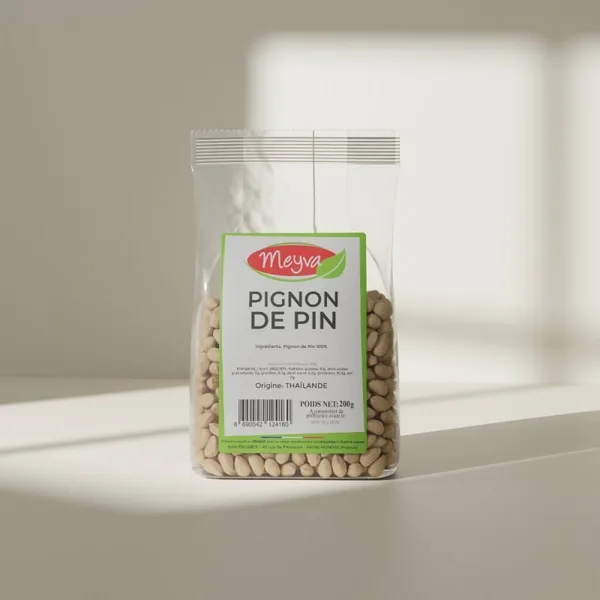
Pine nuts hold a place of their own at a wholesaler. Their price per kilo puts them beyond comparison with other nuts, which completely changes the buying logic: you are not optimising price per kilo, you are trying not to lose any. At Palimex, a food wholesaler since 1984, this is the reference where customer questions are more often about storage than about price.
The reason is physiological: the pine nut has a very high fat content. That richness gives it its melting texture and characteristic resinous taste, but it also makes it unusually prone to oxidation. A rancid pine nut cannot be rescued: it goes in the bin, and on this product that loss shows up immediately in the accounts.
China or Spain: two profiles, two uses
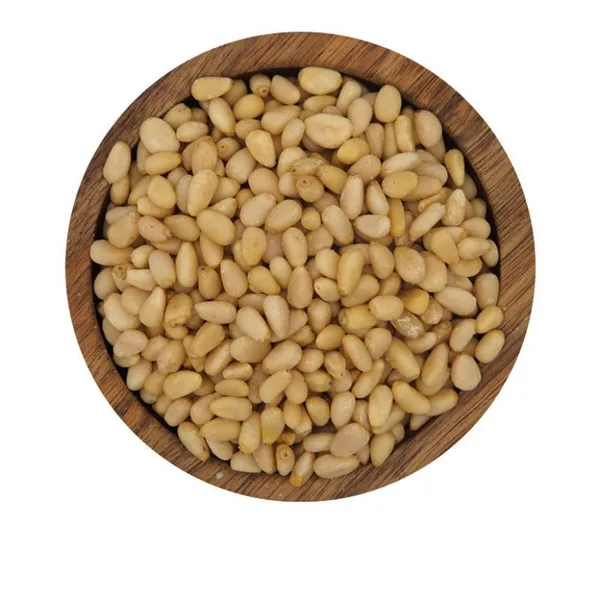
The two origins stocked are not freely interchangeable. They differ visibly in shape and grade, and on the palate in intensity.
| Origin | Visual marker | Packs | Preferred use |
|---|---|---|---|
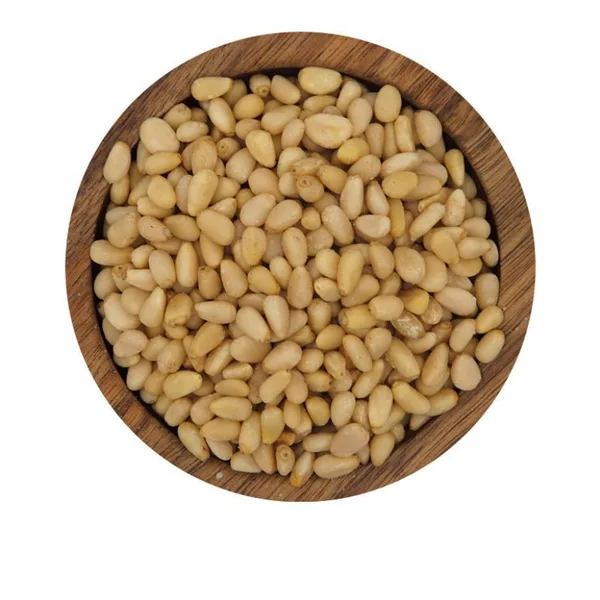
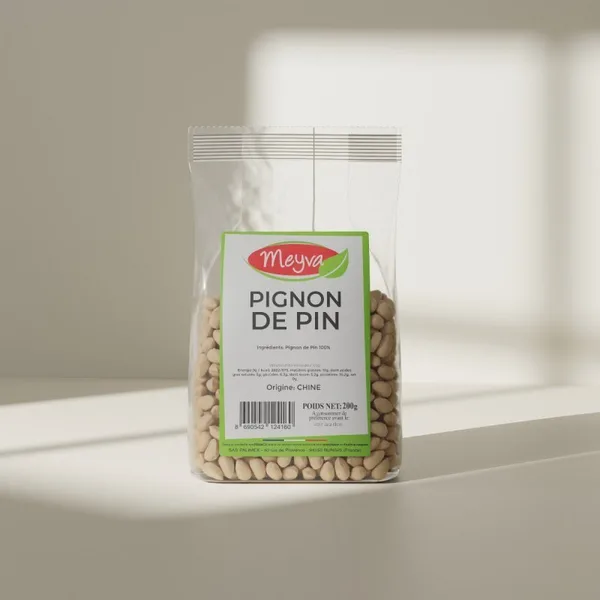
| China | Shorter, stockier kernel | 10x1 kg, 5 kg pail, 12x175 g | Volume: tagines, stuffings, salads, roasting |
| Spain | Long slim kernel, Mediterranean profile | 12x175 g | Visible finish: pesto, plating, fine pastry |
The rule we give customers is simple: when the pine nut is seen, origin matters; when it disappears into a mix, it matters less. In a stuffing or a tagine, where the nut is buried in a preparation, the volume format is the right call. On a pesto made to order or a tart where kernels are placed one by one, the long grain makes a difference the end customer notices.
This is the reference where we see the most avoidable waste. A restaurant orders a 10 kg carton because the price per kilo looks better, uses three in two months, and throws the rest away in spring because the taste has turned. On pine nuts, the right reflex is the opposite of the rest of the range: buy small and buy often.
Uses by trade
- Mediterranean cooking: pesto made to order, where the pine nut provides the binding and the fat — kernel quality reads directly there.
- North African and Middle Eastern cooking: tagines, poultry stuffings, scented rice, honey pastries, where the nut is often roasted before use.
- Pastry: tarts, biscuits, crumble and cream finishes, where kernels are placed on the surface before baking.
- Caterers and cold station: composed salads and roasted vegetables, added at plating to stay crisp.
- Fine grocers: 12x175 g shelf-ready, a format suited to a product whose unit price discourages large retail volumes.
Roasting: the step that changes everything
Raw pine nuts taste discreet; roasted, they develop a far more pronounced resinous, buttery note. Most professionals take them dry, in a pan or a low oven, for a few minutes only and under constant watch: their fat content takes them from golden to burnt in seconds.
Controlled roasting also gets more out of a volume format: Chinese-origin nuts roasted on site gain aromatic presence and come closer to the expected result in preparations where taste matters more than shape.
Storage, cold and rotation
This is the heart of the matter on this product. Three measures cover the essentials:
- Resealed, opaque container after each use — the 5 kg resealable pail is built for this; an open carton protects nothing.
- Cold storage for stocks held beyond a few weeks — the single most effective measure for a nut this rich in fat.
- First-in, first-out rotation with the opening date written on — on pine nuts it is never the best-before date that decides, it is oxidation.
The check is done by nose, not by eye: a turned pine nut keeps its cream colour but gives off a smell of paint or old oil. Smell one kernel before committing to a service; it takes two seconds and saves sending out a failed dish.
Traceability and lot control
Like all nuts, pine nuts are covered by European monitoring of contaminants and the maximum levels applicable to foodstuffs. The framework and the Commission's work on the subject are available on European Commission — contaminants in food. Every lot delivered carries its origin identification, so the chain can be traced back in the event of a claim or an inspection.
Ordering your wholesale pine nuts
Trade prices display once your account is approved, the site being reserved for registered businesses. Minimum pack size is 5 kg and delivery is by pallet, carriage paid above the threshold. Given how sensitive the product is, we recommend splitting pine nut orders rather than building a stock — and completing the pallet with more stable references from the wholesale dried fruit range to reach the threshold.