

Available products
3 references
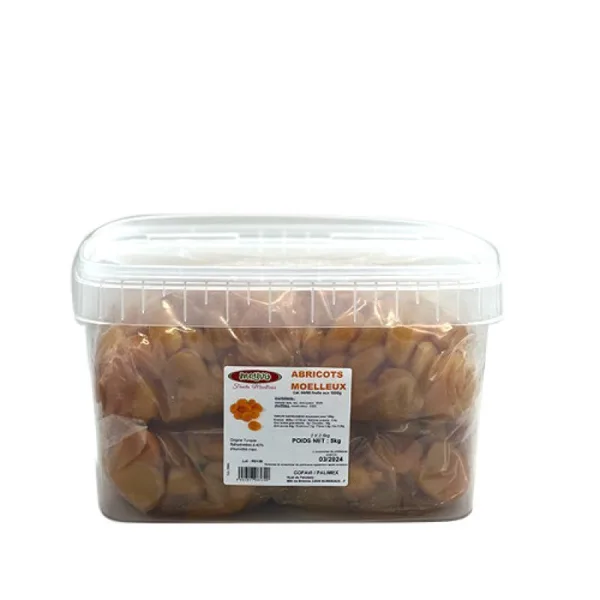
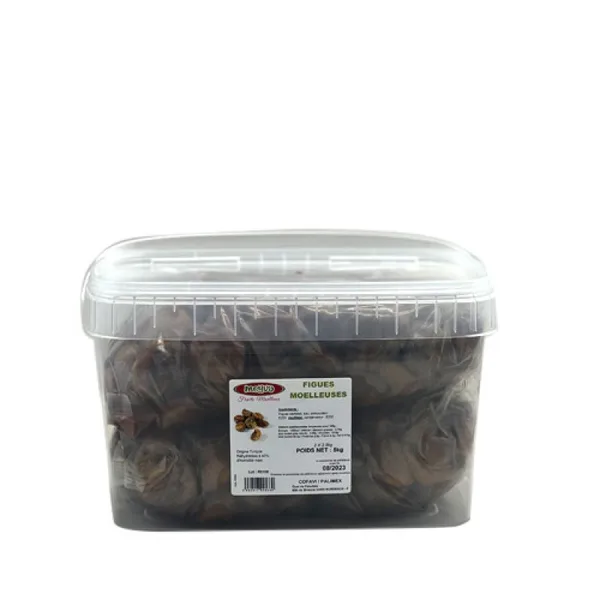
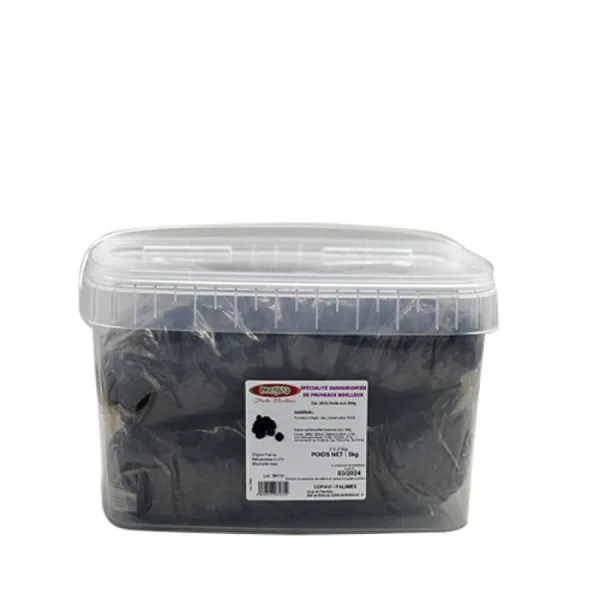

Looking for a wholesale dried fruit supplier?
I'm Jessica, your dedicated wholesale account manager.
Direct sourcing — Rungis and Bordeaux.
- ✓Direct sourcing from producers
- ✓Quality controlled (shelf-life, calibre, origin)
- ✓Next-day delivery in Île-de-France
- ✓Bulk, custom packaging, co-packing
- ✓B2B account with pricing tiers
Shipping & pickup
Rungis pickup
Pick up your order at our Rungis market depot. By appointment Monday through Friday.
Nationwide delivery
Delivery within mainland France and major European cities. Indicative lead time 24-48h.
Careful packaging
Reinforced cardboard, anti-shock padding, traceability labels.
Frequently asked questions
About this category
What "soft" means, and what it changes
Soft dried fruit is not a different fruit: it is the same fruit dried less far. Where traditional dried fruit goes low in residual moisture to keep for a long time, the soft version stops higher — 42% on our prune, a figure stated on the reference itself. Every difference in use follows from that single parameter.
The most immediate consequence is time saved in production. A dried prune destined for a stuffing or a custard tart needs soaking or pre-cooking; the soft version goes straight into the preparation. During service that removes a step, a container and a thing to watch. The second consequence is less comfortable: more water means more demanding storage, and that is the real subject of this range.
Palimex, a food wholesaler since 1984, has chosen to keep the soft range to French-origin references rather than multiply sources. On a product where freshness of manufacture matters this much, a short supply chain is a keeping-quality argument before it is a commercial one.
The range and its grades
| Fruit | Grade | Origin | Pack | Preferred use |
|---|---|---|---|---|
| Soft prune | 28/33 — 42% moisture | France | 5 kg carton | Custard tarts, stuffings, rabbit with prunes, platters |
| Soft fig | N3 | France | 5 kg carton | Cheese boards, tarts, savoury cooking |
| Large soft apricot | Large | France | 5 kg carton | Pastry, tagines, visible garnish |
Two notations worth knowing. The prune's 28/33 grade gives the number of fruits in 500 grams: the lower the figure, the larger the fruit. A 28/33 is a comfortable grade, fleshy enough to be served whole. The fig's N3 grade follows a different scale specific to dried figs and denotes a medium to large fruit, suited to presentation.
The calculation few buyers make: on a service where you rehydrate three kilos of dried prunes, count the station time, the container tied up and the space in the chiller. Against that, the price gap of the soft version often disappears. Conversely, if your recipe already cooks the fruit in syrup, you are paying for water the cooking would have added for free.
When to choose soft over dried
The decision is made recipe by recipe. Soft fruit wins in three cases:
- The fruit is served as it is — cheese board, petit four, buffet, tasting plate: tenderness is perceived directly by the customer.
- The fruit goes in raw — stuffing, fruit bread, a mix that is not cooked long: soft fruit keeps its texture where dried would stay firm.
- Station time is tight — in service, removing a soaking step is often worth more than the difference in material cost.
Conversely, keep traditional dried fruit for compotes, long syrup cooking and any preparation where the fruit will be rehydrated regardless. The dedicated sections answer those uses with a far wider choice of grades and origins across the wholesale dried fruit range.
Storage: the critical point
This is where soft fruit demands discipline. A higher water content makes it more sensitive than conventional dried fruit to two distinct risks. The first is mechanical: the fruits stick together and form a block in a carton left in the warm, making portioning impossible without damaging them. The second is sanitary: any badly stored intermediate-moisture product becomes a more favourable ground for spoilage than a very dry one.
The handling rule is simple but not negotiable: a cool, dry store, carton resealed or fruit transferred to a covered food-grade bin on opening, opening date written on, and strict first-in first-out rotation. Unlike conventional dried fruit, where a forgotten lot mainly loses texture, badly stored soft fruit has to be inspected and discarded. For stock held several weeks, chilled storage is the best guarantee.
Technical sheet, additives and lot control
On dried fruit, two points always appear in a well-kept food-safety plan: the possible presence of preservative additives, which is a labelling matter and is read on the reference's technical sheet, and the monitoring of mycotoxins, natural contaminants for which dried fruit is subject to particular surveillance. The reference work on the subject is published by the French agency for food safety: ANSES — mycotoxins.
In practice, request the technical sheet before the first order and keep it with the lot number. That is what lets you answer an inspection, and equally a trade customer asking about the composition of a dessert.
Ordering your wholesale soft dried fruit
Trade prices display once your account is approved, the site being reserved for registered businesses. Minimum pack size is 5 kg, which here is the single carton, and delivery is by pallet, carriage paid above the threshold. Given how sensitive the product is, we advise ordering close to actual need rather than building a stock, and completing the pallet with more stable references from the wholesale dried fruit range.