

Available products
24 references

Looking for a wholesale dried fruit supplier?
I'm Jessica, your dedicated wholesale account manager.
Direct sourcing — Rungis and Bordeaux.
- ✓Direct sourcing from producers
- ✓Quality controlled (shelf-life, calibre, origin)
- ✓Next-day delivery in Île-de-France
- ✓Bulk, custom packaging, co-packing
- ✓B2B account with pricing tiers
Shipping & pickup
Rungis pickup
Pick up your order at our Rungis market depot. By appointment Monday through Friday.
Nationwide delivery
Delivery within mainland France and major European cities. Indicative lead time 24-48h.
Careful packaging
Reinforced cardboard, anti-shock padding, traceability labels.
Frequently asked questions
About this category
Wholesale pepper: colour is not a flavour, it is a stage
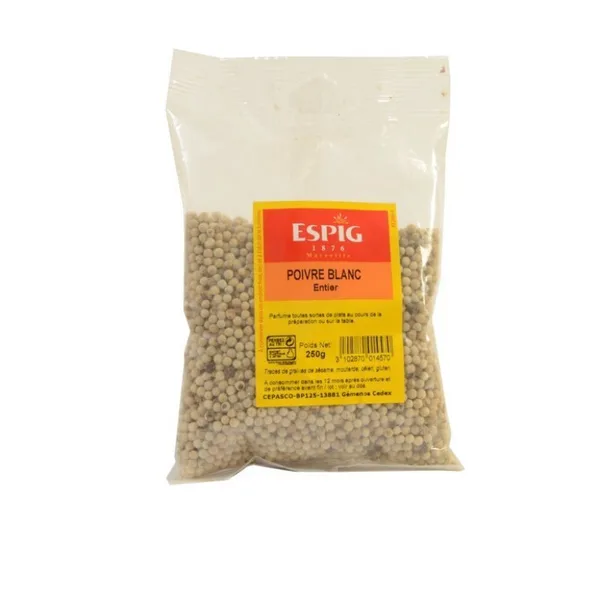
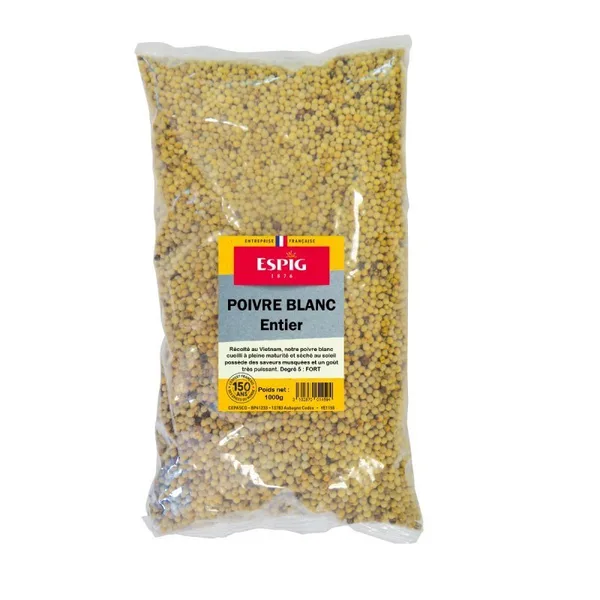
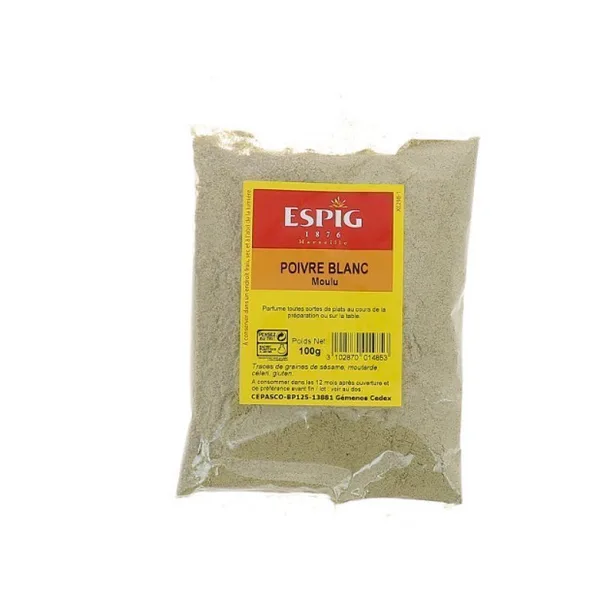
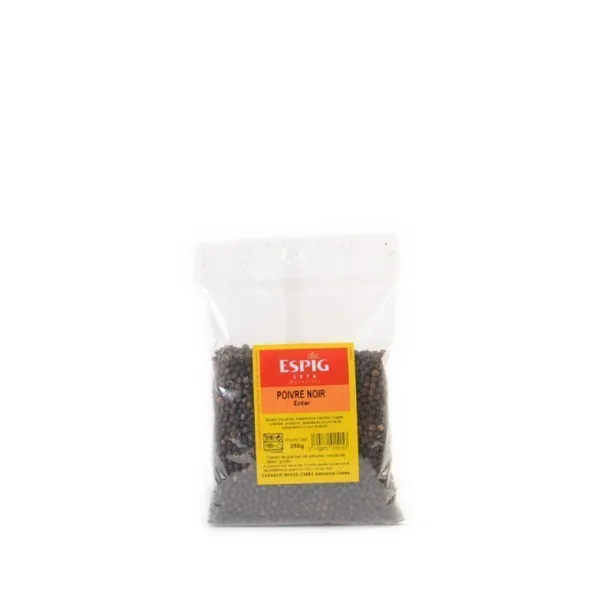
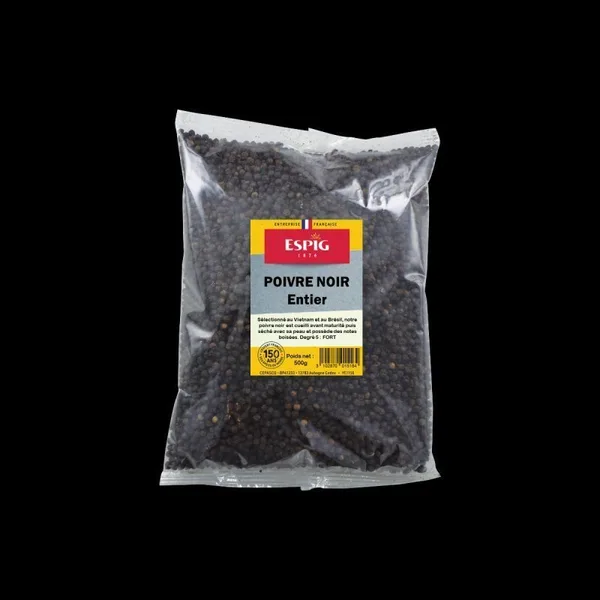
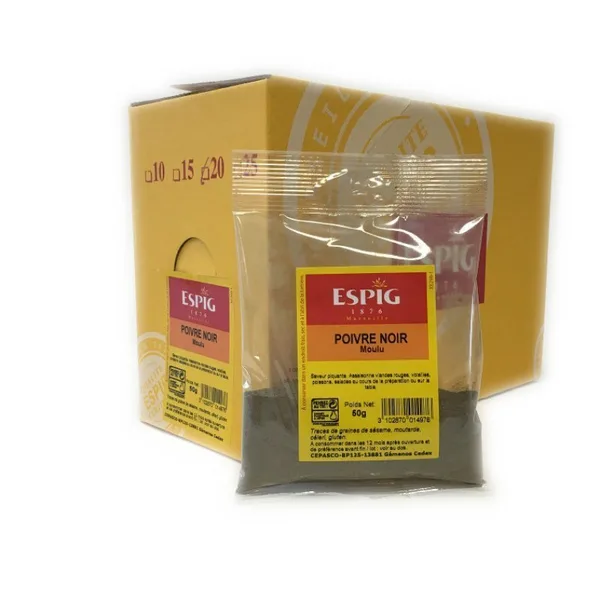
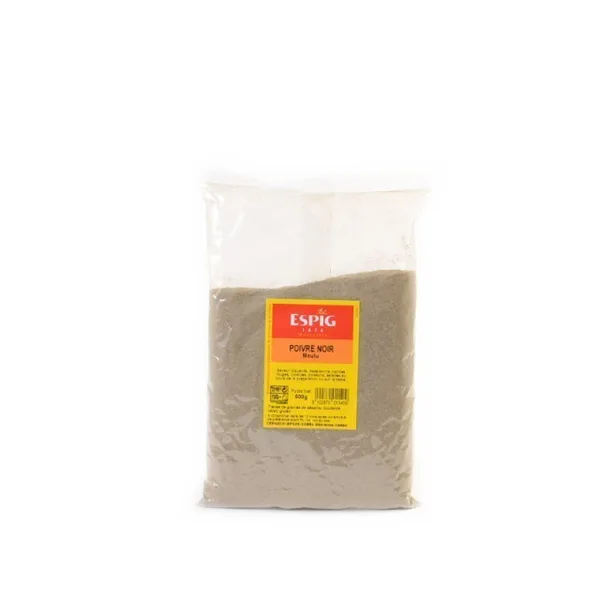
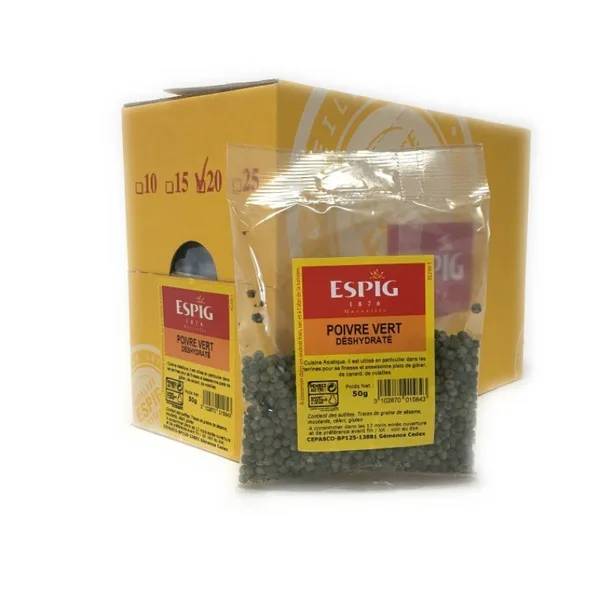
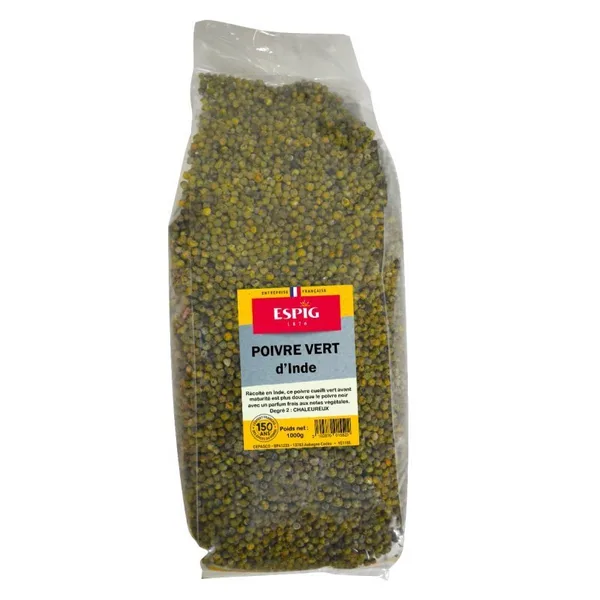
Facing a wholesale pepper aisle, a buyer thinks the choice is between three flavours. It is in fact between three states of the same berry: black is the whole berry dried with its skin, white is the same berry with that skin removed, green is picked before maturity and then dehydrated. A food wholesaler since 1984, Palimex lists this aisle under the Epika and Espig labels, from the 20x50 g case to the 1 kg bag.
That difference of state governs everything else. The skin carries the bite and a good share of the aroma: removing it does not make the pepper milder by accident, it takes away what stung. And it changes how the pepper looks, which is often the real reason for the choice in a professional kitchen.
Black, white, green: where each one goes
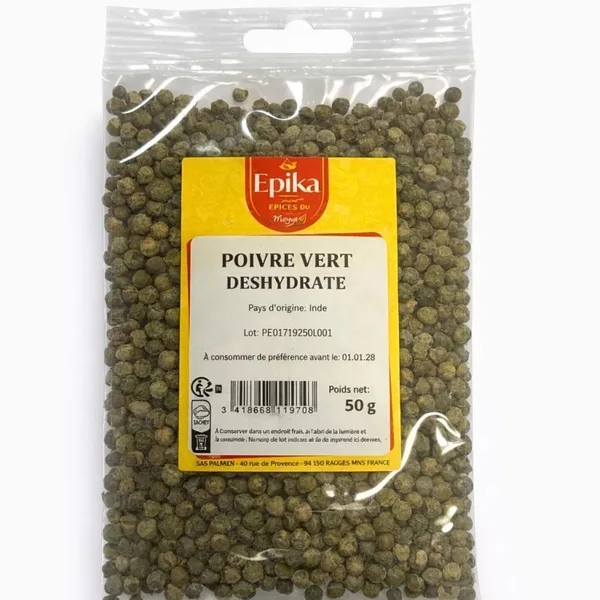
Black pepper is the everyday one: it gives bite, it shows, and being visible is part of its job on a meat or a salad. White pepper exists first for the opposite reason — not to show. In a pale sauce, a purée, a blanquette, a poached fish, the black speck reads as a blemish; white puts pepper in without putting marks in. Dehydrated green pepper keeps a vegetal character the other two lost in full drying; it is often used whole, in a sauce or a terrine, where it is met under the tooth.
| Type | What it brings | Where to use it |
|---|---|---|
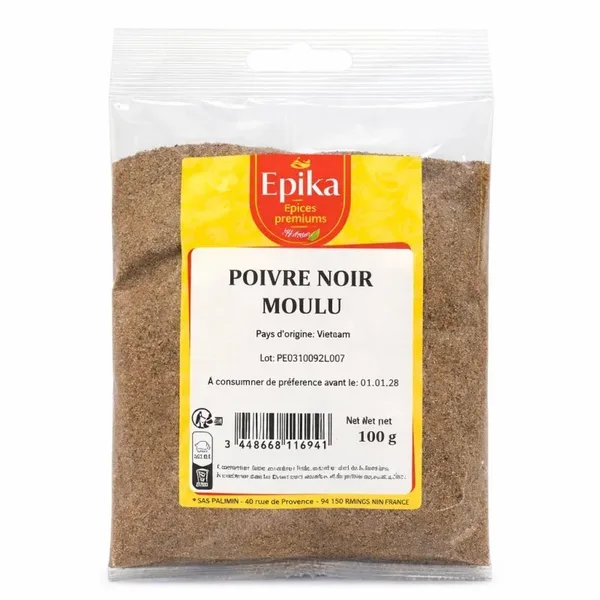
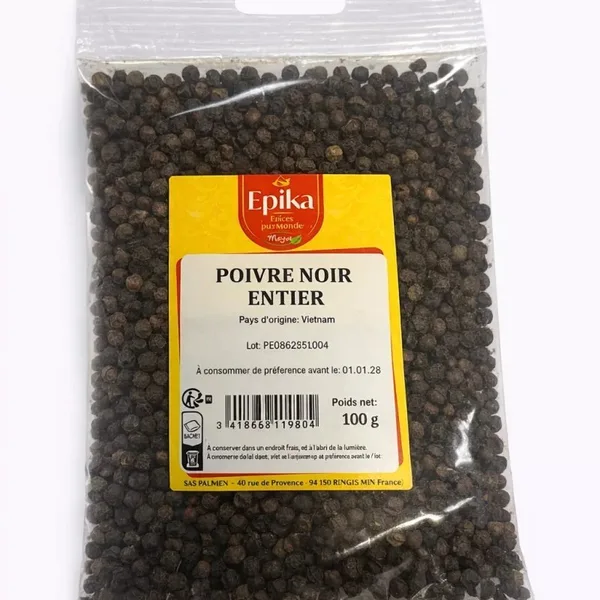
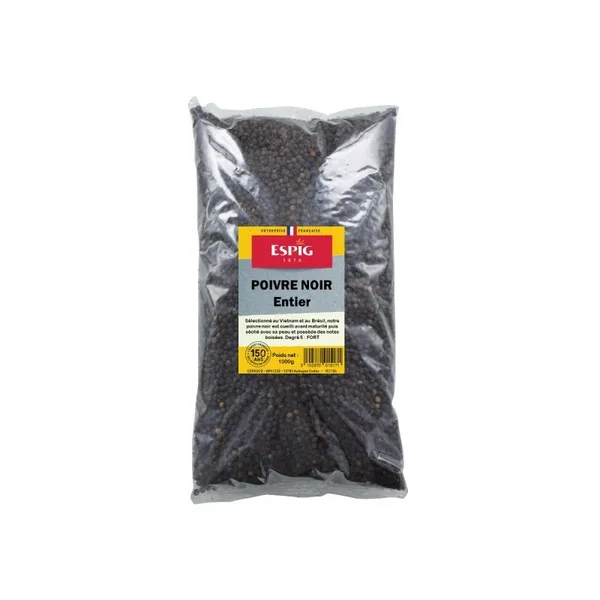
| Black, whole or ground | Clean bite, full aroma, visible presence | Meats, grills, daily specials, salads, general use |
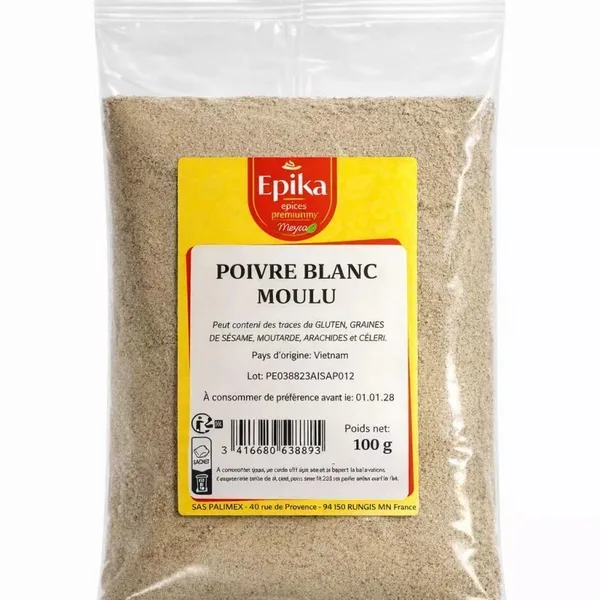
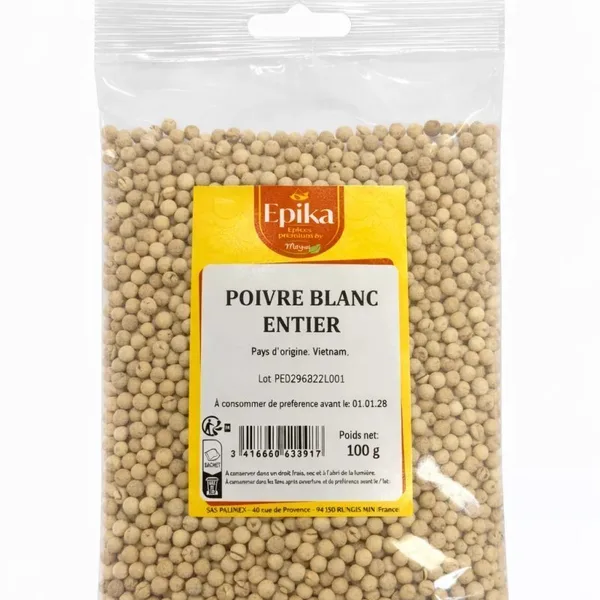
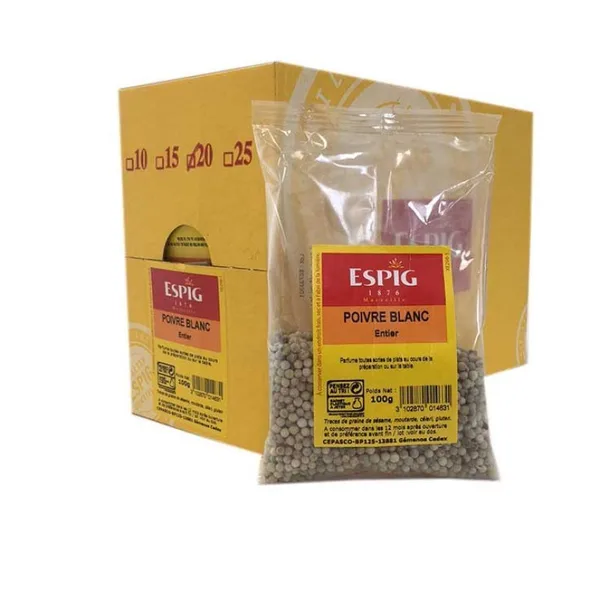
| White, whole or ground | Pepper without the black speck; shorter attack | Pale sauces, purées, blanquettes, fish, smooth preparations |
| Dehydrated green | Vegetal character, a berry that stays whole | Green pepper sauces, terrines, charcuterie, marinades |
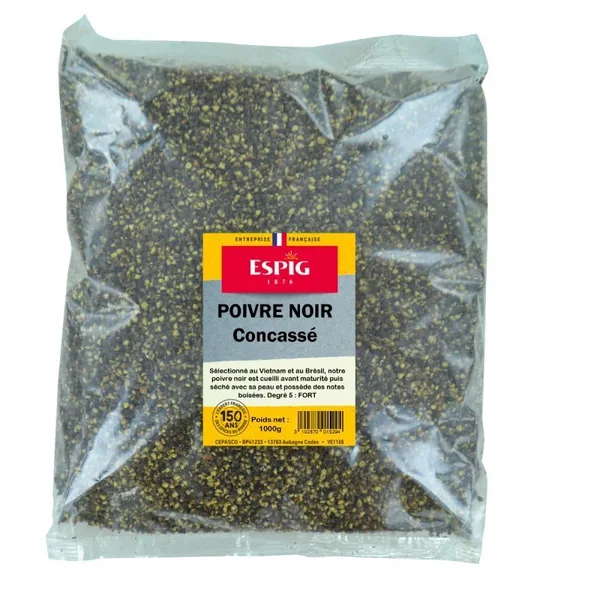
| Cracked black | Grain under the tooth, slow release | Steak au poivre, marinades, crusts, finishing |
Whole, cracked, ground: form is a clock
Pepper is the spice whose moment of grinding is debated most, and for good reason: the whole berry keeps its aroma locked in, the powder lets it go. Ground pepper is not worse than whole pepper; it is simply further along its clock, and it has to be ordered accordingly.
The buying logic follows directly:
- Whole — black, white, green — for stations that grind their own and for stock that turns slowly. It is the form that waits.
- Cracked, carried in black in the 1 kg bag, for anything calling for visible grain and slow release: crusts, marinades, grills.
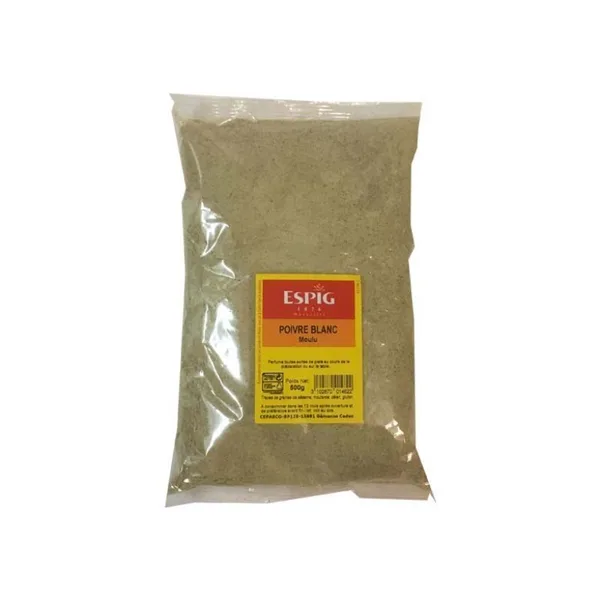
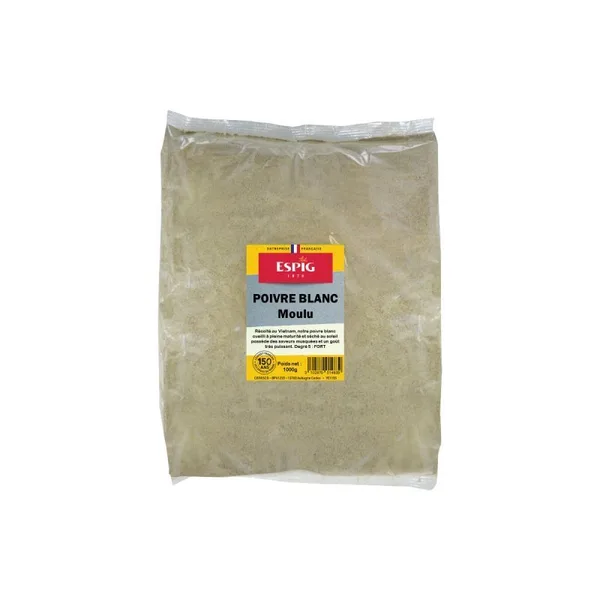
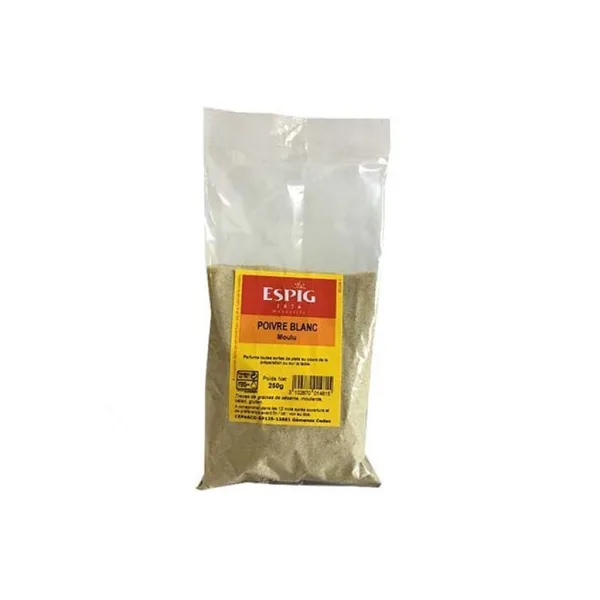
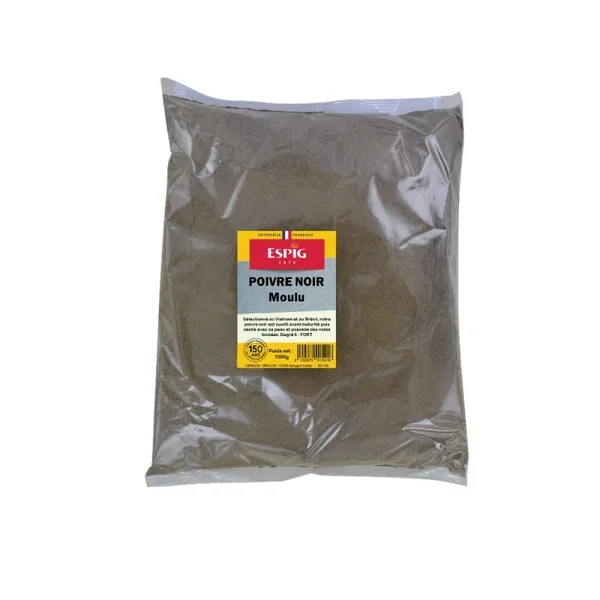
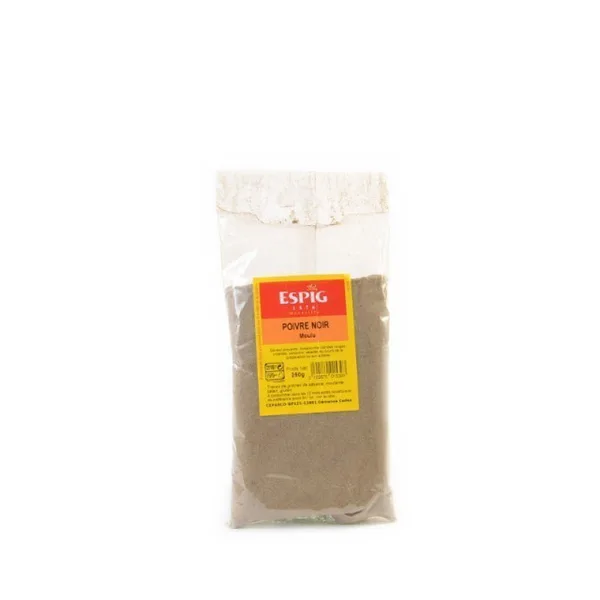
- Ground — black and white, under both labels — for services that cannot grind to order, and for shelf stock in a delicatessen.
- The 100 g case of units when consumption is irregular: each unit stays sealed until opened, which resets the clock at every unit.
A well-balanced establishment often orders both: whole for stations that have a mill, ground for those that do not. It is a question of organisation, not of quality.
Long pepper and cubeb pepper
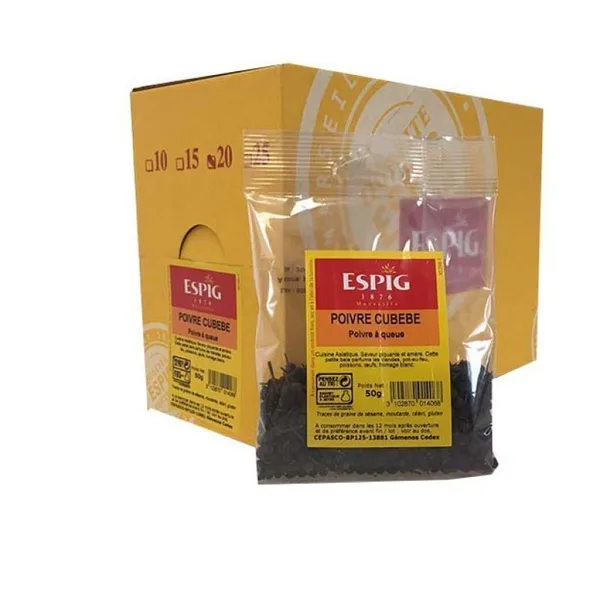
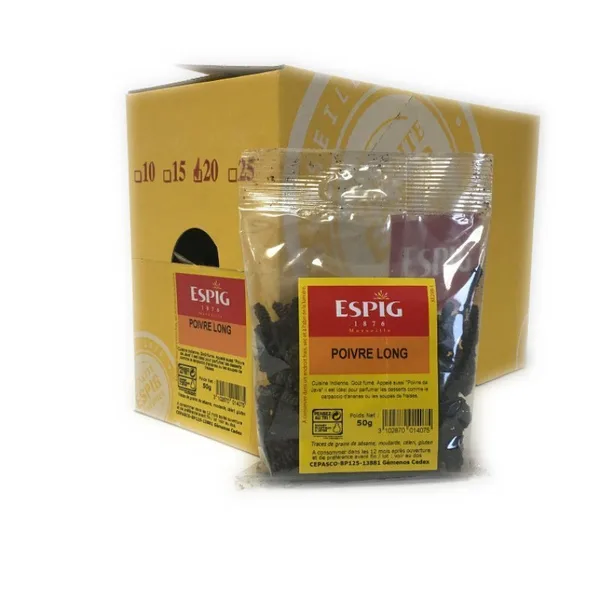
Two references in the aisle are not that berry, and it is worth knowing before ordering. Whole long pepper comes as a spike rather than a grain: it is grated or crushed, and will not go through an ordinary mill. Cubeb pepper, recognisable by the stalk left attached, carries a woodier and more bitter profile and is used in small amounts. These are signature peppers, for preparations where they will be noticed. They do not replace black on a production station. And for sheer heat, this is not the aisle: that is our wholesale chilli, whose burn has nothing to do with the bite of pepper.
Pack sizes, and the rhythm they assume
The aisle runs to five pack sizes, and the choice turns on rate of consumption rather than price per kilo: the 20x50 g case for peppers used in small touches — dehydrated green, long, cubeb; the 20x100 g case for black and white across several stations or for shelf stock; the 250 g, 500 g and 1 kg bags for steady production. An opened kilo of ground pepper started in February will have little left to say by June; a kilo of whole berries will.
Dosing, storing, and knowing what is regulated
The method we recommend comes down to four points:
- Pepper at the end of cooking when aroma is wanted, at the start when depth is: prolonged heat erases the nose and leaves the bite.
- Choose the colour on what the dish must show, not only on what it must taste of.
- Keep cracked pepper for surfaces — crusts, marinades, grills — where the grain plays a textural part.
- Record the gram weight on the recipe sheet as soon as it satisfies, station by station.
In the storeroom, pepper follows the rules of dry goods: an opaque, resealed container, away from the heat of the ranges, first in first out, batch number and best-before date kept until the pack is finished. One point is worth a professional buyer's attention: dried herbs and spices are among the few foods for which the European Union regulates treatment by irradiation, with a compulsory mention on the label where it has been applied. Knowing that this framework exists, and reading labels accordingly, is part of the trade.
Our view as a wholesaler
White pepper is not a pepper for delicate palates: it is a pepper for pale plates. The day a chef grasps that it is bought for visual reasons as much as for taste, they stop hesitating between the two and order both.
Our teams work daily with restaurateurs, caterers, butchers and delicatessens buying in bulk. We would rather offer an aisle that explains itself — three states, four forms, five pack sizes — than a wall of references in which the buyer no longer knows what is being compared. When you want a seasoning already balanced rather than a single pepper, our wholesale spice blends take over. Find the whole aisle at your wholesale spice supplier, and request your trade price: our bulk terms apply from the first tier, with pallet delivery and carriage paid depending on order value.