

Available products
8 references

Looking for a wholesale dried fruit supplier?
I'm Jessica, your dedicated wholesale account manager.
Direct sourcing — Rungis and Bordeaux.
- ✓Direct sourcing from producers
- ✓Quality controlled (shelf-life, calibre, origin)
- ✓Next-day delivery in Île-de-France
- ✓Bulk, custom packaging, co-packing
- ✓B2B account with pricing tiers
Shipping & pickup
Rungis pickup
Pick up your order at our Rungis market depot. By appointment Monday through Friday.
Nationwide delivery
Delivery within mainland France and major European cities. Indicative lead time 24-48h.
Careful packaging
Reinforced cardboard, anti-shock padding, traceability labels.
Frequently asked questions
About this category
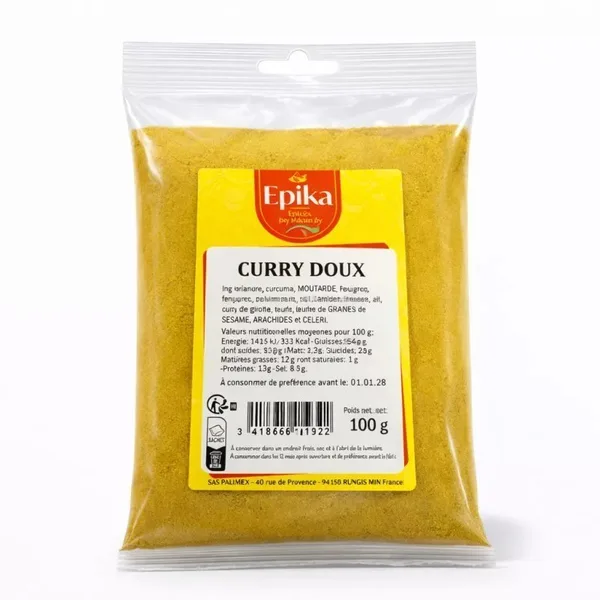
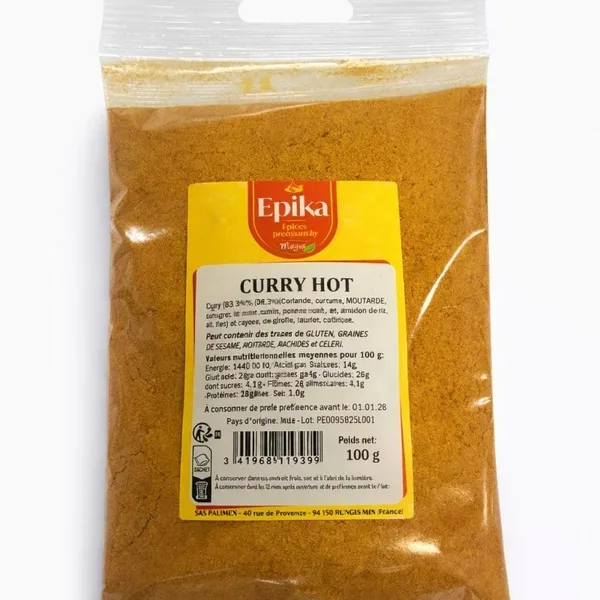
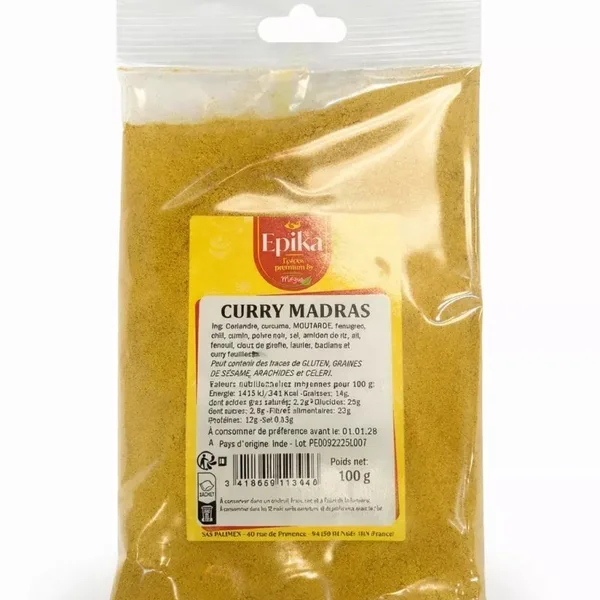
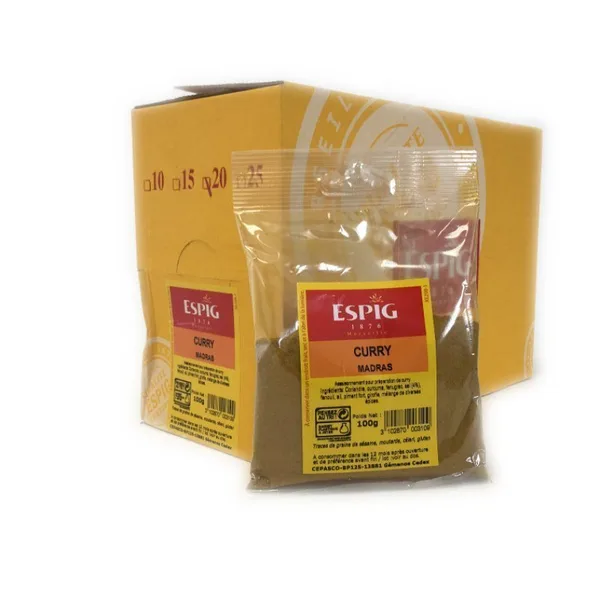
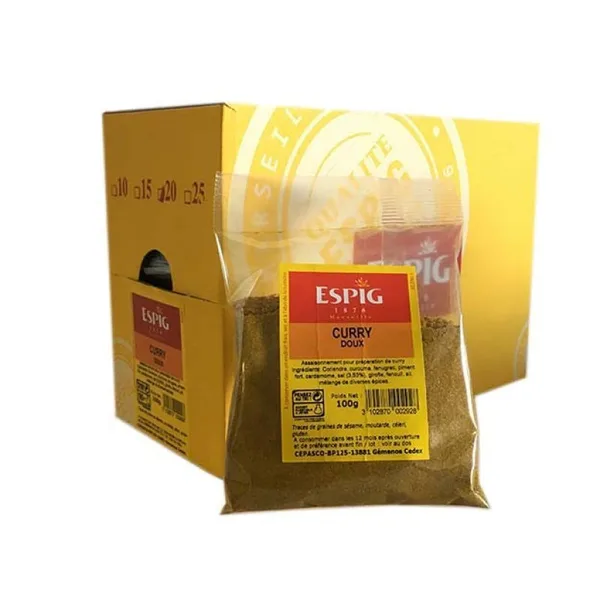
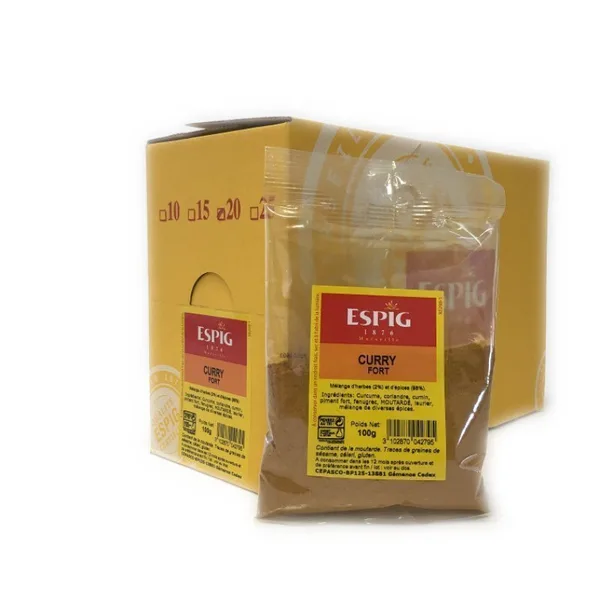
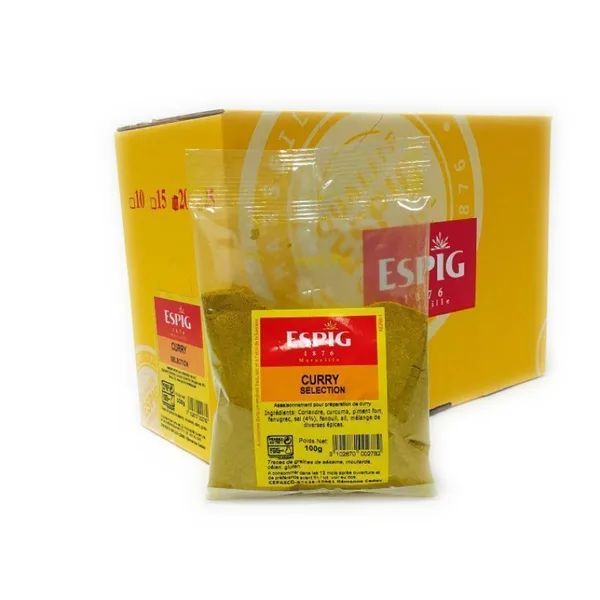
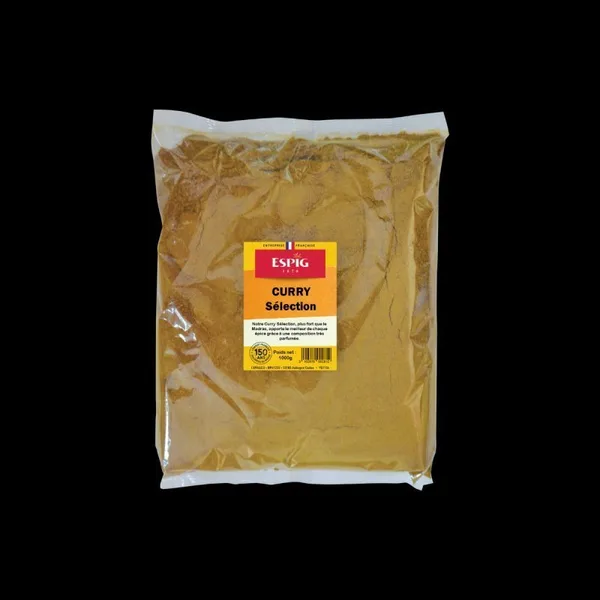
Wholesale curry powder, four profiles in the catalogue
Wholesale curry powder is not a spice: it is a blend, and two curries carrying the same name will not give you the same dish. That is why our aisle offers four distinct profiles under the Epika and Espig labels — mild, hot, Madras and Selection — rather than a single reference meant to suit everybody. A food wholesaler since 1984, we know that a chef chooses a curry once and stays with it: they still need something to choose from.
A blend, not a single spice
A curry brings several ground spices together in a proportion that makes its whole personality. The starting profile therefore shapes the dish as much as the cook's hand does: changing curry mid-year means changing the recipe, even if the recipe card has not moved a single line. That is the main trap in this family of products, and the reason steady supply beats buying lot by lot.
In practice, it means you do not try a curry on a menu dish during service. You test it cold and then hot on a neutral base, note the quantity that works, and only open it in production once that figure is settled. A blend is also judged on how it holds up to cooking: some profiles assert themselves over long cooking while others close down.
The four profiles and their uses
Each profile has its own ground. Mild opens up the widest, hot carries the heat, Madras brings a marked identity and Selection looks for balance in daily use.
| Profile | What it brings | Typical use |
|---|---|---|
| Mild curry | Roundness, no marked heat | Family menus, catering kitchens |
| Hot curry | Deliberate intensity | Spicy dishes, assertive Indian cooking |
| Madras curry | Character and deep colour | Slow-cooked sauces, signature dishes |
| Selection curry | Versatile balance | Everyday use, sauce base |
Between them, these four profiles cover most of what a menu asks for without any business having to stock a dozen references. Most of our customers end up carrying two: one for everyday production and one for a dish meant to stand out. A third rarely pays for itself, because every extra reference ties up storage space and slows the rotation of the other two.
Choosing a curry for a menu
The choice is made before service, not at the stove. Here is the method we recommend to our customers:
- Start from your best-selling dish, not from the curry: the dish sets the profile.
- Compare two profiles on the same neutral base, rice or cream, at an identical quantity.
- Run the test again after long cooking: a blend that pleases raw can close down.
- Settle on one profile and one quantity, write both on the recipe card, and stop changing.
- Keep a second profile in reserve for the dishes that must stand out on the menu.
Pack sizes, storage and the technical sheet
All four profiles are available in cases of 100 g units, and Selection also comes in a 1 kg bag. The case remains the safest format for a blend: it limits the time a pack stays open, and therefore the loss of aroma. As with any ground spice, monitoring belongs in your food safety management plan.
- Store away from light and damp, well away from any source of heat.
- Reseal tightly after every use: a blend fades faster than a whole spice.
- Apply first-in first-out rotation and date every decanted container.
- Never mix two lots in the same bin: the profile would become impossible to reproduce.
- Keep lot marks and best-before dates until the pack is finished, for upstream traceability.
With a blend, reading the ingredient list is the first buying reflex: it alone tells you what goes into the formula. Food additives authorised in the Union are set out in a list published in the Official Journal of the European Union — see Regulation (EU) No 1129/2011 establishing a Union list of food additives.
Our view as a wholesaler
Do not look for the best curry: look for yours, the one that goes with your best-selling dish, and keep it. Consistency is worth more than novelty on a menu that runs all year. Take a second profile only if a dish genuinely has to stand apart.
Our teams work every day with restaurateurs, caterers and fine grocers who buy in bulk. So we hold the four profiles side by side, from two suppliers, so that a change of assortment never forces you to rewrite a recipe. To round out your shelf, wholesale ground turmeric and wholesale cumin are the two spices found behind most curry blends. Request your trade price: our wholesale terms apply from the first tier, with pallet delivery and carriage paid according to order value.