
Available products
9 references

Looking for a wholesale dried fruit supplier?
I'm Jessica, your dedicated wholesale account manager.
Direct sourcing — Rungis and Bordeaux.
- ✓Direct sourcing from producers
- ✓Quality controlled (shelf-life, calibre, origin)
- ✓Next-day delivery in Île-de-France
- ✓Bulk, custom packaging, co-packing
- ✓B2B account with pricing tiers
Shipping & pickup
Rungis pickup
Pick up your order at our Rungis market depot. By appointment Monday through Friday.
Nationwide delivery
Delivery within mainland France and major European cities. Indicative lead time 24-48h.
Careful packaging
Reinforced cardboard, anti-shock padding, traceability labels.
Frequently asked questions
About this category
Seed or leaf: one plant, two spices
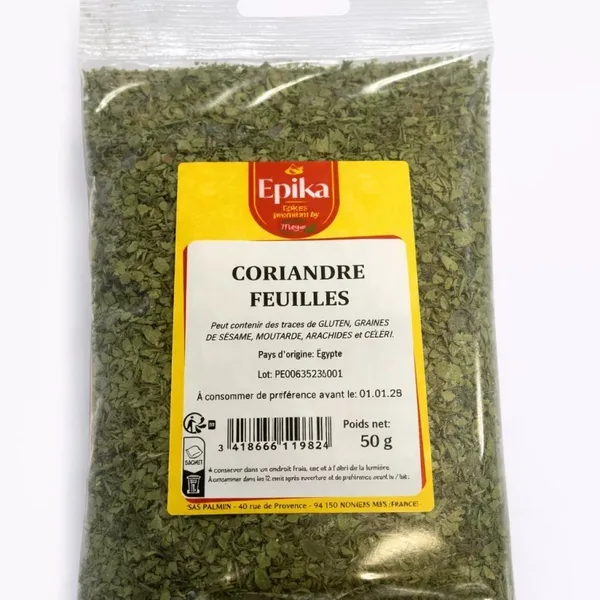
This is the most expensive confusion in the aisle. Coriander names two products that come from the same plant and share almost no aroma. The seed, dried, develops warm, slightly lemony and woody notes; it stands up to long cooking and belongs with slow-cooked dishes. The leaf, also dried, keeps a green, sharp profile; it goes in at the end of cooking or at plating, and disappears if boiled.
In practice, an establishment making curries, tagines and marinades needs the seed, while a Latin American or Asian kitchen finishing its dishes with coriander needs the leaf. Many houses need both, and often store them side by side — which is precisely what not to do, because the two bags look alike and the mistake is paid for in a ruined dish during service.
Small or large seed: what the grade changes
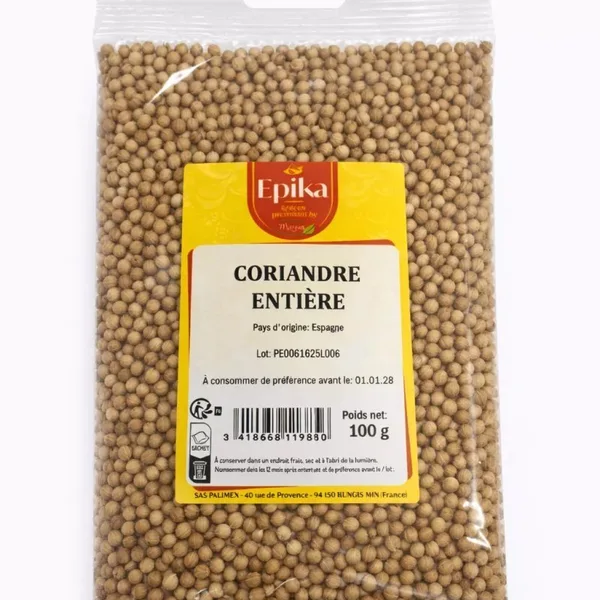
Whole seed comes in two grades, and it is not a cosmetic nuance. Small seed is denser, more concentrated in aroma by weight, and grinds finer; it suits blends where coriander must be present without dominating. Large seed toasts better in a dry pan, cracks cleanly in a mortar or under a rolling pin, and gives a more rustic result, more visible in a crust or a dry marinade.
The wholesaler stocks both because both have their public. A charcutier building a brine does not make the same choice as a pastry chef flavouring a spice bread.
| Form | Available formats | Main use |
|---|---|---|
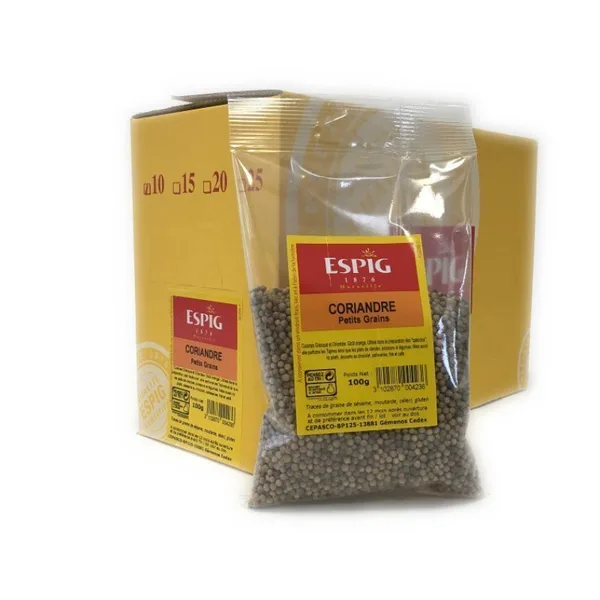
| Whole coriander, small seed | 10x100 g | blends, fine grinding, precise dosing |
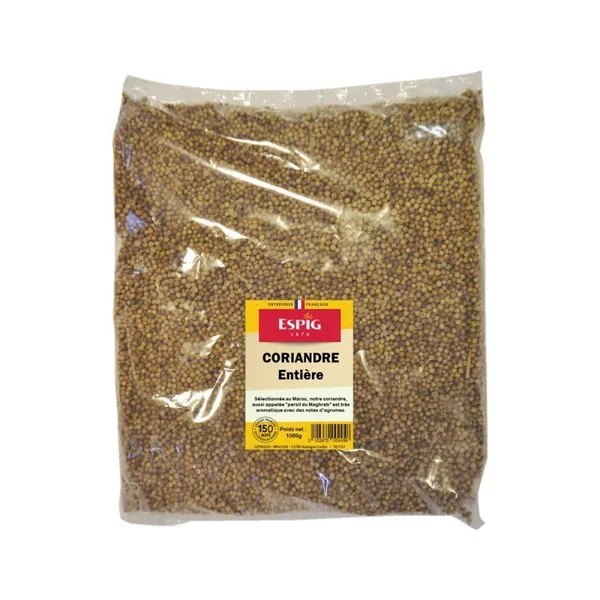
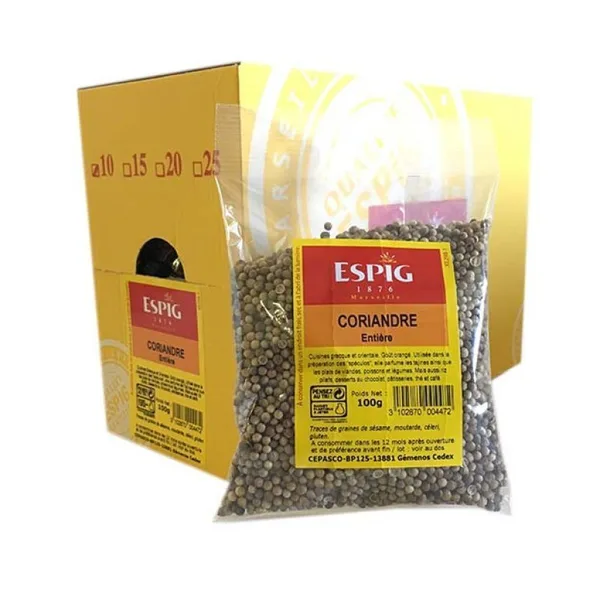
| Whole coriander, large seed | 1 kg, 10x100 g | dry toasting, cracking, marinades |
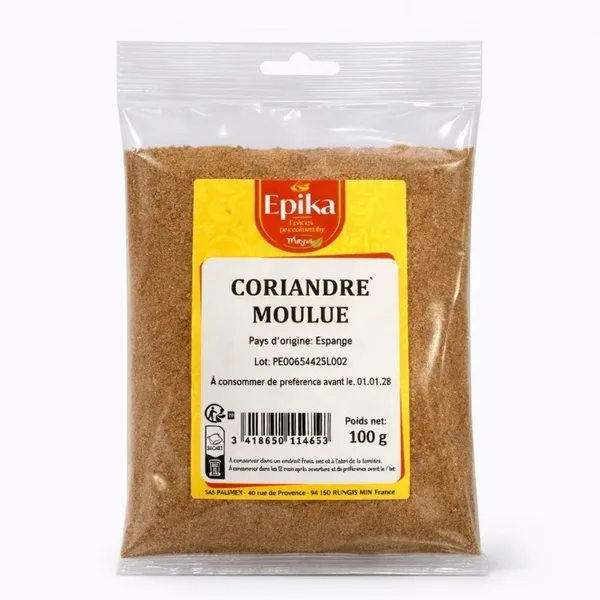
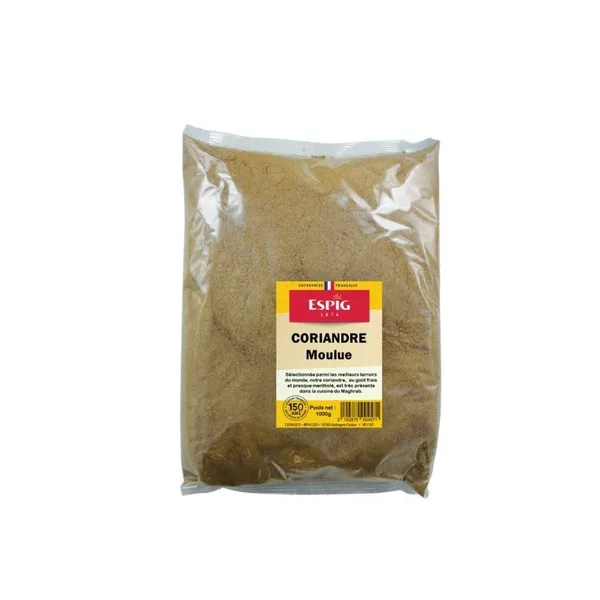
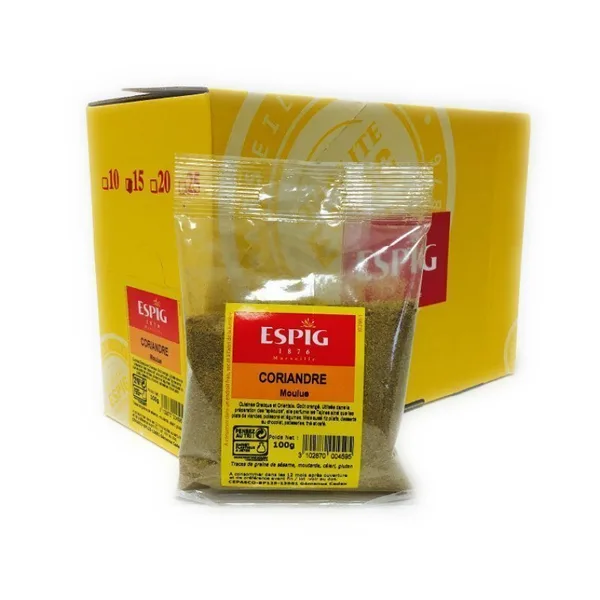
| Ground coriander | 1 kg, 15x100 g | curries, slow-cooked dishes, immediate effect |
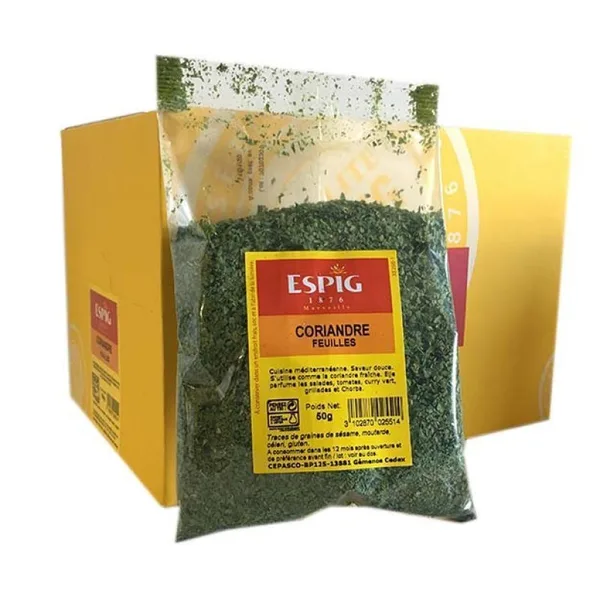
| Coriander leaf | 10x50 g | finishing, Latin and Asian dishes |
Toasting, the gesture that changes everything
This is the first piece of advice experienced cooks give on this spice. A coriander seed given thirty seconds in a dry pan, with no fat, releases an aroma out of all proportion to the same seed used as is. Heat wakes the essential oils that drying had put to sleep.
The gesture costs little time and on its own justifies buying seed rather than powder. Ground coriander cannot be toasted: it burns before it speaks. That is the accepted trade-off of the format — speed against intensity.
Where coriander works
The most frequent uses among our trade customers:
- North African and Middle Eastern cooking — ground seed in tagines, merguez, meatballs.
- Indian cooking — seed toasted then ground, the base of many masalas.
- Charcuterie and brines — cracked large seed, which holds in a long liquid.
- Bakery — seed in speciality breads and crackers.
- Finishing — dried leaf, added off the heat.
Two brands share the aisle: Espig, from the 1 kg bag to the resale case, and Epika in 10x50 g, 10x100 g and 15x100 g cases. The choice is made on destination — production consumes kilos, the shelf sells units.
We advise stocking both the seed and the powder, but storing them far apart. Coriander is the spice on which the most picking errors happen during service.— The Palimex team
Storage and the standards frame
Whole seed is one of the most stable spices in the aisle: its hull protects the essential oils, and it crosses several months of dry storage without damage. Ground coriander loses aroma markedly faster, and dried leaf is the most fragile of the three — it pales in the light and loses its bite within weeks if the case stays open.
Spices are the subject of international composition and quality standards discussed within the FAO and WHO Codex Alimentarius, a useful reference for buyers writing a specification or comparing offers from different origins.
The neighbouring spices
- Cumin — coriander's historic partner
- Culinary herbs — where the leaf also lives
- Curry — when coriander arrives already blended
- Fennel — the other seed to toast