
Available products
26 references · page 1 / 2

Looking for a wholesale dried fruit supplier?
I'm Jessica, your dedicated wholesale account manager.
Direct sourcing — Rungis and Bordeaux.
- ✓Direct sourcing from producers
- ✓Quality controlled (shelf-life, calibre, origin)
- ✓Next-day delivery in Île-de-France
- ✓Bulk, custom packaging, co-packing
- ✓B2B account with pricing tiers
Shipping & pickup
Rungis pickup
Pick up your order at our Rungis market depot. By appointment Monday through Friday.
Nationwide delivery
Delivery within mainland France and major European cities. Indicative lead time 24-48h.
Careful packaging
Reinforced cardboard, anti-shock padding, traceability labels.
Frequently asked questions
About this category
Wholesale chilli: two decisions, not one
Ordering wholesale chilli means settling two questions that are almost always run together: what heat, and in what form. These are two independent axes. A ground sweet chilli and a ground hot chilli are dosed differently but behave the same way in the pan; a whole hot chilli and a ground hot chilli carry the same heat and do entirely different jobs. A food wholesaler since 1984, Palimex lists this aisle under the Epika and Espig labels, from the 20x50 g case to the 1 kg bag.
It is by crossing those two axes that the right choice is made. Heat answers the question "how much"; form answers the question "when", and above all "will I be able to go back".
Heat: from sweet especial to bird's eye
The aisle covers a wide span, from sweet especial chilli — which brings aromatic body and colour without the burn — to whole hot bird's eye chilli, where a few units are enough to mark a whole preparation. Between the two, cayenne chilli, ground or whole, plays the everyday hot: the one used daily, whose gram weight is known by heart.
Sweet chilli is not a failed hot one. It does a job the hot one cannot: filling the mouth without overwhelming it. Many spiced preparations gain from being built on a sweet base, with heat arriving afterwards and in small amounts.
Form governs the moment
Four forms sit side by side in the aisle, and the choice between them turns on the moment of release, never on price:
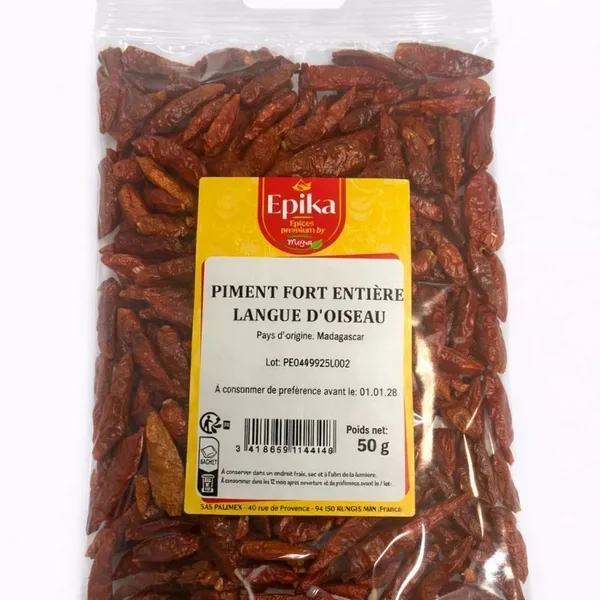
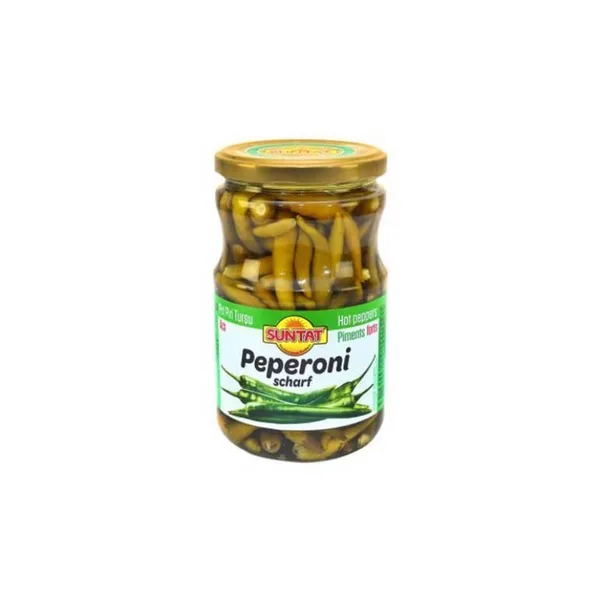
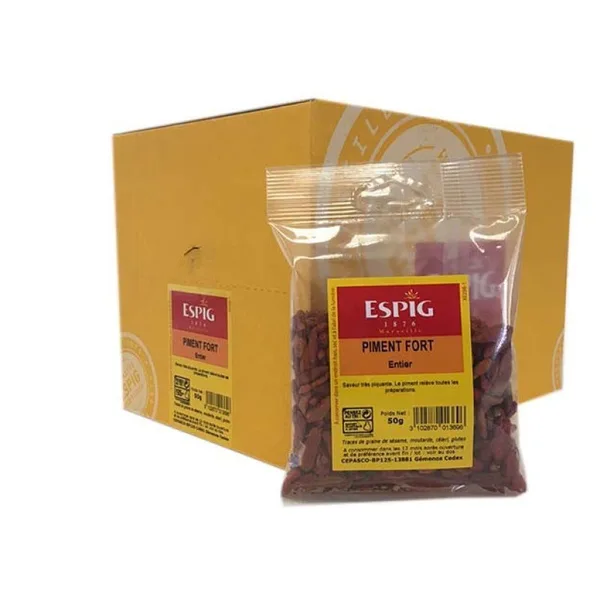
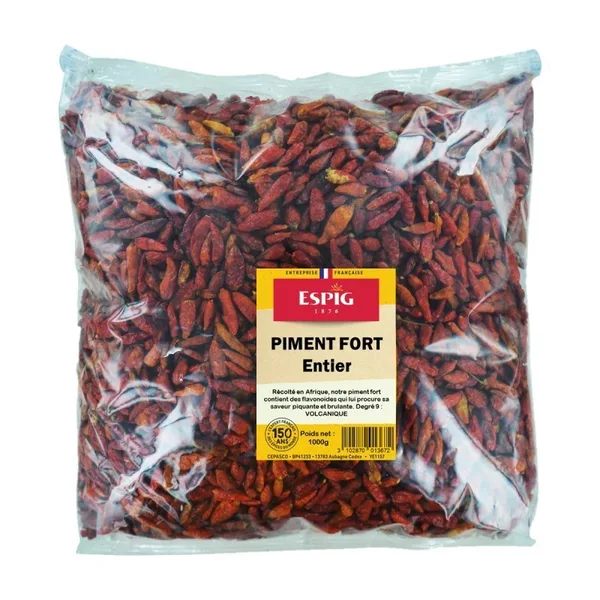
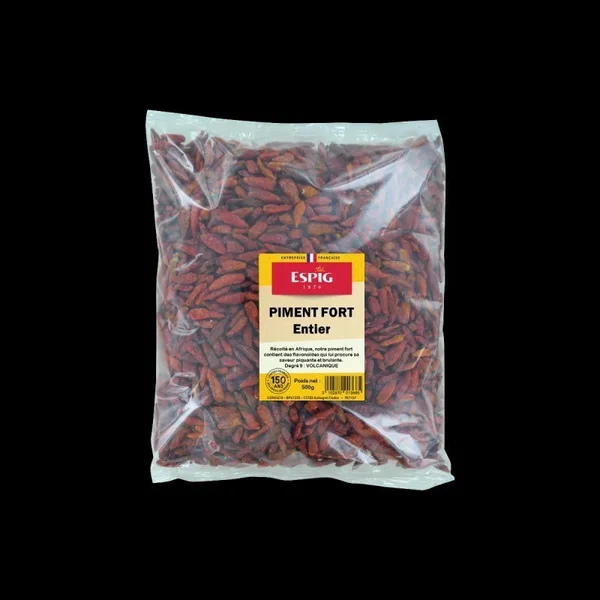
- Whole chilli — bird's eye, whole cayenne, whole hot in 500 g and 1 kg — infuses and is then removed. It is the only form that leaves a way back.
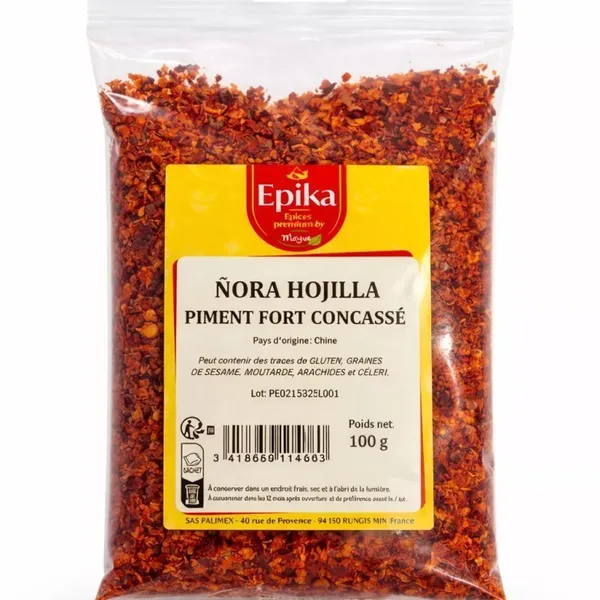
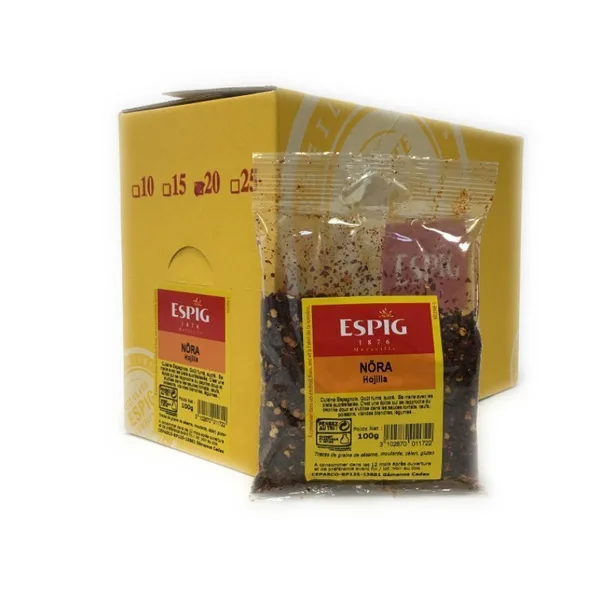
- Crushed chilli — Nora Hojilla, carried under both labels — gives visible pieces and a slow release, with a texture that stays in the mouth.
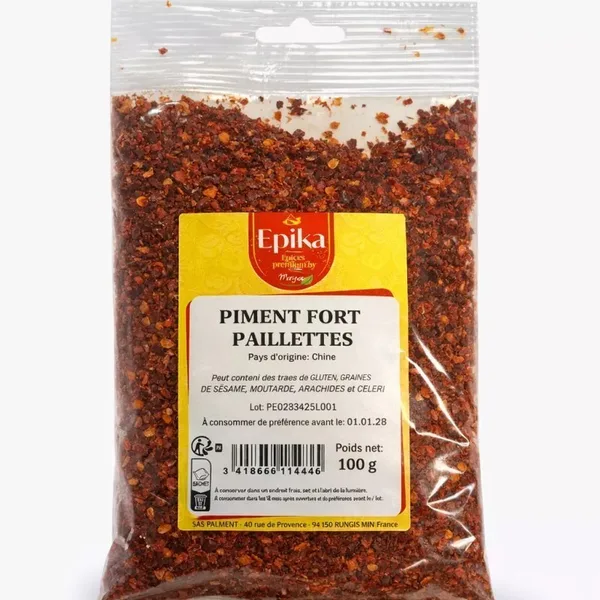
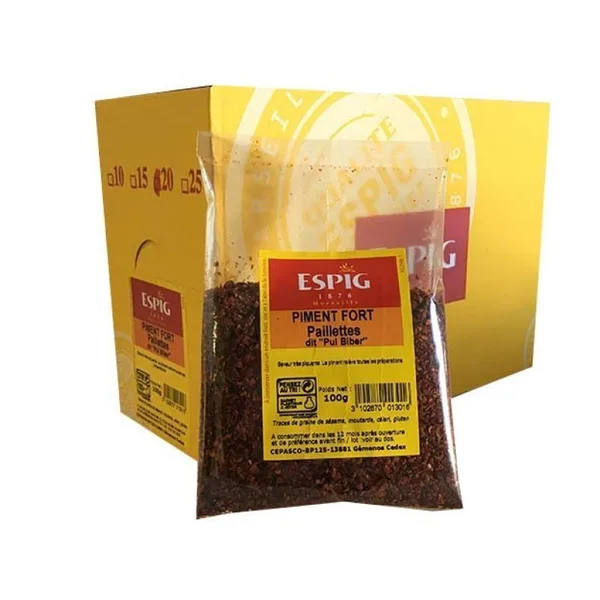
- Flakes, from Epika as from Espig, show on the surface: they serve a dish's finish and visual signature as much as its heat.
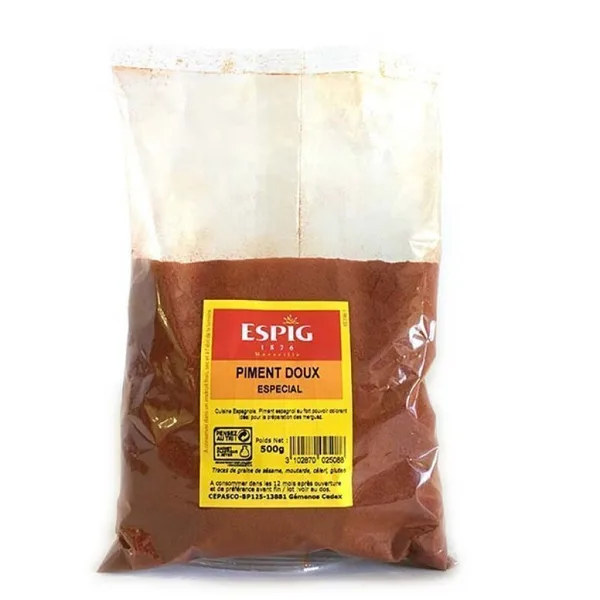
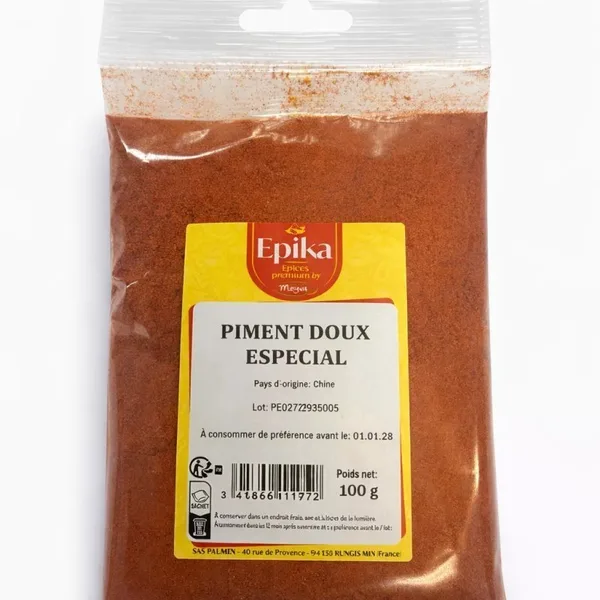
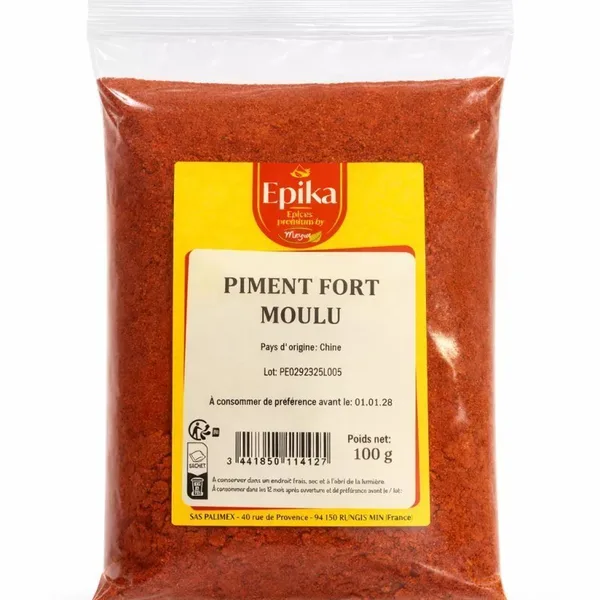
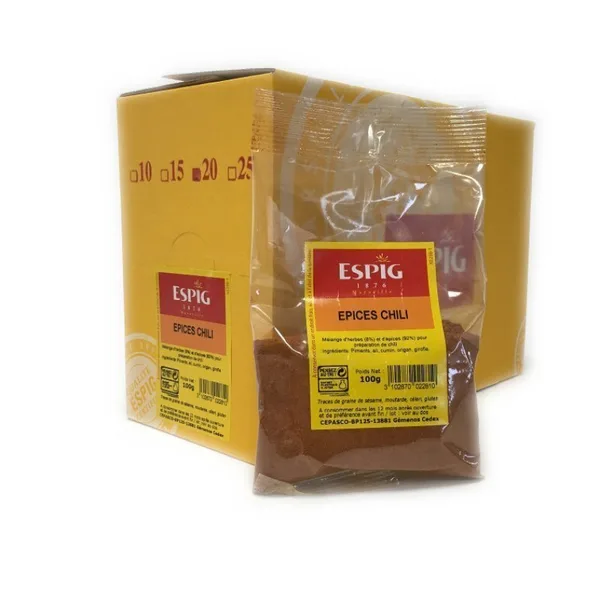
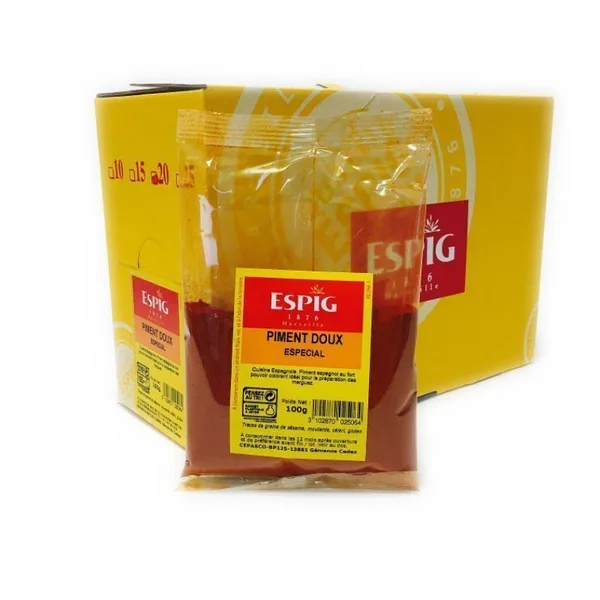
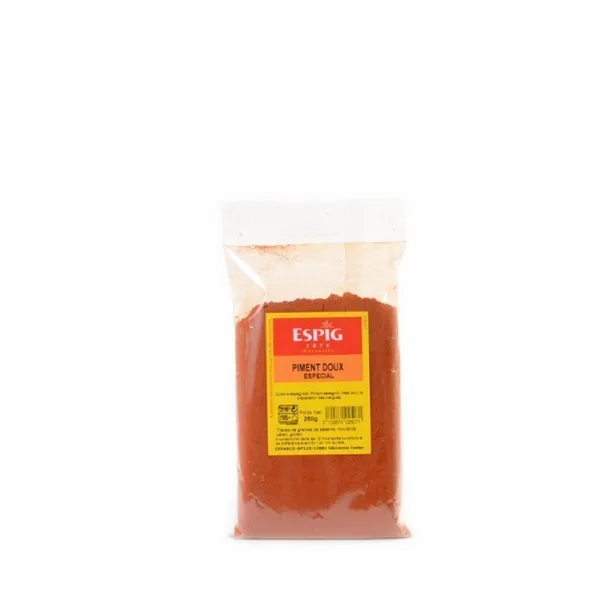
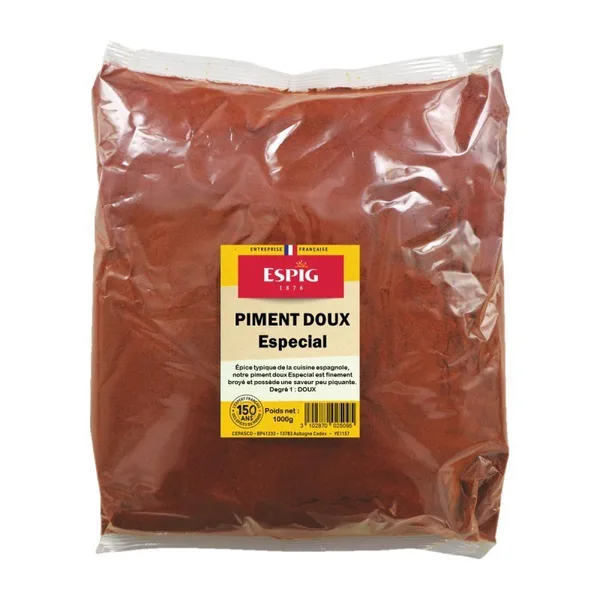
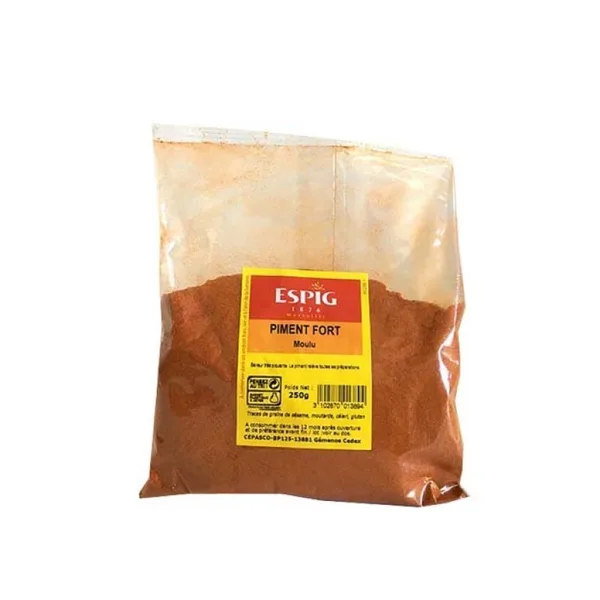
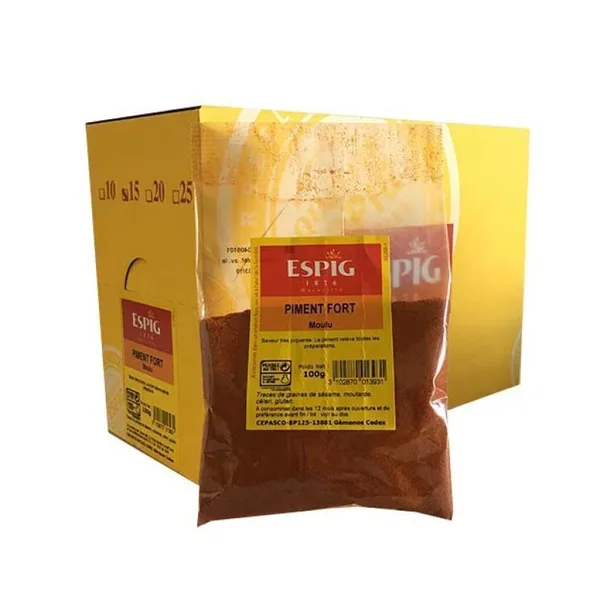
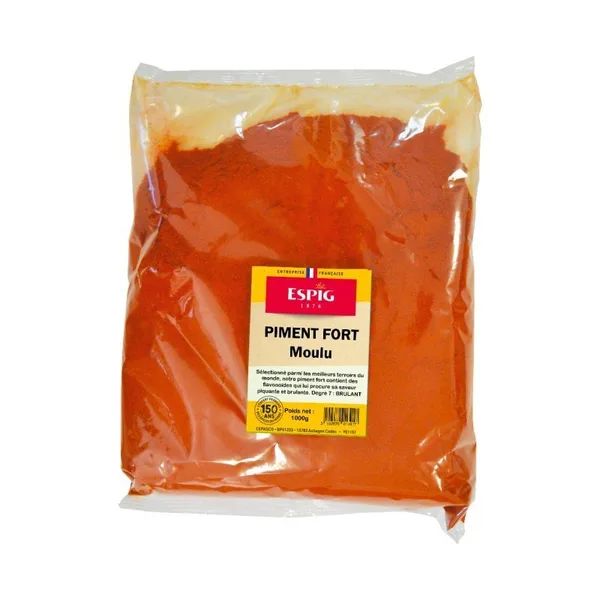
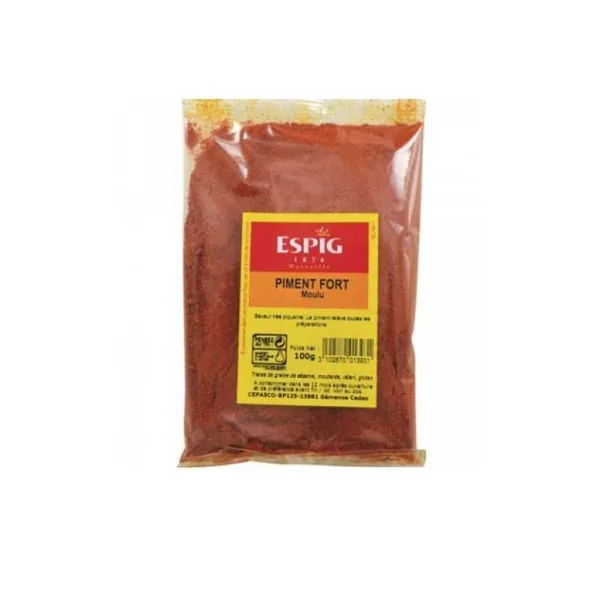
- Ground — hot, cayenne, sweet, sweet especial — acts at once and spreads everywhere. It is the handiest form and the least forgiving.
That word is the one most often missing from an order. Two kitchens ordering "hot chilli" may receive flakes in one case and ground in the other, and get nothing like the same result at identical gram weights. For colour without heat, wholesale paprika takes over.
The aisle as a matrix
The table below crosses the four forms with what they actually do in the preparation.
| Form | References in the aisle | What it does in the dish |
|---|---|---|
| Whole | Bird's eye, whole cayenne, whole hot in 500 g and 1 kg | Infuses then comes out; heat stays steerable, no visible trace |
| Crushed | Nora Hojilla, Epika and Espig | Visible pieces, slow release, texture in the mouth |
| Flakes | Hot chilli flakes, Epika and Espig | Visible on the surface, gradual release, finishing use |
| Ground | Hot, cayenne, sweet, sweet especial | Immediate, even and irreversible |
Pack sizes follow the same reasoning as the rest of the spice aisle: the 15x100 g or 20x100 g case for several stations and for shelf stock, the 20x50 g case for chillies used only a few units at a time, and the 250 g, 500 g or 1 kg bag for steady production.
Dosing, and knowing how to recover
The method we recommend comes down to four points, and the fourth is the one that gets forgotten:
- Build the base on sweet especial, which gives body without the burn.
- Raise the heat in fractions with a ground hot chilli, never in one go.
- Use the whole form whenever heat must stay steerable: take it out once the level is reached.
- Record the gram weight on the recipe sheet as soon as it satisfies, dish by dish.
And when it is too hot: heat is not taken out of a preparation, it is spread. Water does nothing; it is fat, a dairy product or a starch added to the volume that distribute the burn and make it bearable. Better to lengthen than to correct.
Allspice, and what grinding erases
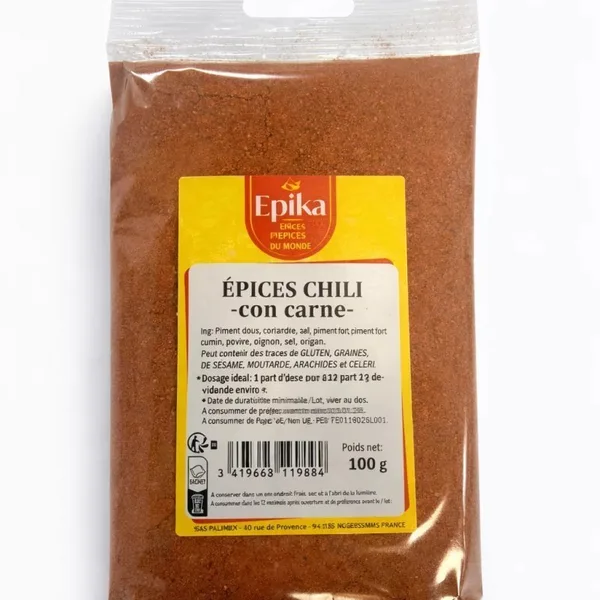
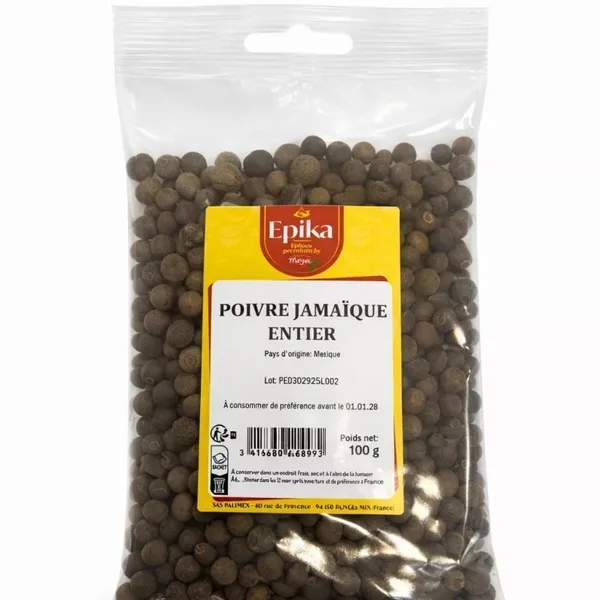
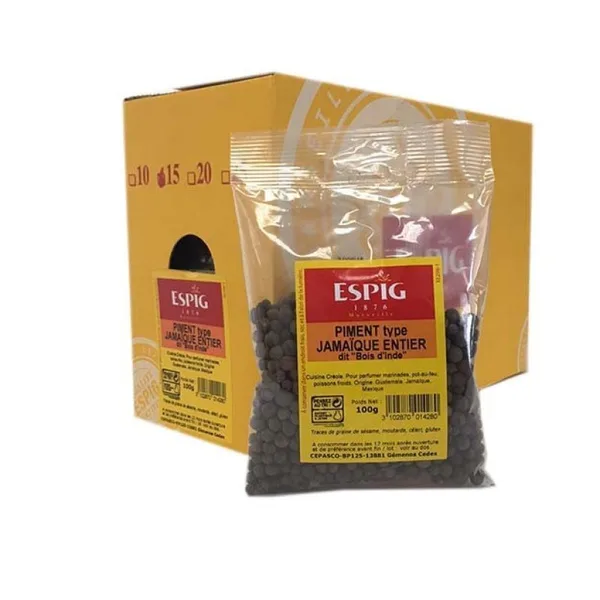
One reference in the aisle bears the name of chilli without its heat: whole Jamaica pepper, known as allspice, carried by Epika and by Espig. It is a whole aromatic spice, crushed or infused, and it has no place in a heat calculation. It sits here for reasons of name, not of use. Likewise, the chili con carne spice mixes from both labels are blends, not single chillies: they belong with our wholesale spice blends.
One last point, valid across the aisle: a whole chilli can be judged by eye, a ground one cannot. Grinding erases the visual evidence, and that is precisely what makes coloured powders sensitive to fraud at European level. The Union has set up a dedicated scheme, the EU Agri-Food Fraud Network: a professional buyer does well to know it exists, and to favour a supply chain traceable batch by batch. In the storeroom, chilli follows the same rules as the rest of the dry goods — an opaque, resealed container, away from the heat of the ranges, first in first out, batch number and best-before date kept until the pack is finished.
Our view as a wholesaler
With chilli, the commonest buying mistake is not picking the wrong heat: it is ordering ground where whole would have left the choice open. When a menu changes often, whole is the format that forgives.
Our teams work daily with restaurateurs, caterers, butchers and delicatessens buying in bulk. We would rather offer an aisle that reads along two axes — heat and form — than a list in which the buyer no longer knows what is being compared. Find the whole aisle at your wholesale spice supplier, and request your trade price: our bulk terms apply from the first tier, with pallet delivery and carriage paid depending on order value.