

Available products
55 references · page 1 / 3

Looking for a wholesale dried fruit supplier?
I'm Jessica, your dedicated wholesale account manager.
Direct sourcing — Rungis and Bordeaux.
- ✓Direct sourcing from producers
- ✓Quality controlled (shelf-life, calibre, origin)
- ✓Next-day delivery in Île-de-France
- ✓Bulk, custom packaging, co-packing
- ✓B2B account with pricing tiers
Shipping & pickup
Rungis pickup
Pick up your order at our Rungis market depot. By appointment Monday through Friday.
Nationwide delivery
Delivery within mainland France and major European cities. Indicative lead time 24-48h.
Careful packaging
Reinforced cardboard, anti-shock padding, traceability labels.
Frequently asked questions
About this category
Wholesale spice blends, a decision already made
Buying a wholesale spice blend is not buying spices: it is buying a decision. The ratio between eight or twelve powders, the grind, the room left for heat. A chef can make that decision alone, provided they stock every spice involved, weigh them at each service and accept that the result shifts from one commis to the next. A food wholesaler since 1984, Palimex lists these blends under the Epika and Espig labels, in cases of units and in 1 kg bags.
That calculation is what explains the aisle. A menu offering a couscous, a tagine and a colombo calls on fifteen or so single spices if everything is built by hand; three cases of blend take up one shelf and give the same dish, the same way, all year round.
Three families, three uses
The aisle reads in three families, and they are not used at the same moment of service:
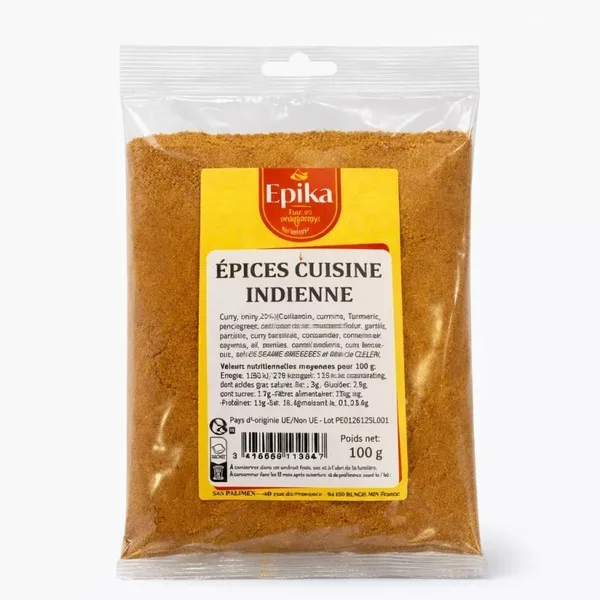
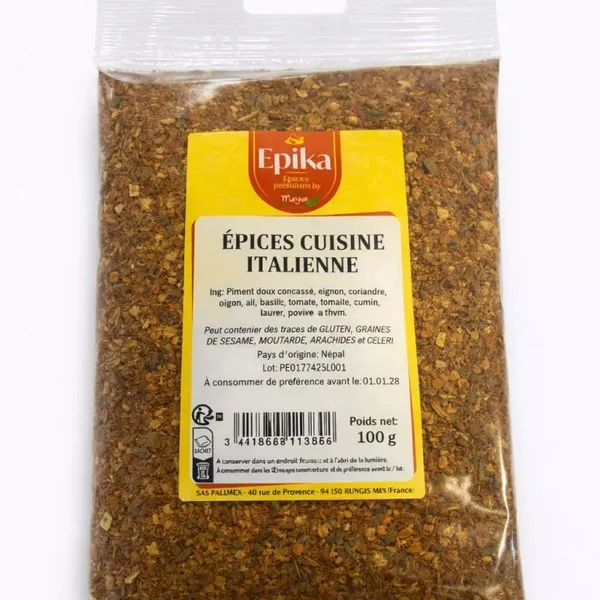
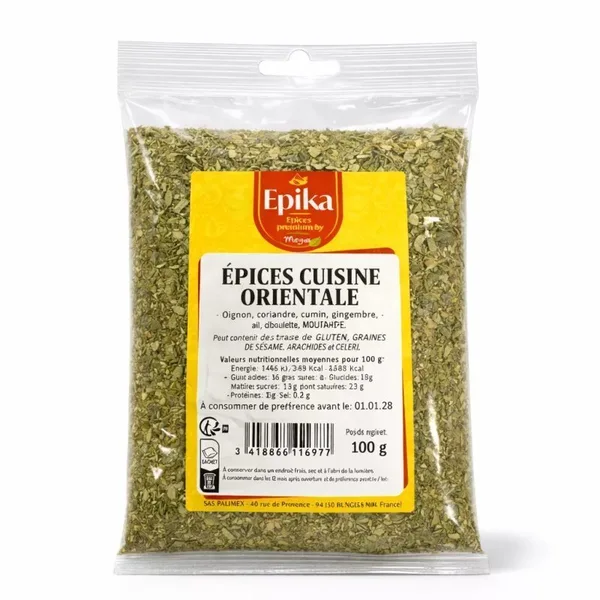
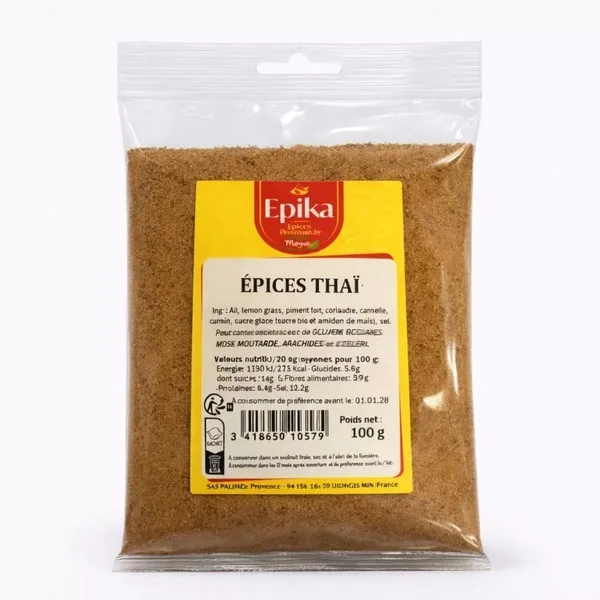
- World cuisines, broad and versatile: Italian, Indian, oriental, Thai, Mexican or Tex-Mex, Tunisian.
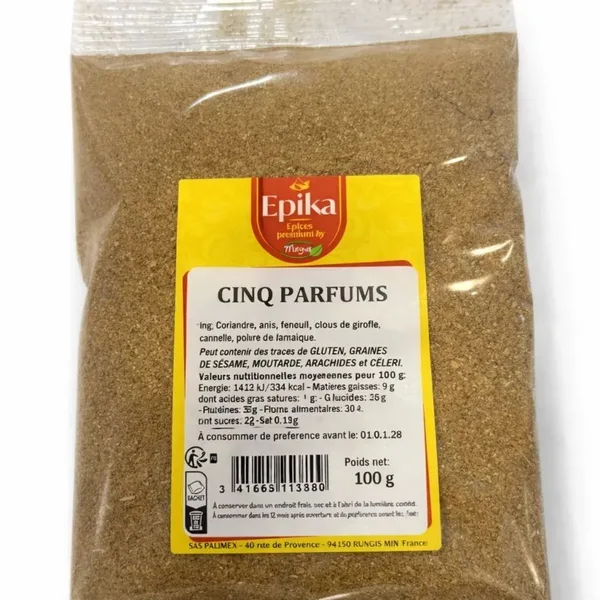
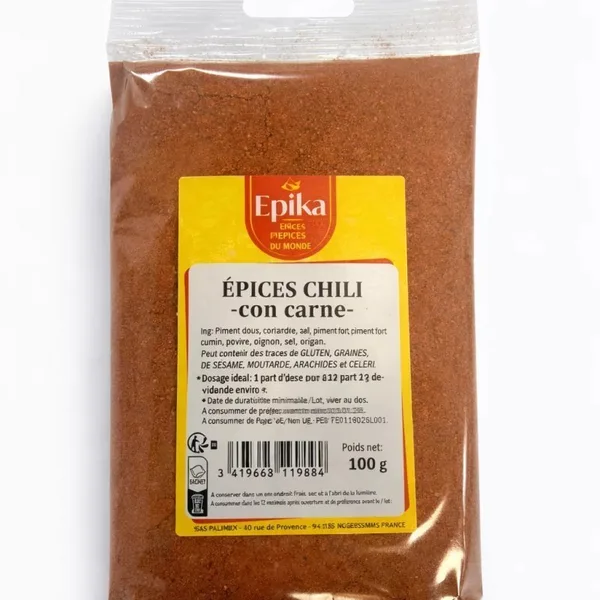
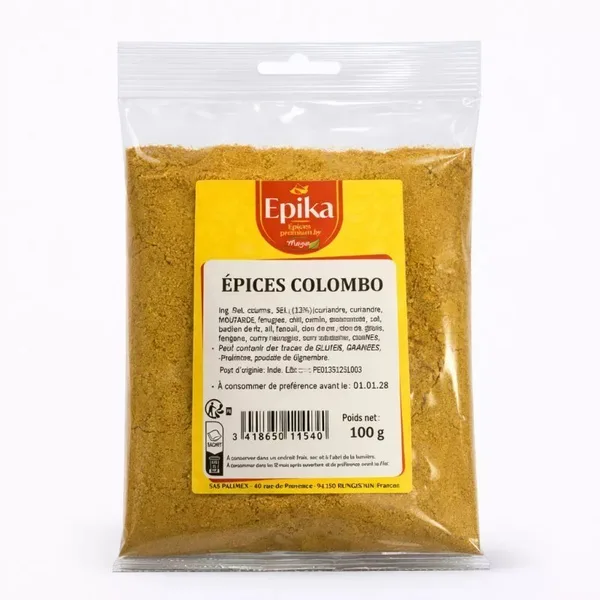
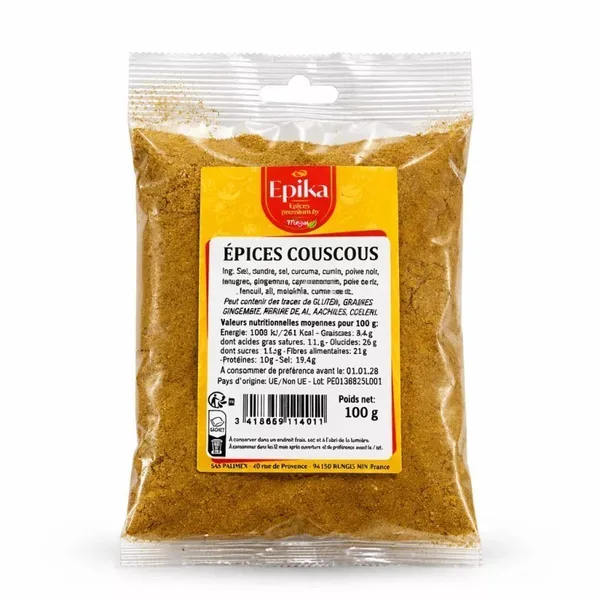
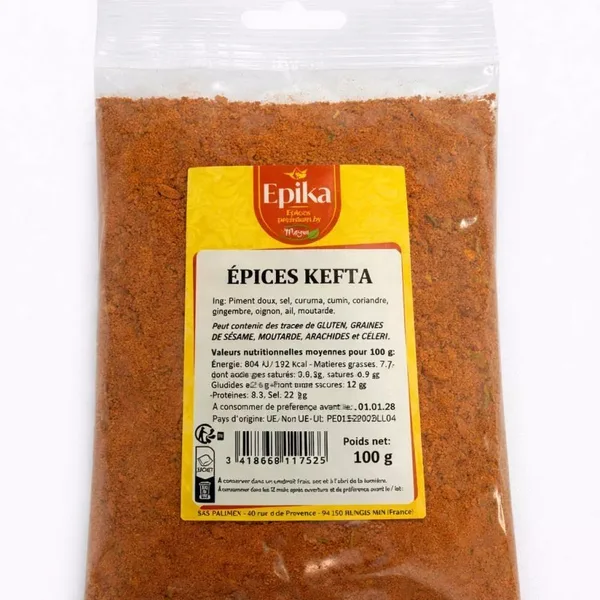
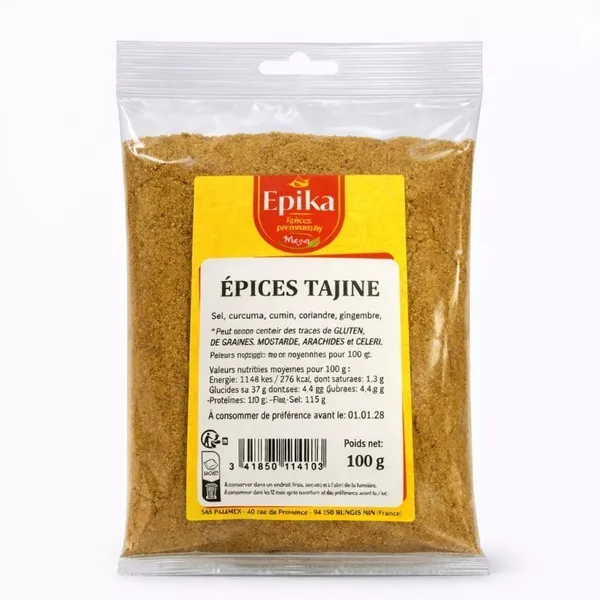
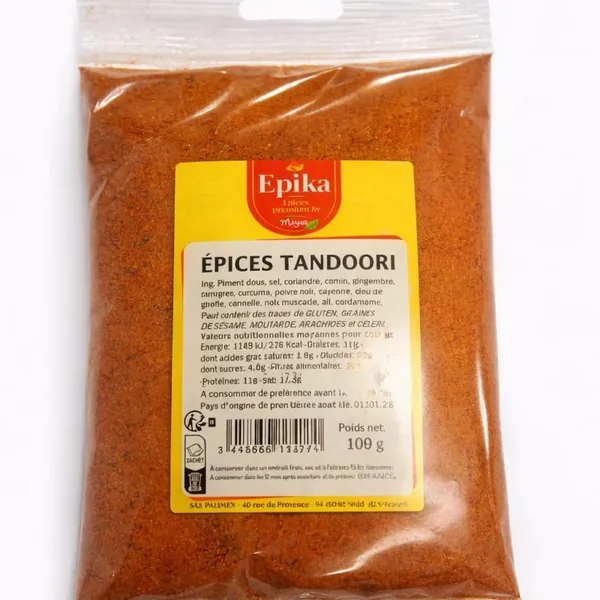
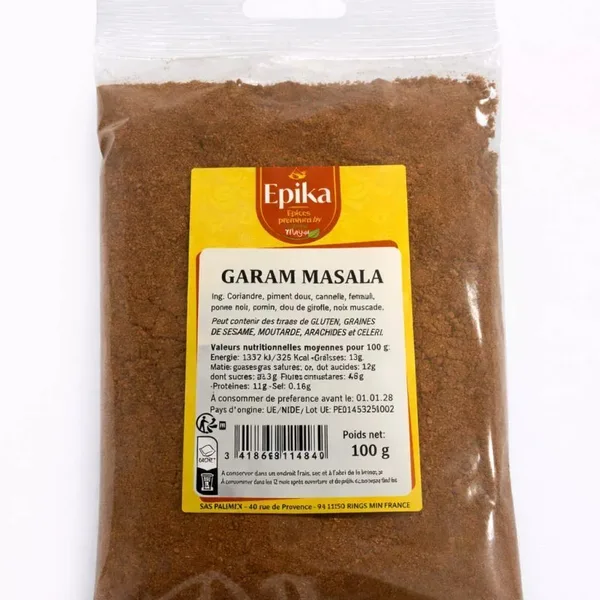
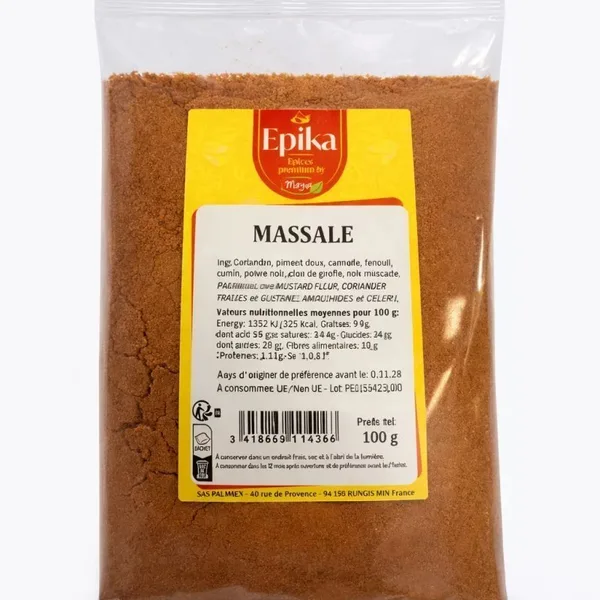
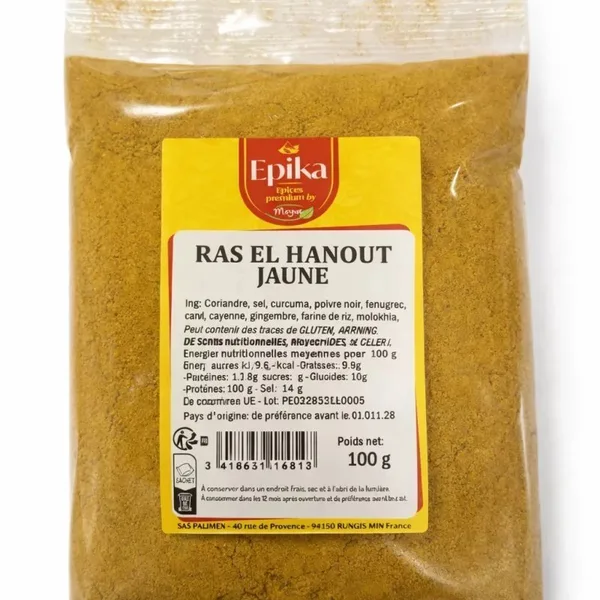
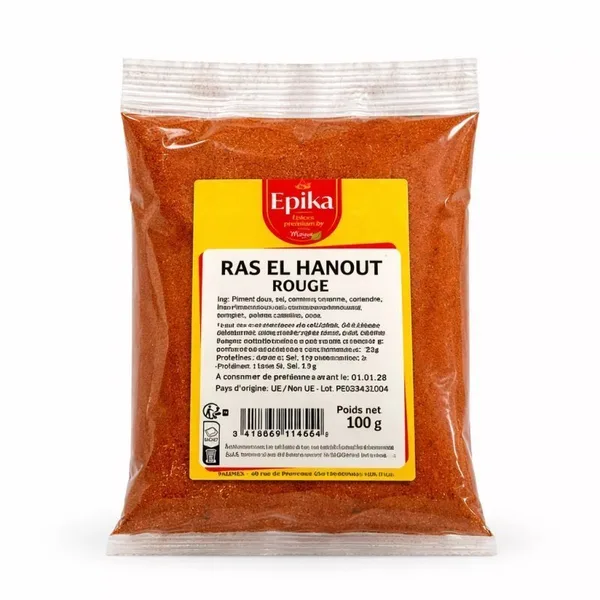
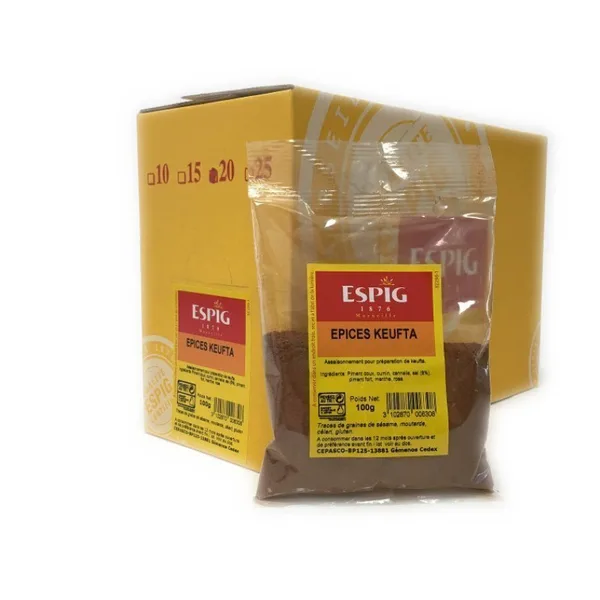
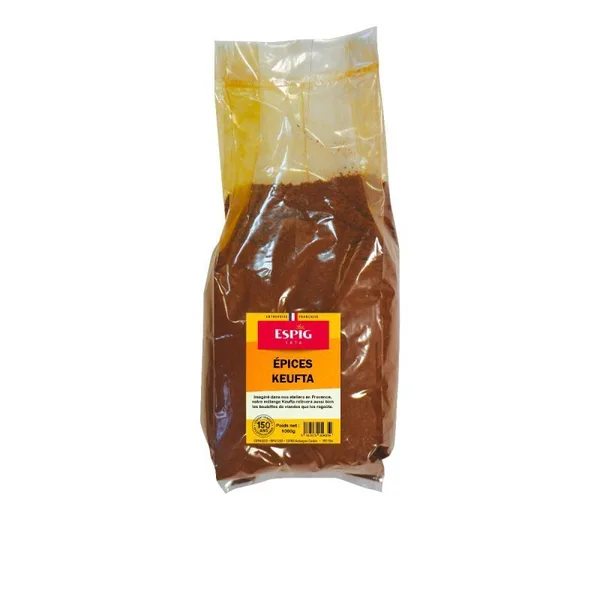
- Named dishes, calibrated for one precise recipe: tagine, couscous, colombo, tandoori, kefta, chilli con carne, garam masala, massalé, five spice, red and yellow ras el hanout.
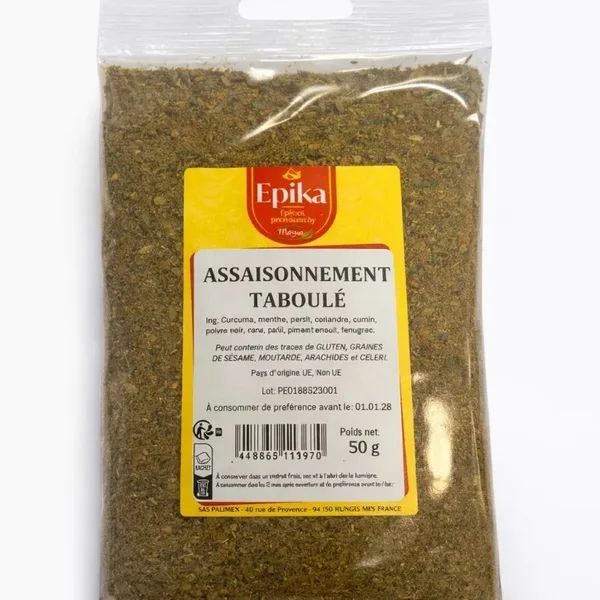
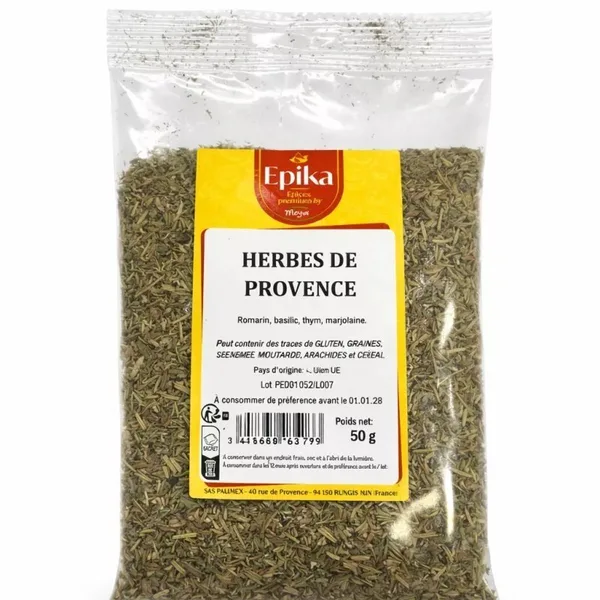
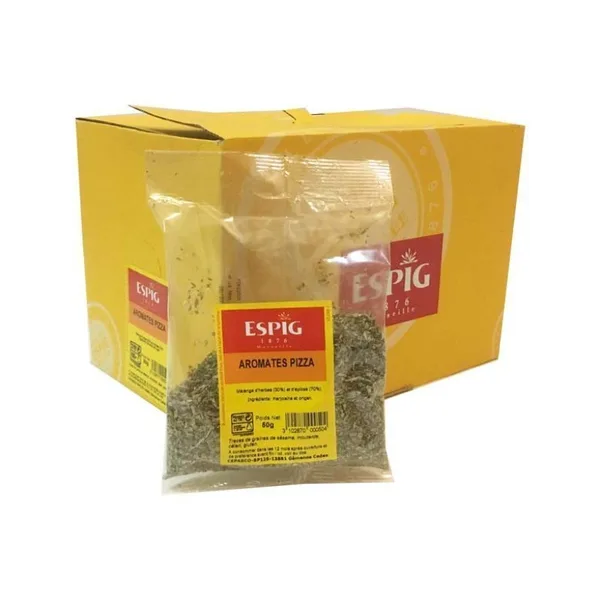
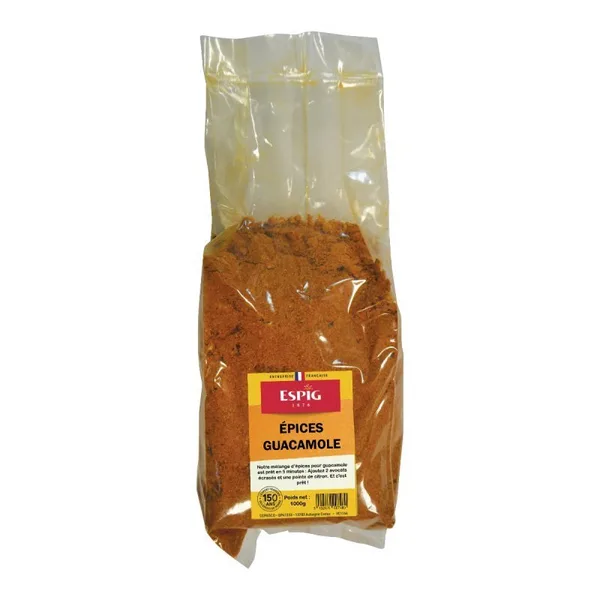
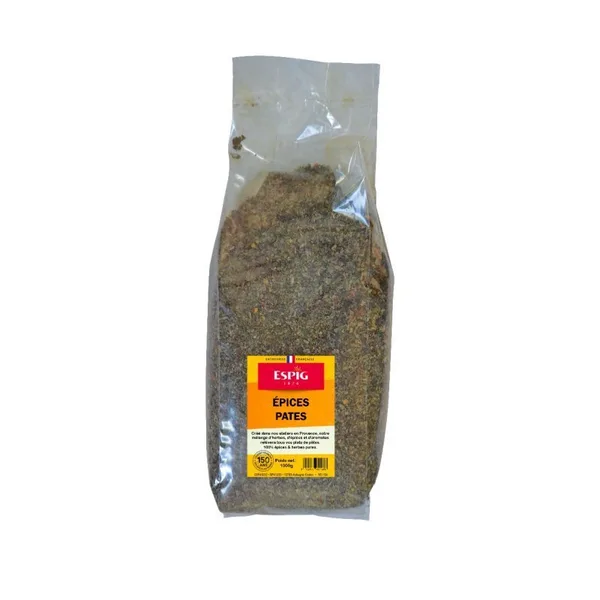
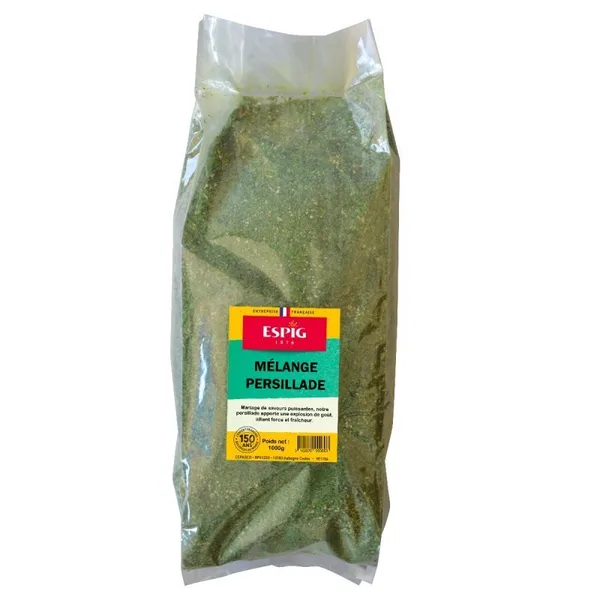
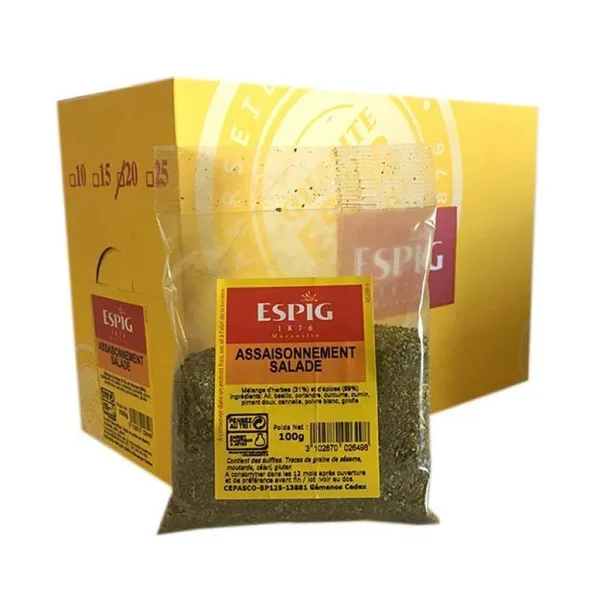
- Preparation and service seasonings: salad, tabbouleh, pasta, persillade, guacamole, pizza herbs, herbes de Provence.
The first two families cook: they go into a marinade, a stock or a slow braise and need fat and time. The third is used cold or at the end of cooking, on a product that is already finished. That is the most frequent and most expensive confusion: a salad seasoning thrown into a braise loses everything, and a tagine blend dusted over raw vegetables stays dusty in the mouth.
Two references from the third family also live on the leaf aisle: herbes de Provence and persillade are found among our wholesale culinary herbs, where they sit with the single herbs that compose them.
Epika or Espig, and the choice of pack
Almost the whole aisle exists in parallel under our two labels, at identical or very close pack sizes. The real decision is therefore not the label: it is the format, and it follows from the number of services involved.
| Pack size | References concerned | Usage profile |
|---|---|---|
| 20x100 g case | Tagine, couscous, colombo, tandoori, kefta, chilli con carne, garam masala, world cuisines, ras el hanout | The reference format of the aisle, kitchen portioning |
| 15x100 g and 20x50 g cases | Massalé, five spice, tabbouleh, salad seasoning | Slower rotation, menu trials |
| 15x50 g case | Pizza herbs, herbes de Provence | Leaf-based blends, bulky weight for weight |
| 1 kg bag | Tagine, tandoori, ras el hanout, ground couscous blend, ground five spice, pasta, persillade, guacamole, kefta, herbes de Provence | Steady production, central kitchen |
The case of 100 g units is the heart of the aisle, and that is no accident: a blend goes flat faster than a single spice, because its most volatile components leave first and unbalance what remains. A tagine blend open for six months is no longer the tagine of day one — it has aged towards its heavy notes. The 1 kg bag keeps all its sense as soon as the reference turns over weekly, and it carries the high-volume seasonings: persillade, guacamole, pasta seasoning.
What a blend gives, and what it does not
A blend brings three things a hand-built mix struggles to hold: consistency from one service to the next, speed at the station, and a manageable store. In exchange it takes away fine tuning: you can no longer decide to load the cumin or drop the chilli.
Our position as a wholesaler is simple: the two approaches combine. Many of our customers start from the blend and correct it at the last moment with a single spice — a wholesale curry powder to underline one note, a touch of heat on a dish for customers who expect it. Ras el hanout deserves its own examination: red or yellow are not two intensities of one blend but two distinct profiles, detailed on our wholesale ras el hanout page.
Dosing, correcting, storing
A blend is not dosed like the spice whose name it carries. The method we recommend comes down to four points:
- Calibrate once on a test portion, then fix the weight on the recipe card.
- Sweat the blend in the fat before adding liquid, for the families that cook.
- Correct only with a single spice, never with a second blend: two compositions stacked become unreadable.
- Open a fresh unit as soon as the scent has tipped, rather than compensating by increasing quantities.
In the storeroom, blends belong to your food safety management plan like other powders: resealed and dated containers, away from light and steam, first in first out rotation, batch and best-before dates kept until the pack is finished. The composition of spice blends is also the subject of international standards work, carried out by the Codex Alimentarius committee on spices and culinary herbs — useful reading for a buyer comparing two suppliers on something other than price.
Our view as a wholesaler
The right blend is not the one richest in spices, it is the one that returns the same dish in February and in September. Judge it across two services set apart, never on a spoonful taken from the case on opening.
Our teams work daily with restaurateurs, caterers, butchers and delicatessens ordering in bulk. We would rather keep a legible aisle — three families, two labels, four pack families — than a catalogue in which every dish name has its reference without anyone knowing what sets it apart from the next. Find the whole range at your wholesale spice supplier, and request your trade price: our wholesale terms apply from the first tier, with pallet delivery and carriage paid according to order value.