
Available products
42 references · page 1 / 2

Looking for a wholesale dried fruit supplier?
I'm Jessica, your dedicated wholesale account manager.
Direct sourcing — Rungis and Bordeaux.
- ✓Direct sourcing from producers
- ✓Quality controlled (shelf-life, calibre, origin)
- ✓Next-day delivery in Île-de-France
- ✓Bulk, custom packaging, co-packing
- ✓B2B account with pricing tiers
Shipping & pickup
Rungis pickup
Pick up your order at our Rungis market depot. By appointment Monday through Friday.
Nationwide delivery
Delivery within mainland France and major European cities. Indicative lead time 24-48h.
Careful packaging
Reinforced cardboard, anti-shock padding, traceability labels.
Frequently asked questions
About this category
Wholesale dried culinary herbs, a question of volume
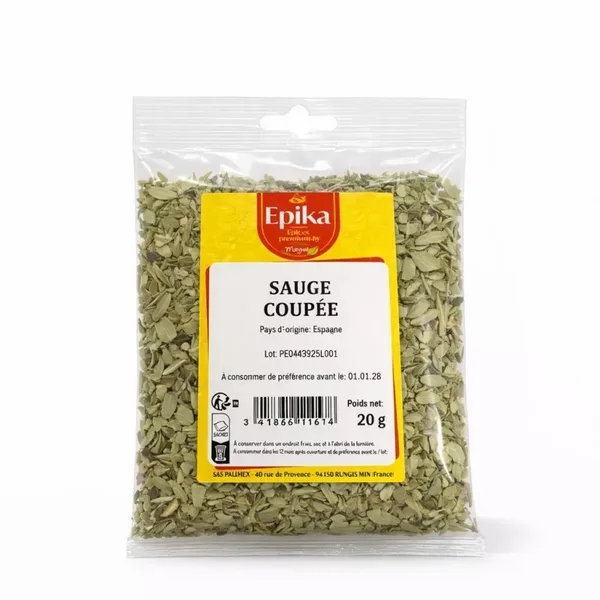
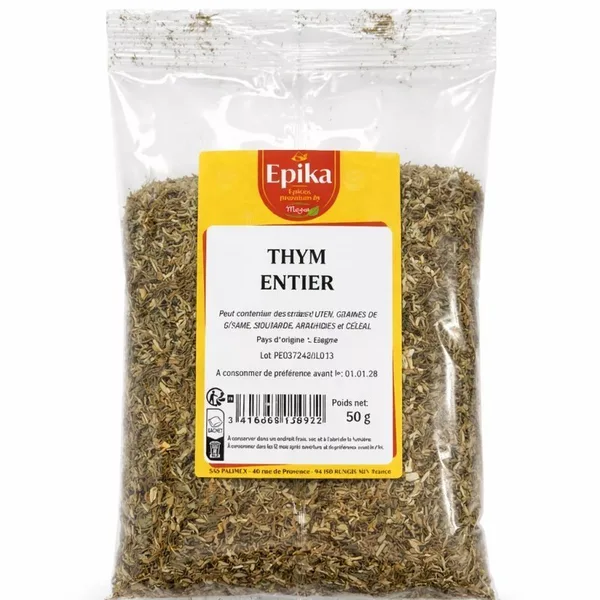
Wholesale dried culinary herbs are not ordered the way a ground spice is. A dried leaf is bulky and fragile: weight for weight, thyme takes up several times the room of powdered turmeric, and it breaks as soon as it is pressed down. That physical fact governs the whole aisle — the pack sizes, the choice of case, the way the storeroom is arranged. A food wholesaler since 1984, Palimex lists these herbs under the Epika and Espig labels, from the case of single units to the 1 kg bag.
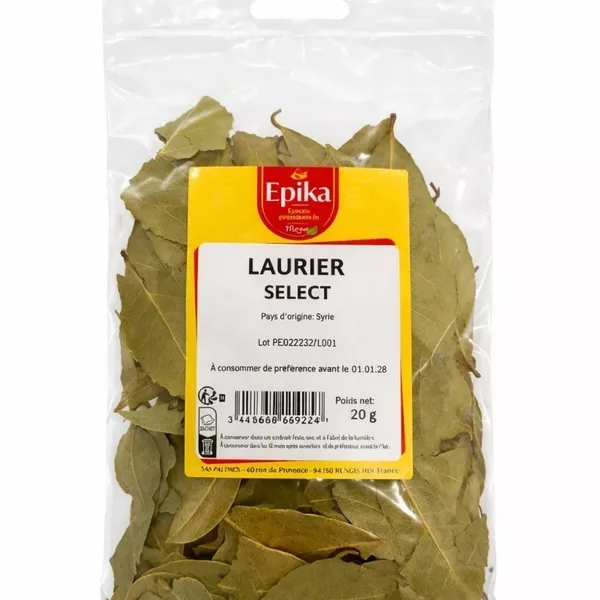
It is also why a herb sells in 15, 20 or 50 grams where a ground spice leaves in 100 g units or by the kilo. The figure printed on the pack does not mean the same thing: a 20x20 g case of bay leaf holds a considerable quantity of leaves, whereas 20x20 g of pepper would sit in one hand.
Whole leaf, cut leaf, flakes
The aisle reads in three states, and the choice between them rests on when the herb enters the preparation, never on price. The whole leaf — bay, cut-leaf sage — is set to infuse and then lifted out; it builds a background and leaves a visible mark on the plate. The cut leaf — parsley, chive, coriander leaf, tarragon — is stirred in and stays. Flakes and powders — parsley flakes, ground celery — disappear into the mass and serve smooth preparations.
Confusing the first two is expensive in a kitchen: cut-leaf sage thrown into a stuffing will never come out again, and chopped bay comes out no more easily. We regularly see orders corrected for that reason alone.
What the aisle holds
Our seventeen herbs cover everyday French cooking and Mediterranean menus:
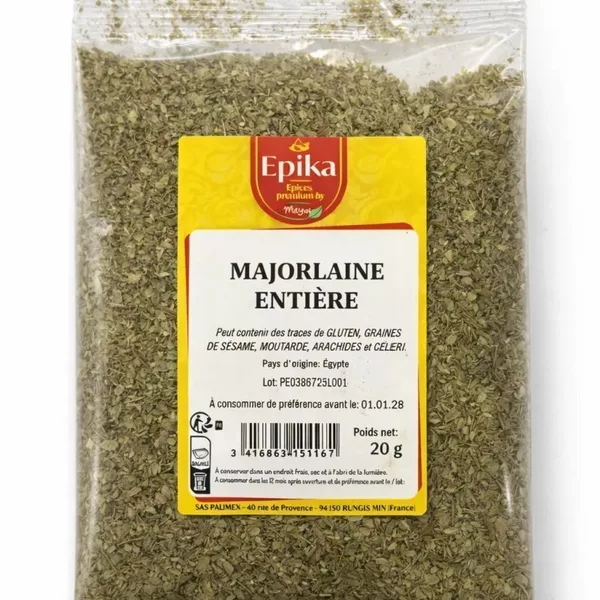
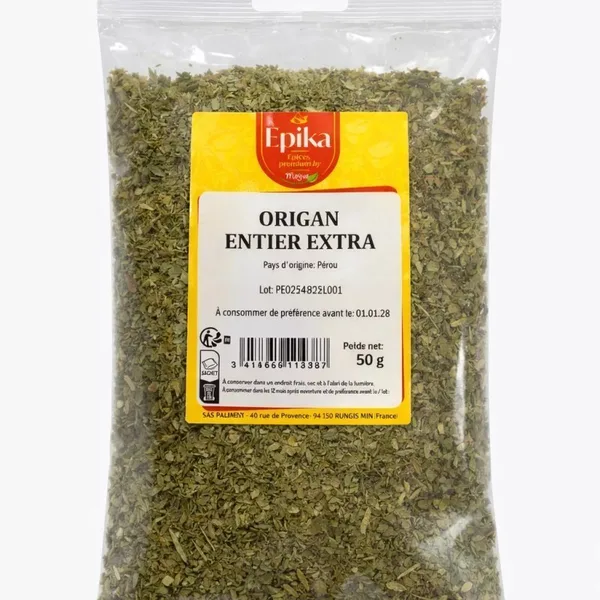
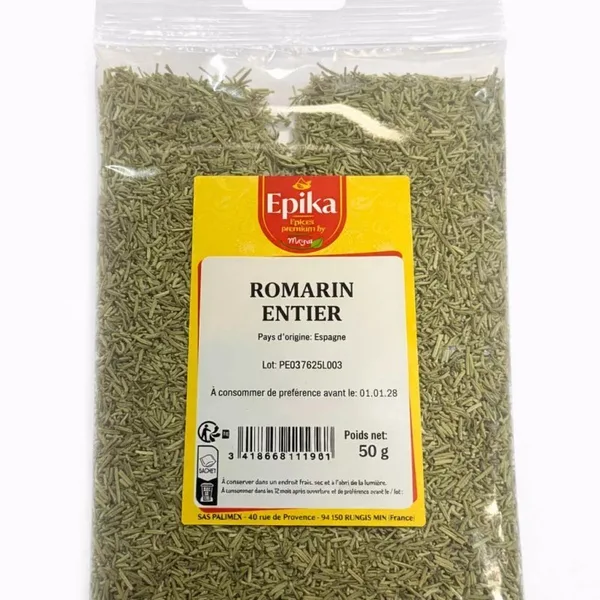
- The classics of the bouquet: thyme, bay leaf, rosemary, sage, marjoram, extra oregano.
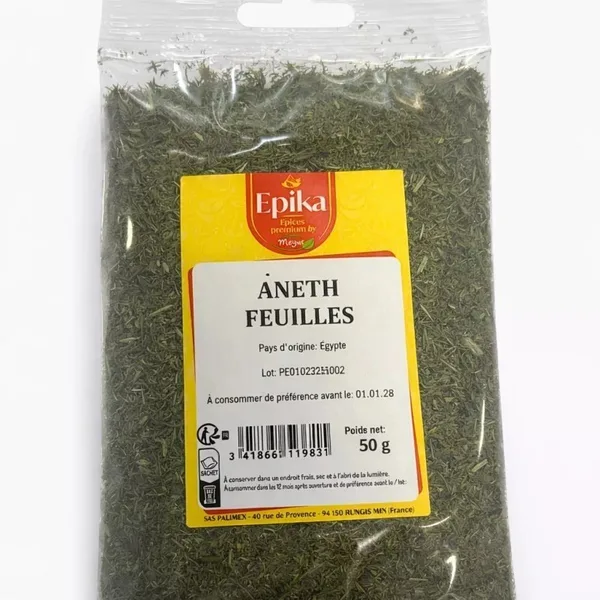
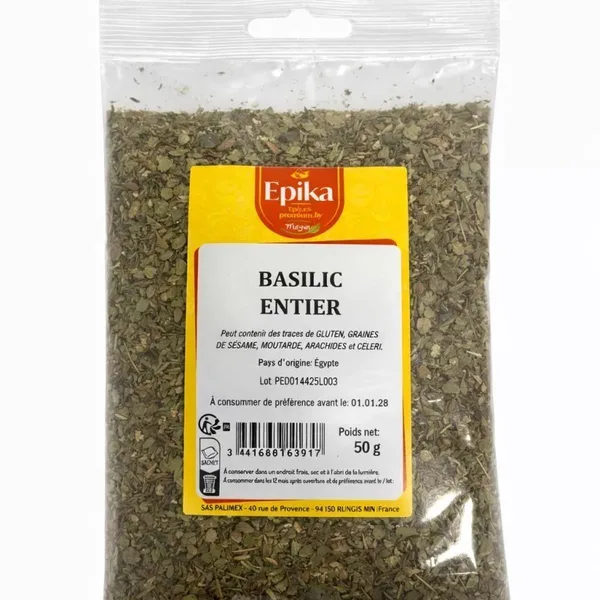
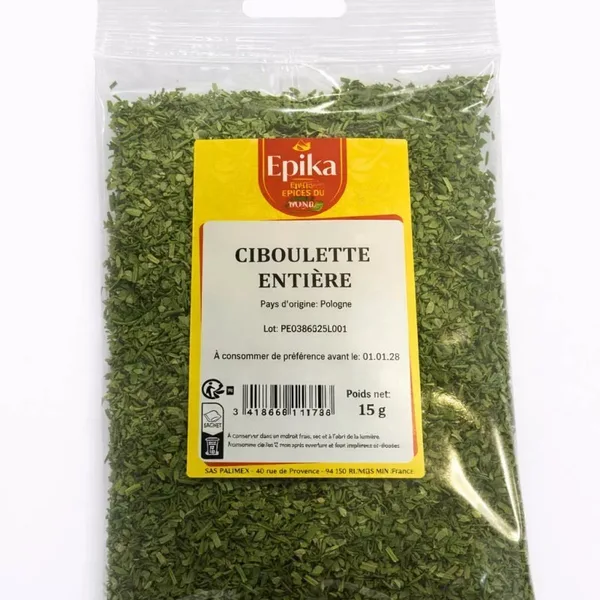
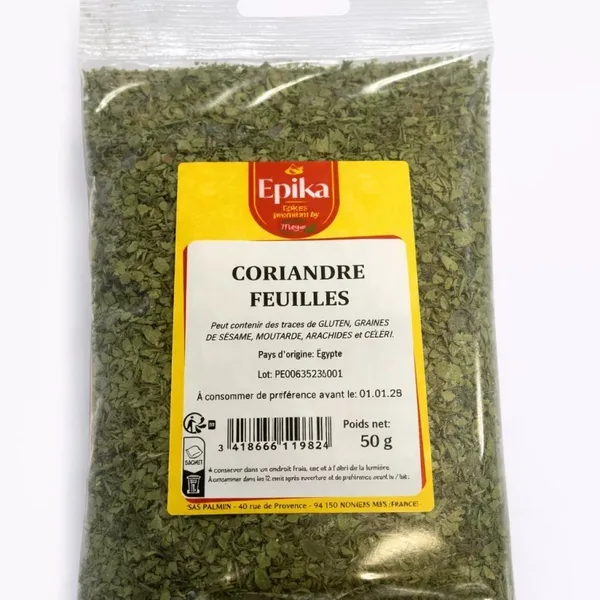
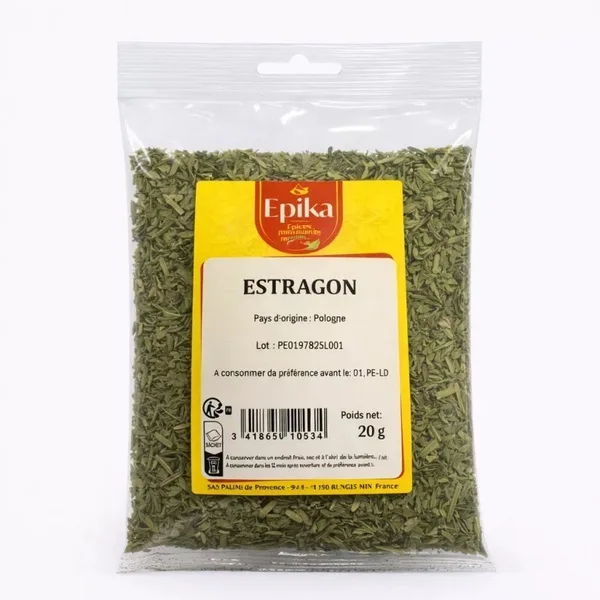
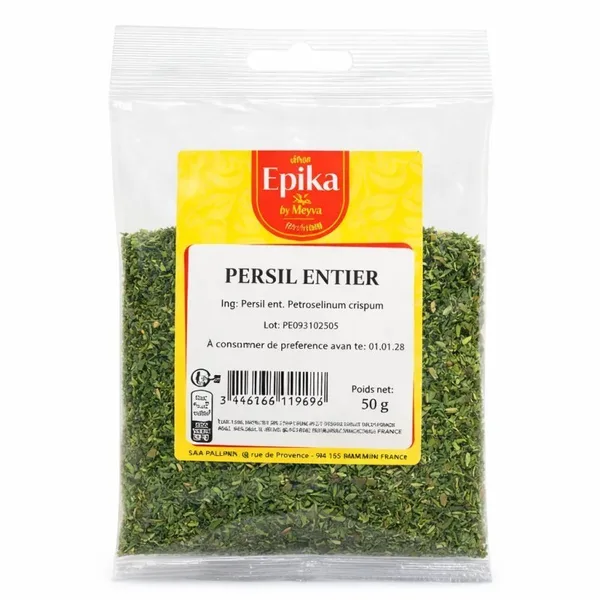
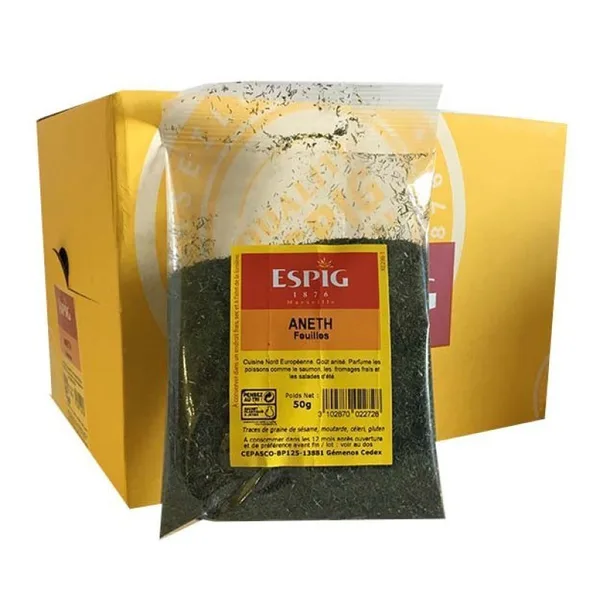
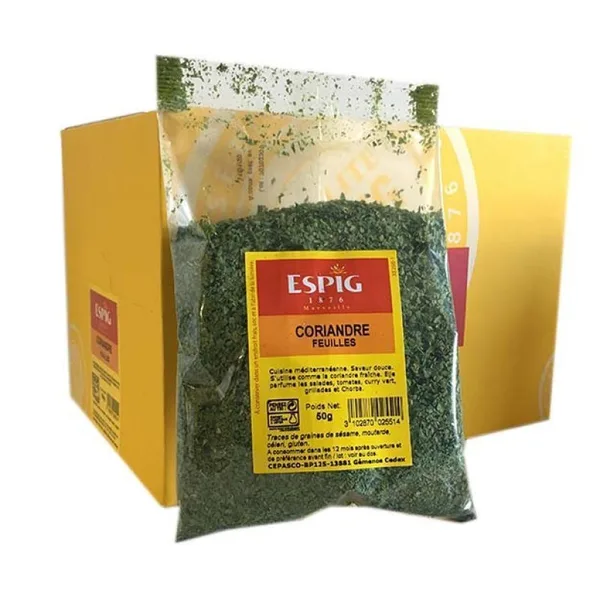
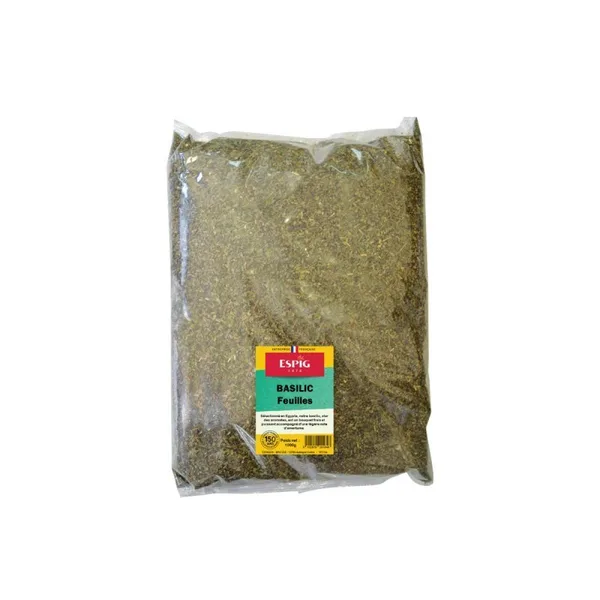
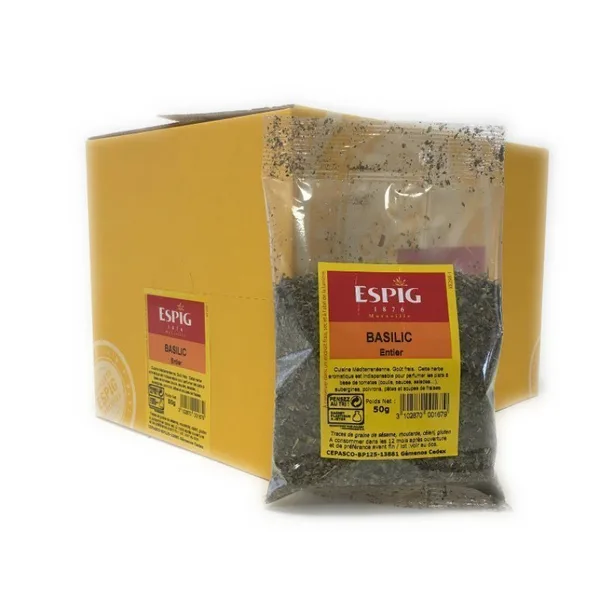
- Fresh herbs, dried: whole or flaked parsley, chive, tarragon, dill, basil, coriander leaf.
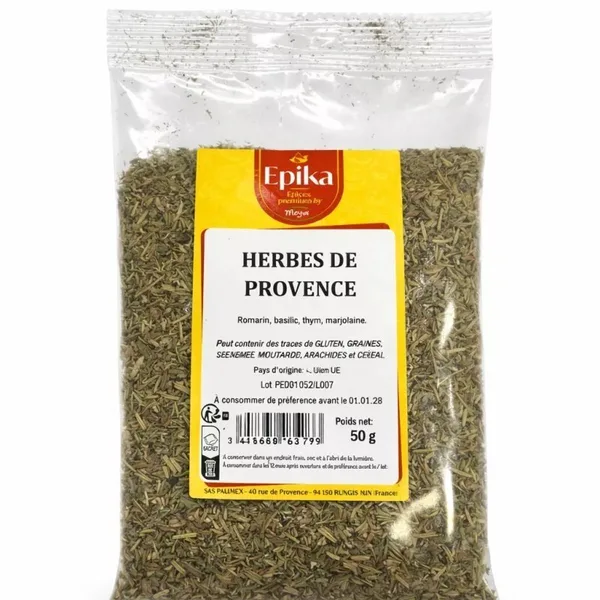
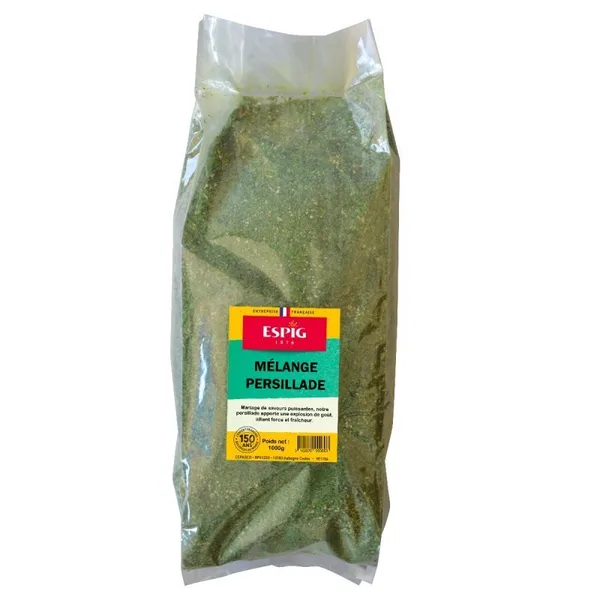
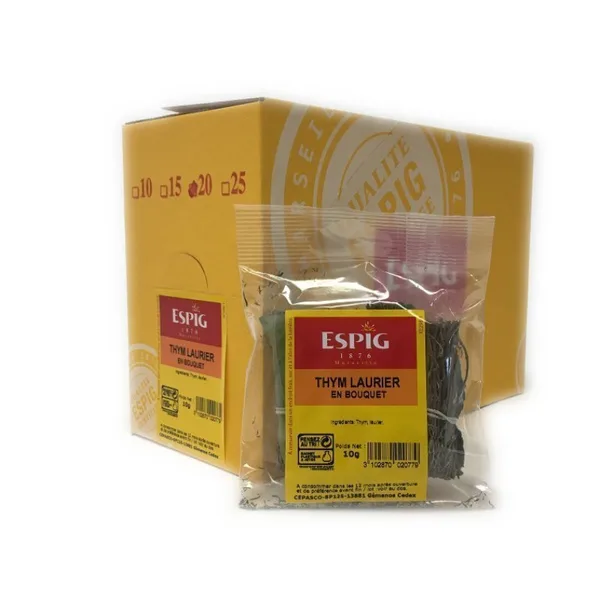
- Ready-to-use assemblies: herbes de Provence, thyme-and-bay bouquet in 20x10 g cases, persillade seasoning in 1 kg.
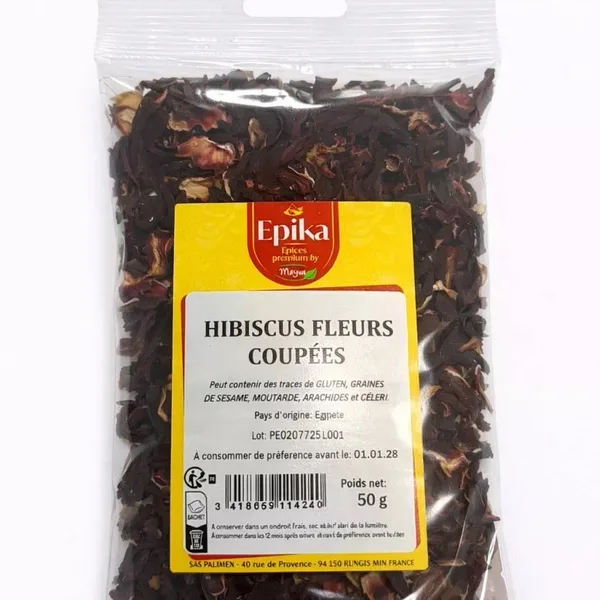
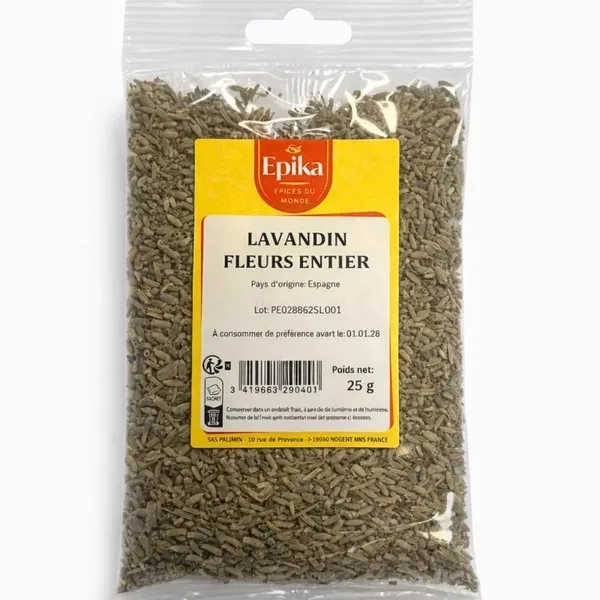
- Infusion and decoration: Moroccan mint in 40 g cartons, hibiscus in cut flowers, lavandin flowers.
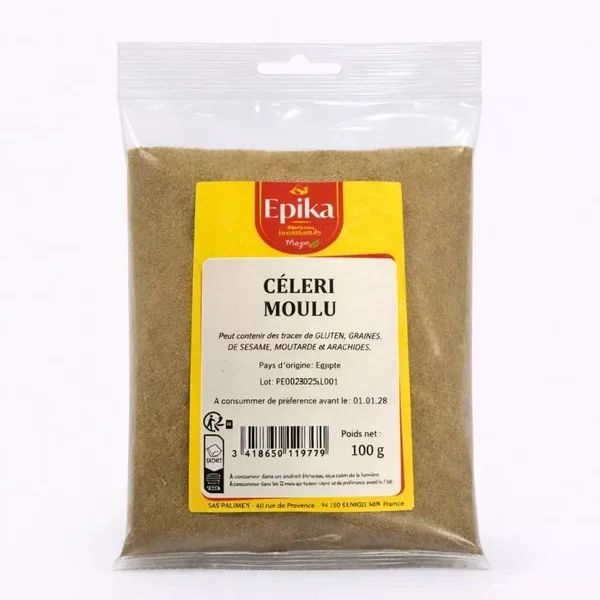
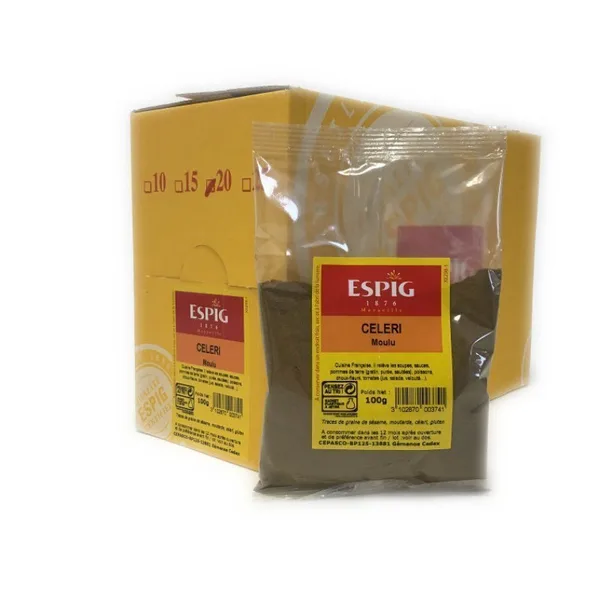
- The particular case of celery, stocked ground, which acts as a base rather than a finishing herb.
Almost that entire list exists in parallel under Epika and under Espig, which leaves you the choice of label at identical pack size. Persillade already belongs to compound seasonings: if you build your own bases, wholesale garlic gives you the same thing while you set the garlic-to-parsley ratio yourself.
The formats, and why they are so small
The table below gathers the three pack families of the aisle. They are not told apart by quality, but by the pace at which the business uses them.
| Pack size | Herbs concerned | Usage profile |
|---|---|---|
| Case of units, 15 to 25 g | Chive, marjoram, bay leaf, sage, lavandin, tarragon | Slow rotation, kitchen portioning, shelf display |
| Case of 50 g units | Thyme, rosemary, oregano, parsley, coriander leaf, basil, herbes de Provence, hibiscus | Regular use across several stations |
| 500 g to 1 kg bag | Thyme, basil, marjoram, herbes de Provence, bay leaf, parsley flakes, extra oregano, persillade | Steady production, central kitchen |
The case of units has one merit the bag does not: each unit stays sealed until it is opened. A herb loses its scent the moment it meets the air, and a kilo started in February will have little left to say by June. Conversely, a business using thyme every week has every reason to take the 1 kg bag, whose price per kilo bears no comparison. The right call is not a price call, it is a call on speed of consumption.
Dosing, storing, tracing
A dried herb is not a fresh herb divided by three: drying concentrates some aromas and erases others. The method we recommend comes down to four points:
- Wake the herb between your fingers before adding it: friction releases the oils.
- Add the tough leaves early — thyme, bay, rosemary — as they need cooking time.
- Add the tender leaves late — parsley, chive, coriander — as heat puts them out.
- Record the weight on the recipe card as soon as it satisfies, herb by herb.
In the storeroom, dried herbs belong to your food safety management plan like the rest of the dry goods: opaque resealed containers, kept away from the heat of the ranges, first in first out rotation, batch and best-before dates kept until the pack is finished — the food hygiene principles published by the European Commission apply here as anywhere else in the store. Dried plants also fall under a specific European framework for pyrrolizidine alkaloids, set by Regulation (EU) 2020/2040: a point a professional buyer does well to know, since it concerns this family of products alone.
Our view as a wholesaler
On a dried herb, what tells a good batch apart is not the scent on opening: it is what remains of it three months later. Hence our preference for the case of units wherever consumption is irregular, even when the price per kilo appears to argue otherwise.
Our teams work daily with restaurateurs, caterers, butchers and delicatessens ordering in bulk. We would rather keep a legible range — seventeen herbs, two labels, three pack families — than an endless catalogue in which the buyer no longer knows what is being compared. To round out the aisle, wholesale coriander gives you the seed where this page gives you the leaf, and our wholesale spice blends take over when you want a complete seasoning rather than a single herb. Find the whole range at your wholesale spice supplier, and request your trade price: our wholesale terms apply from the first tier, with pallet delivery and carriage paid according to order value.